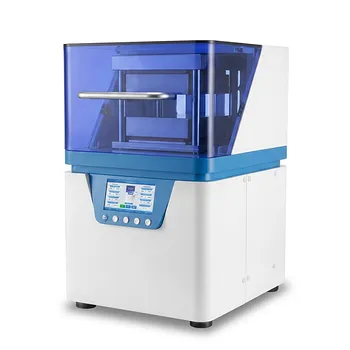
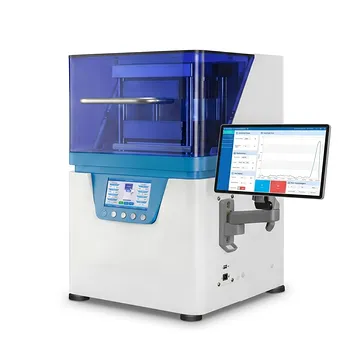
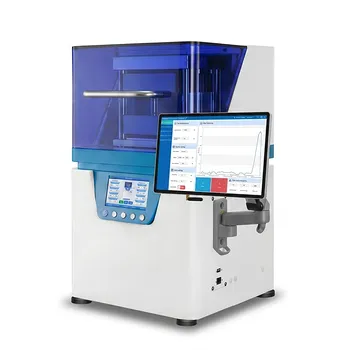
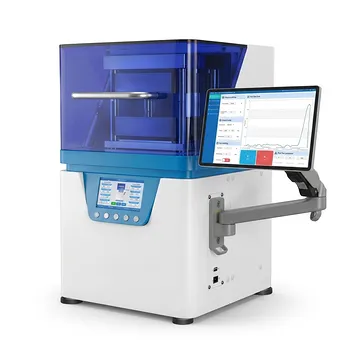
Specialized research necessitates specialized engineering. When standard machinery fails to meet the unique parameters of a scientific project, laboratories require customized hydraulic presses. This requirement forces manufacturers to break away from standard templates, resulting in novel design architectures and advanced technologies that eventually benefit the entire industry.
The need for customization in research settings is the primary engine for innovation in hydraulic press technology. By solving specific, high-level problems for individual projects, manufacturers expand the functional boundaries of what these machines can achieve.
The Catalyst of Customization
Moving Beyond Standard Specifications
Standard industrial presses are designed for repetition and known variables. However, scientific inquiry often operates outside these known boundaries.
Researchers frequently require specific pressures, unique dwelling times, or distinct platen configurations that off-the-shelf models cannot provide.
Engineering for Specific Outcomes
To accommodate these requests, manufacturers must modify the fundamental DNA of their machines.
They are forced to engineer solutions that align precisely with the specific needs of a research project. This prevents the technology from stagnating, as the machinery must evolve to keep pace with scientific questions.
From Niche Solutions to Broader Innovation
Developing Novel Designs
The demand for customization does not just result in a modified machine; it leads to the development of entirely innovative hydraulic press designs.
When engineers solve a complex problem for one laboratory, they often create a new technology or design principle. These innovations, born from necessity, become part of the manufacturer's technological arsenal.
Expanding Operational Possibilities
As these innovative designs are realized, the scope of what hydraulic presses can achieve expands.
Capabilities that were once considered impossible or impractical become attainable. This cycle ensures that the technology continuously improves, offering new possibilities for future research and industrial applications.
Understanding the Trade-offs
The Cost of Innovation
While customization drives technology forward, it inherently introduces higher costs and longer lead times.
Developing a bespoke solution requires significant engineering hours compared to purchasing a standardized model.
Complexity and Maintenance
Innovative, custom-built presses often possess a higher degree of mechanical complexity.
This can make maintenance more challenging, as the specific parts or knowledge required to repair the machine may not be as readily available as they are for mass-produced units.
Leveraging Innovation for Your Objectives
Depending on your specific goals, the level of innovation you require will vary.
- If your primary focus is routine testing: Rely on standard press designs to ensure cost-effectiveness, reliability, and ease of maintenance.
- If your primary focus is experimental discovery: Invest in a customized solution, understanding that the higher upfront cost buys you the innovative capabilities required to break new ground.
Innovation is not just a feature; it is a direct response to the specific, evolving demands of the scientific community.
Summary Table:
| Aspect of Innovation | Standard Press Utility | Custom Research Press Impact |
|---|---|---|
| Design Focus | Repetition & Known Variables | Novel Architectures & Unique Parameters |
| Capabilities | Fixed Platen & Pressure | Tailored Dwelling Times & Configurations |
| Tech Evolution | Stagnant/Standardized DNA | Continuous Functional Expansion |
| Lead Time | Short / Off-the-shelf | Longer due to Bespoke Engineering |
| Maintenance | Simple / Standard Parts | High Complexity / Specialized Knowledge |
Unlock Scientific Breakthroughs with KINTEK Precision Engineering
Don’t let standard machinery limit your discovery. KINTEK specializes in comprehensive laboratory pressing solutions, offering manual, automatic, heated, multifunctional, and glovebox-compatible models, alongside advanced cold and warm isostatic presses widely applied in battery research.
Whether you are performing routine testing or pioneering experimental research, our team is ready to engineer the custom capabilities you need to break new ground. Experience the value of specialized engineering tailored to your unique parameters.
Ready to evolve your laboratory capabilities? Contact KINTEK today to discuss your custom project.
Related Products
- Automatic Hydraulic Hot Press with Large Plate and Precision Temperature Control for Advanced Material Sample Preparation and Industrial Research
- Automatic Hydraulic Heat Press Machine with Multi Stage Programmable Control and Integrated Water Cooling Plate Size 180x180mm
- Automatic High Temperature Heated Hydraulic Press Machine with Heated Plates for Lab
- Automatic Heated Hydraulic Lab Press with Programmable Touch Screen Controls and Precision Temperature Regulation
- Manual Heated Hydraulic Lab Press with Integrated Hot Plates Hydraulic Press Machine
People Also Ask
- What are the specific features and applications of hydraulic hot press machines? Precision Solutions for Modern Labs
- How does an automatic hydraulic press operate? Achieve Precision and Consistency in Lab Pelleting
- What are the advantages and common applications of an automatic hydraulic press? Elevate Your Lab's Precision
- What is the technical significance of setting a precise dwell time? Achieve Peak Material Density and Stability
- When is an automatic hydraulic press more suitable than a manual press? Scale Your Lab with Precision & Speed