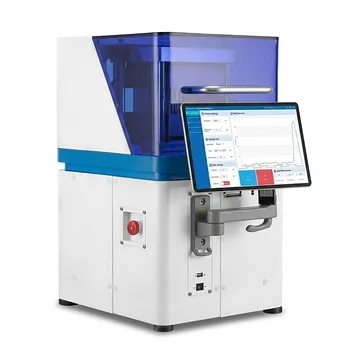
Laboratory presses are fundamental instruments utilized primarily in pharmaceuticals, materials science, and environmental analysis. Beyond these core sectors, their application extends deeply into aerospace, manufacturing (plastics, rubber, and wood), and electronics, serving as essential equipment for operations requiring precise compaction, molding, and lamination.
While the specific output varies by industry, the core function of a laboratory press remains consistent: bridging the gap between research and production. They are the standard for R&D, quality control, and lean manufacturing where precision takes precedence over high-volume output.
Core Industries and Applications
Pharmaceuticals and Medical Research
In the pharmaceutical sector, the laboratory press is critical for formulation and development.
The primary application here is pill making and powder compaction. Researchers use these presses to compress granules into solid tablets with exacting dimensions and weights to ensure consistent dosage and structural integrity.
Materials Science and Composites
Materials science laboratories rely heavily on hydraulic presses for manipulating the physical states of new materials.
Common tasks include pressing pellets for spectroscopy, punching electrodes, and testing the properties of ceramics and polymers. The press allows scientists to create uniform samples to test how materials react under specific pressures.
Manufacturing and Industrial Engineering
For industries involving rubber, plastics, and wood research, laboratory presses are used to simulate production environments on a smaller scale.
They are essential for molding and curing. By applying heat and pressure, engineers can shape thermoplastics, cure adhesives, or bond different materials to create laminates and composites used in aerospace and computer components.
Environmental Analysis and Academia
In environmental sectors and university laboratories, these presses are often used for sample preparation.
They prepare soil or sediment samples for analysis and serve as a primary teaching tool in educational settings to demonstrate principles of material behavior.
Defining the Operational Scope
Focus on R&D and Lean Manufacturing
It is important to distinguish a laboratory press from a heavy industrial press.
Laboratory presses are specifically designed for short production runs, cell manufacturing, and lean manufacturing. They are optimized for the flexibility required in research and development rather than the speed required for mass production.
Versatility Through Configuration
The utility of a single press is often defined by its tooling.
Whether the task is lamination, molding, or compacting powders, the press adapts to the specific industry need through the use of interchangeable die sets and heated platens.
Aligning the Tool with Your Sector
To determine how a laboratory press fits into your specific workflow, consider the primary output of your industry:
- If your primary focus is Pharmaceuticals: You will utilize the press to compress powders into tablets to verify density and dosage consistency.
- If your primary focus is Materials Science: You will use the press for sample preparation, such as creating pellets for analysis or punching electrodes.
- If your primary focus is Product Engineering: You will rely on the press for molding, curing, and laminating composites for prototyping and short-run manufacturing.
Precision in the lab ensures reliability in the field.
Summary Table:
| Industry | Primary Applications | Key Benefits |
|---|---|---|
| Pharmaceuticals | Pill making, powder compaction, dosage testing | Ensures structural integrity and dosage consistency. |
| Materials Science | Pellet pressing for spectroscopy, electrode punching | Enables uniform sample creation for accurate property testing. |
| Manufacturing | Molding, curing, and laminating (Plastics, Rubber) | Simulates production environments for prototyping and R&D. |
| Environmental | Soil and sediment sample preparation | Facilitates precise chemical and structural analysis. |
| Aerospace/Electronics | Creating composites and bonding laminates | Supports the development of high-performance components. |
Elevate Your Research with KINTEK Precision Solutions
At KINTEK, we understand that precision in the lab is the foundation for reliability in the field. We specialize in providing comprehensive laboratory pressing solutions tailored to your specific industry needs. Whether you are conducting advanced battery research or developing new pharmaceutical formulations, our diverse range of equipment—including manual, automatic, heated, multifunctional, and glovebox-compatible models, as well as cold and warm isostatic presses—is designed to bridge the gap between R&D and production.
Ready to optimize your workflow with industry-leading precision?
Contact KINTEK Today to Find Your Perfect Pressing Solution
Related Products
- Laboratory Hydraulic Press Lab Pellet Press Button Battery Press
- Laboratory Hydraulic Press Lab Pellet Press Machine for Glove Box
- Laboratory Split Manual Heated Hydraulic Press Machine with Hot Plates
- Laboratory Hydraulic Pellet Press for XRF KBR FTIR Lab Press
- Laboratory Hydraulic Split Electric Lab Pellet Press
People Also Ask
- How is a laboratory hydraulic press used for HAP composite gels? Master Mineral Substrate Standardization
- What role does a laboratory hydraulic press play in reaction pellets? Optimizing Lunar Soil and Metal Fuel Density
- What role does a laboratory hydraulic press play in the preparation of piezoelectric ceramic discs for DC-PG? | KINTEK
- Why is a laboratory hydraulic press required for PBAT and PLA sample preparation? Achieve Flawless Characterization
- What role does a laboratory hydraulic press play in the assembly of all-solid-state battery test cells? Expert Guide