Hydraulic presses are distinguished primarily by their intended manufacturing function. The most common types include assembly presses for joining discrete parts, bending presses for altering material geometry, and stamping presses for creating surface impressions or indentations.
While the underlying fluid-power principle remains constant, the tooling and structural design of a hydraulic press are dictated by whether the goal is structural deformation, surface modification, or component integration.
Categorization by Primary Function
Assembly Presses
These machines are engineered specifically for joining multiple components into a single unit.
They generate the precise force required for tasks such as riveting, crimping, and pressing bearings or fittings into place.
The focus here is on alignment and secure insertion rather than deforming the material's bulk structure.
Bending Presses
Bending presses are designed to permanently change the shape of a material without removing material.
These are heavily utilized in the construction and automotive industries for straightening metal beams or forming brackets.
The tooling in these presses applies force to create angles and curves in sheets or solid bars.
Stamping Presses
Stamping presses focus on creating indentations, impressions, or specific profiles within a material.
Common applications include forming automotive body panels or creating intricate shapes in consumer goods.
This process often involves high pressure to force metal sheets into a die cavity to achieve a specific texture or relief.
Specialized Temperature-Controlled Systems
Hydraulic Hot Presses
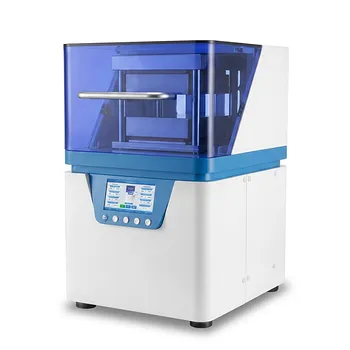
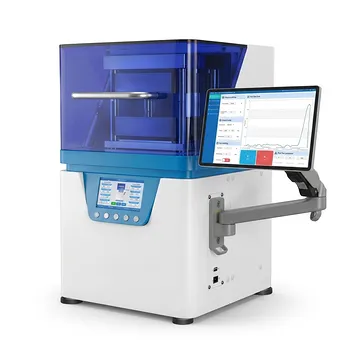
In addition to standard cold-forming machines, hydraulic hot presses integrate thermal control with hydraulic force.
These are essential for handling temperature-sensitive materials, such as curing composites, molding plastics, or laminating.
By combining heat with pressure, they allow for the processing of materials that would crack or fail under cold pressure alone.
Understanding the Operational Trade-offs
Force vs. Application Scale
Not all press systems are suitable for every volume of production.
Hydraulic systems are the standard for heavy-duty metal forming and composite curing due to their immense force generation.
However, for lighter applications like simple laminating, a pneumatic press (using compressed air) may be preferred for its speed and cleanliness, despite its lower force capacity.
Automation vs. Control
The method of operation dictates the throughput and precision of the press.
Manual presses offer high control for laboratory testing or low-volume prototyping but lack the speed for mass production.
Conversely, automated hydraulic systems maximize throughput for industrial assembly but require significant setup time and capital investment.
Making the Right Choice for Your Goal
Selecting the correct press requires matching the machine's specific mechanical advantage to your material's needs.
- If your primary focus is joining components: Prioritize an assembly press, which is optimized for operations like riveting and crimping bearings.
- If your primary focus is structural alteration: Utilize a bending press, which is specifically tooled to change material geometry for beams and brackets.
- If your primary focus is surface detailing: Choose a stamping press to create precise indentations or form complex panels like car bodies.
- If your primary focus is composite materials: Implement a hydraulic hot press to ensure proper curing and molding of temperature-sensitive plastics.
The effectiveness of a hydraulic press is defined not just by the power it generates, but by how precisely that power is applied to the specific task at hand.
Summary Table:
| Press Type | Primary Function | Key Applications | Material Focus |
|---|---|---|---|
| Assembly Press | Joining components | Riveting, crimping, bearing insertion | Discrete parts |
| Bending Press | Geometric alteration | Straightening beams, forming brackets | Metal sheets/bars |
| Stamping Press | Surface detailing | Automotive panels, complex profiles | Metal sheets |
| Hydraulic Hot Press | Thermal forming | Curing composites, plastic molding | Temperature-sensitive materials |
| Manual/Lab Press | Testing & Prototyping | Research & development, sampling | Various (low volume) |
Optimize Your Lab Performance with KINTEK Press Solutions
Precision is non-negotiable in material research. KINTEK specializes in comprehensive laboratory pressing solutions tailored to your specific research goals. Whether you are performing delicate battery research or industrial-grade material testing, our range of equipment ensures superior results.
Our value to you includes:
- Versatile Model Range: Choose from manual, automatic, heated, and multifunctional models.
- Specialized Technology: Access high-performance cold and warm isostatic presses.
- Controlled Environments: Glovebox-compatible designs for sensitive research.
Ready to elevate your laboratory's capabilities? Contact KINTEK today to find the perfect hydraulic press for your application!
Related Products
- Automatic Hydraulic Hot Press with Large Plate and Precision Temperature Control for Advanced Material Sample Preparation and Industrial Research
- Automatic Hydraulic Heat Press Machine with Multi Stage Programmable Control and Integrated Water Cooling Plate Size 180x180mm
- Automatic High Temperature Heated Hydraulic Press Machine with Heated Plates for Lab
- Automatic Heated Hydraulic Lab Press with Programmable Touch Screen Controls and Precision Temperature Regulation
- Manual Heated Hydraulic Lab Press with Integrated Hot Plates Hydraulic Press Machine
People Also Ask
- What are the specific features and applications of hydraulic hot press machines? Precision Solutions for Modern Labs
- How does an automatic hydraulic press operate? Achieve Precision and Consistency in Lab Pelleting
- What are the advantages and common applications of an automatic hydraulic press? Elevate Your Lab's Precision
- What is the technical significance of setting a precise dwell time? Achieve Peak Material Density and Stability
- When is an automatic hydraulic press more suitable than a manual press? Scale Your Lab with Precision & Speed