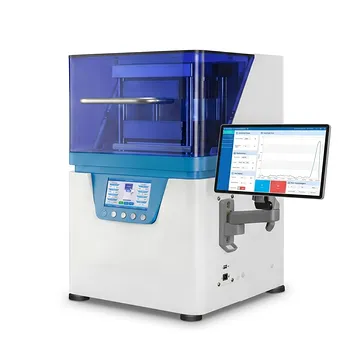
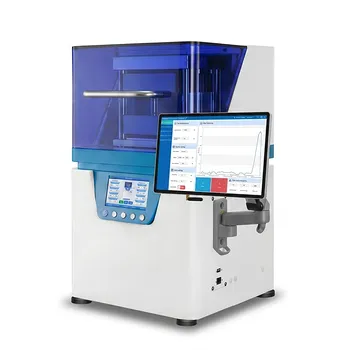
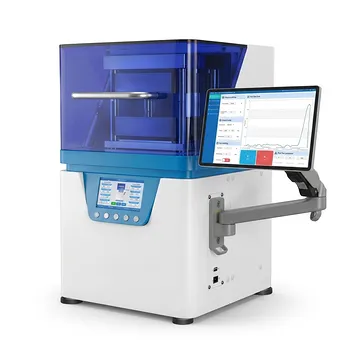
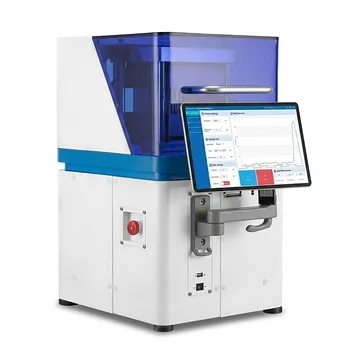
Hydraulic laboratory presses are precision instruments designed to generate immense compressive force through fluid mechanics. Their primary advantages lie in their ability to deliver high-pressure output, exceptional versatility across material types, and precise control for repeatable scientific testing. However, prospective users must weigh these benefits against significant limitations, specifically high acquisition costs and the requirement for disciplined maintenance schedules.
Core Insight: While hydraulic presses are indispensable for applications requiring high-force output and exacting repeatability, they demand a higher commitment to upfront investment and ongoing mechanical upkeep compared to simpler, manual alternatives.
The Strategic Advantages of Hydraulic Systems
Unmatched High-Force Generation
The defining characteristic of a hydraulic press is its ability to generate substantial pressure—often reaching or exceeding 1,000 psi—with relatively low input power.
This high-force output is critical for heavy-duty tasks that mechanical or pneumatic presses simply cannot handle. It allows for the effective compression of resistant materials, turning loose powders into solid pellets or molding robust polymers.
Material and Application Versatility
Hydraulic presses are not limited to a single function; they are highly adaptable tools suitable for a wide spectrum of laboratory tasks.
They effectively handle diverse materials including ceramics, metals, polymers, and biological samples. This makes them essential for applications ranging from X-ray fluorescence (XRF) pellet preparation to complex material testing and thermal curing processes.
Precision and Reproducibility
Modern hydraulic systems offer granular control over critical variables such as force, speed, and piston position.
This precision minimizes sample damage and ensures that experiments are repeatable. Adjustable pressure settings allow researchers to apply the exact force required for a specific protocol, ensuring consistent density and quality in sample preparation.
Enhanced Operational Safety
Unlike older mechanical devices which could be prone to sudden failure under load, modern hydraulic presses are designed with integrated safety mechanisms.
They typically feature overload protection and pressure relief valves. These features prevent the machine from exceeding its design limits, protecting both the operator and the equipment from catastrophic damage.
Understanding the Trade-offs
High Initial Investment
The primary barrier to adopting hydraulic technology is cost.
Advanced models, particularly those with automated pressure control and programmable cycles, represent a significant capital expenditure. For laboratories with limited budgets, the price tag of a high-end hydraulic press may be difficult to justify compared to manual alternatives.
Maintenance Dependencies
While hydraulic presses are generally durable, the Primary Reference highlights that they are not "set and forget" tools.
The hydraulic system relies on fluid integrity, seals, and pumps, all of which require regular inspection and maintenance. Neglecting this upkeep can lead to leaks, pressure loss, or system failure, contrasting with the lower maintenance needs of purely mechanical presses.
Making the Right Choice for Your Goal
Before investing in a hydraulic laboratory press, assess your specific requirements regarding force, throughput, and budget.
- If your primary focus is analytical precision (e.g., XRF/FTIR): Prioritize a hydraulic press for its ability to create uniform, high-density pellets through consistent pressure application.
- If your primary focus is budget and low maintenance: Be aware that the superior performance of a hydraulic system comes with a higher price point and a mandatory maintenance schedule.
For laboratories requiring the synthesis of high force and high precision, the hydraulic press remains the definitive solution.
Summary Table:
| Feature | Advantages | Limitations |
|---|---|---|
| Performance | High-force output (>1,000 psi) & precision control | Requires regular fluid and seal maintenance |
| Versatility | Handles ceramics, metals, polymers, and XRF pellets | Higher complexity compared to manual tools |
| Safety | Integrated overload protection & relief valves | Potential for leaks if neglected |
| Investment | Ensures repeatable, high-density sample results | Significant upfront capital expenditure |
Maximize Your Lab’s Research Potential with KINTEK
Precision and power are non-negotiable in advanced material science. KINTEK specializes in comprehensive laboratory pressing solutions designed to meet the rigorous demands of battery research and material testing. Whether you require manual, automatic, heated, multifunctional, or glovebox-compatible models, or specialized cold and warm isostatic presses, our equipment delivers the exact force and repeatability your experiments demand.
Don't let equipment limitations slow your innovation. Our team of experts is ready to help you select the ideal hydraulic system tailored to your budget and technical requirements.
Upgrade your laboratory capabilities—Contact KINTEK today!
Related Products
- 24T 30T 60T Heated Hydraulic Lab Press Machine with Hot Plates for Laboratory
- Automatic Laboratory Hydraulic Press Lab Pellet Press Machine
- Laboratory Hydraulic Press Lab Pellet Press Button Battery Press
- Laboratory Hydraulic Press 2T Lab Pellet Press for KBR FTIR
- Automatic Heated Hydraulic Lab Press with Programmable Touch Screen Controls and Precision Temperature Regulation
People Also Ask
- Function of a Laboratory Hydraulic Press with Heated Platens in SSE? Enhance Battery Density & Conductivity
- Why is a laboratory hydraulic press with heating plates required for PLA/TEC films? Achieve Precise Sample Integrity
- What role does a laboratory heated hydraulic press play in LTCC? Essential for High-Density Ceramic Lamination
- Why reduce load when applying composite strengthening tabs? Protect Specimen Integrity and Data Accuracy
- Why is a laboratory heated hydraulic press utilized during the lamination stage of NASICON green tapes?