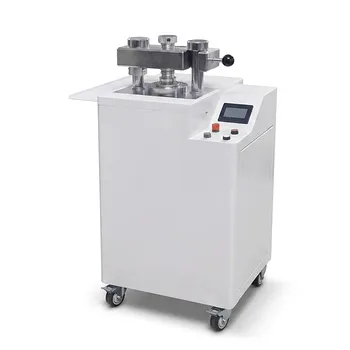
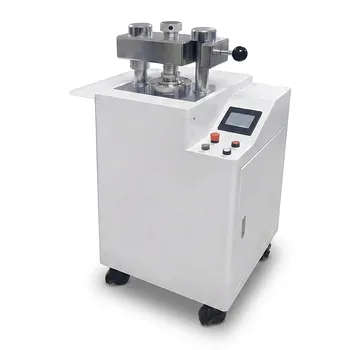
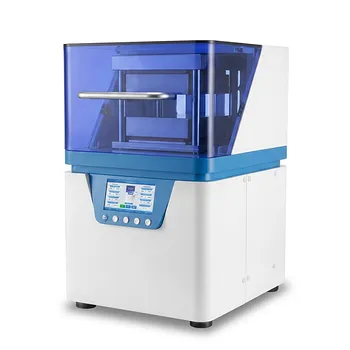
Automating the pellet pressing process fundamentally transforms high-throughput laboratories by maximizing efficiency, accuracy, and result consistency while significantly reducing manual labor. By utilizing automated hydraulic presses that operate autonomously after programming, laboratories can streamline complex workflows and eliminate the variable factors that typically compromise data quality.
Automation transforms sample preparation from a manual bottleneck into a standardized scientific process. By strictly controlling pressure variables, it ensures that data integrity remains high even as sample volume increases.
Streamlining Laboratory Workflows
Unlocking Autonomous Operation
Automated hydraulic presses can function independently once they are programmed. This autonomy allows technicians to walk away from the machine and focus their attention on higher-value tasks, such as data analysis or experimental design.
Reducing Labor Intensity
In a high-throughput environment, manual pressing is physically demanding and repetitive. Automation removes this physical burden, preventing operator fatigue and ensuring that the final sample of the day is processed with the same energy as the first.
Elevating Scientific Rigor
Eliminating Operator Variability
Manual operation inevitably introduces human error, as different technicians may apply pressure differently. Fully automatic systems utilize preset pressure curves and specific pressurization rates to ensure every sample is treated identically, regardless of who is running the machine.
Ensuring Reproducibility
Consistency is the cornerstone of valid research. By standardizing multi-stage dwell parameters, automation creates a repeatable material synthesis path. This is essential for establishing reliable research databases where data points must be comparable over time.
Meeting Publication Standards
High-level academic publications demand rigorous data validation. The high degree of standardization achieved through automation provides the process consistency required to withstand peer review and verify experimental results.
Understanding the Trade-offs
Upfront Programming Requirements
While the execution is automatic, the setup requires precision. Operators must invest time upfront to define the correct pressure curves and dwell times for specific materials to ensure the automation yields the desired results.
Maintenance and Calibration
Automated systems rely on sophisticated sensors and hydraulics to maintain their accuracy. To prevent drift in data quality, these systems often require a more disciplined calibration and maintenance schedule than simpler manual presses.
Making the Right Choice for Your Goal
Automation is an investment in both capacity and quality. To maximize its value, align the technology with your laboratory's primary objectives.
- If your primary focus is Operational Efficiency: Leverage the autonomous capabilities to reduce bottlenecks and redeploy your technical staff to analytical tasks.
- If your primary focus is Data Quality: Prioritize the programming of precise pressure curves to ensure absolute standardization across all experimental datasets.
By removing variables and manual effort, automation empowers your laboratory to scale its operations without sacrificing the scientific integrity of your results.
Summary Table:
| Benefit | Impact on Laboratory Operations |
|---|---|
| Autonomous Operation | Technicians can focus on high-value tasks while the press runs independently. |
| Consistency | Preset pressure curves eliminate operator variability for repeatable results. |
| Labor Efficiency | Reduces physical strain and prevents fatigue-induced errors in high-volume settings. |
| Scientific Rigor | Standardized multi-stage dwell parameters meet strict publication and peer-review standards. |
Elevate Your Research with KINTEK’s Advanced Pressing Solutions
Maximize your laboratory's potential and ensure scientific integrity with KINTEK. We specialize in comprehensive laboratory pressing solutions tailored to your specific research needs. Whether you require manual, automatic, heated, multifunctional, or glovebox-compatible models, or specialized cold and warm isostatic presses for battery research, our technology is designed to streamline your workflow and deliver unmatched precision.
Ready to transform your sample preparation from a manual bottleneck into a standardized scientific process?
Contact KINTEK Today to Find Your Ideal Solution
Related Products
- Automatic XRF Pellet Press for Laboratory Spectrometry Sample Preparation
- Automatic Laboratory Hydraulic Press Lab Pellet Press Machine
- Automatic Fluorescence Sample Preparation Press 40 Ton Lab Pellet Press for XRF Analysis
- Automatic Laboratory Hydraulic Press for XRF and KBR Pellet Pressing
- Manual Cold Isostatic Pressing CIP Machine Pellet Press
People Also Ask
- How can contamination occur during the preparation of pressed pellets for XRF analysis? Expert Prevention Guide
- How does the sample material influence the required pressing load for making an XRF pellet? Find the Optimal Pressure
- What are the different methods for preparing a sample pellet for XRF analysis? Expert Guide to Superior XRF Results
- What are the advantages of preparing a sample as a dense pellet for XRF? Unlock High-Precision Trace Element Analysis
- What is the primary purpose of using an automatic pellet press? Achieve Precise Geopolymer Analysis Results