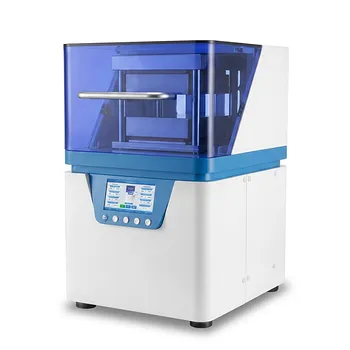
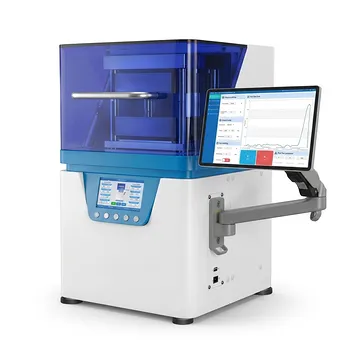
The primary advantages of using a hydraulic press in production center on its ability to deliver high force output, precise force control, exceptional versatility across various tasks, and overall energy efficiency.
Core Takeaway Hydraulic presses leverage the physics of fluid mechanics (Pascal's Law) to generate immense force from a minimal input. This capability, combined with the ability to finely tune pressure and speed, makes them a superior choice for operations requiring both raw power and exacting consistency.
Unmatched Force Generation
Utilizing Mechanical Advantage
Hydraulic presses operate on Pascal’s Law, where pressure applied to a confined fluid is transmitted equally in all directions.
High Force Output
By applying a modest mechanical force to a small piston, the system transfers energy to a larger piston to generate immense compressive force. This allows for the manipulation of heavy-duty materials with relatively little mechanical effort.
Precision and Control
Adjustable Parameters
Unlike rigid mechanical systems, hydraulic presses offer significant operational flexibility. Operators can adjust speeds, applied forces, directions, and pressure limits to meet specific production requirements.
Consistent Application
The ability to maintain precise control over the compression process ensures consistent results. This is particularly vital in laboratory settings or sample preparation, where exact pressure replication is necessary for accurate data.
Operational Versatility
Diverse Material Handling
These presses are highly versatile, capable of processing a wide variety of materials ranging from industrial metals to delicate laboratory samples.
Integrated Heat and Pressure
In specific configurations like hydraulic heat presses, the machine can apply heat and pressure simultaneously. This reduces overall processing time and improves the quality of bonding or compression, particularly in material synthesis applications.
Efficiency and Reliability
High-Volume Throughput
Hydraulic systems significantly increase production speed, especially in high-volume sample preparation. Features like faster sample switching in hand-fed systems contribute to greater overall workflow efficiency.
Safety and Maintenance
These machines are generally designed with built-in safety features to prevent overloading. Furthermore, because they rely on fluid dynamics rather than complex mechanical linkages, they often require minimal maintenance, making them a cost-effective long-term option.
Understanding the Trade-offs
Fluid Management
While low maintenance, hydraulic presses do rely on oil-filled cylinders. Operators must monitor for hydraulic fluid leaks and ensure seals remain intact to maintain pressure and cleanliness.
Speed Limitations
While efficient for deep forming and bonding, hydraulic ram speeds can be slower compared to high-speed mechanical flywheel presses. They are optimized for force and control rather than rapid-fire impact speeds.
Making the Right Choice for Your Goal
To determine if a hydraulic press fits your production line, consider your specific constraints:
- If your primary focus is heavy industrial forming: Prioritize the press for its high force output, as it delivers maximum power with minimal energy input.
- If your primary focus is laboratory testing or R&D: Rely on the press for its precise force control, allowing you to adjust pressure for delicate or specific sample requirements.
- If your primary focus is material bonding: Look for hydraulic heat press capabilities, where simultaneous heat and pressure will ensure higher quality end-products.
The hydraulic press is the definitive tool when your operation demands the intersection of massive power and granular control.
Summary Table:
| Advantage Category | Key Feature | Production Benefit |
|---|---|---|
| Force Generation | Pascal's Law / Fluid Mechanics | Immense compressive force for heavy-duty materials |
| Precision | Adjustable Parameters | Fine-tuned pressure and speed for consistent R&D results |
| Versatility | Integrated Heat & Pressure | Multitasking capabilities for bonding and material synthesis |
| Maintenance | Simplified Fluid Dynamics | Fewer mechanical linkages lead to lower long-term costs |
| Efficiency | High-Volume Throughput | Faster sample preparation and streamlined workflow |
Elevate Your Production with KINTEK Pressing Solutions
Are you looking to enhance your laboratory or industrial workflow with unmatched precision? KINTEK specializes in comprehensive laboratory pressing solutions designed to meet the rigorous demands of battery research and material science.
Our diverse range includes:
- Manual & Automatic Models: Perfect for flexible lab work or high-throughput production.
- Heated & Multifunctional Presses: Achieve simultaneous heat and pressure for superior material bonding.
- Specialized Isostatic Presses: Offering both Cold (CIP) and Warm (WIP) options for uniform density.
- Glovebox-Compatible Designs: Ensuring safety and integrity for sensitive battery research.
Ready to optimize your pressing process? Contact KINTEK today to discover how our expert engineering can bring raw power and granular control to your facility.
Related Products
- Automatic Hydraulic Hot Press with Large Plate and Precision Temperature Control for Advanced Material Sample Preparation and Industrial Research
- Automatic Hydraulic Heat Press Machine with Multi Stage Programmable Control and Integrated Water Cooling Plate Size 180x180mm
- Automatic High Temperature Heated Hydraulic Press Machine with Heated Plates for Lab
- Automatic Heated Hydraulic Lab Press with Programmable Touch Screen Controls and Precision Temperature Regulation
- Manual Heated Hydraulic Lab Press with Integrated Hot Plates Hydraulic Press Machine
People Also Ask
- What are the specific features and applications of hydraulic hot press machines? Precision Solutions for Modern Labs
- How does an automatic hydraulic press operate? Achieve Precision and Consistency in Lab Pelleting
- What are the advantages and common applications of an automatic hydraulic press? Elevate Your Lab's Precision
- What is the technical significance of setting a precise dwell time? Achieve Peak Material Density and Stability
- When is an automatic hydraulic press more suitable than a manual press? Scale Your Lab with Precision & Speed