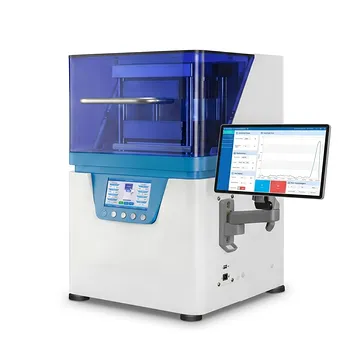
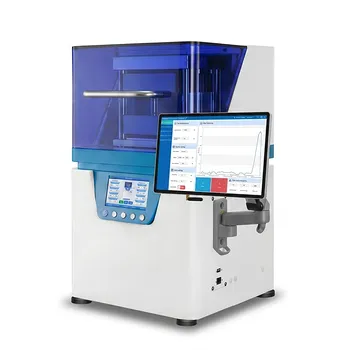
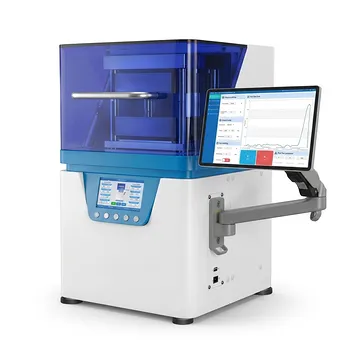
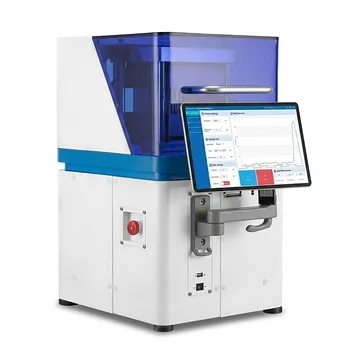
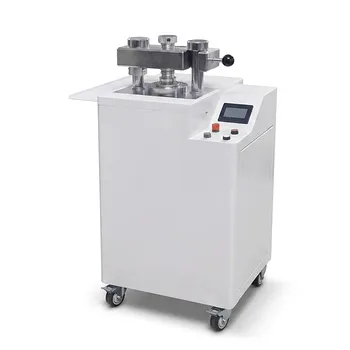
High-precision laboratory hydraulic systems are the primary drivers of quality in rubber nanocomposite fabrication. They deliver a highly uniform load distribution that is essential for removing trapped air and ensuring a dense, void-free material structure. By strengthening the interfacial bond between nano-fillers and the rubber matrix, these systems ensure the repeatability and consistency required for rigorous thermal and fire safety testing.
Core Takeaway: To produce high-quality rubber nanocomposites, high-precision hydraulic systems provide the stable pressure and thermal environment necessary to eliminate internal defects and ensure a uniform distribution of nanoparticles throughout the matrix.
Enhancing Microstructural Integrity and Density
Elimination of Internal Porosity
High-precision hydraulic presses apply consistent pressure output to effectively expel trapped air bubbles and volatiles from the mold cavity. This process is critical because internal pores act as stress concentrators that can lead to premature material failure. By removing these gaps, the system ensures a dense microstructure that accurately reflects the material's true physical properties.
Strengthening Interfacial Bonding
At the nanoscale, particles possess extremely high specific surface areas and reactivity. The stable high pressure provided by a laboratory press—often reaching 10 MPa or higher—forces the rubber matrix into intimate contact with the nano-fillers. This tight contact eliminates interfacial gaps, maximizing the bonding strength and improving the overall stability of the composite.
Optimization of Filler Distribution
Nanoparticles are prone to agglomeration, which can compromise the performance of the entire sample. High-precision systems maintain a controllable pressure environment that facilitates the uniform distribution of these particles within the rubber. This uniformity is essential for avoiding internal stress concentrations and ensuring that the final nanocomposite is isotropic.
Precision Control and Material Consistency
Uniform Thermal and Chemical Stability
Modern hydraulic systems often integrate precisely controlled temperature settings (e.g., 160°C to 180°C) with mechanical pressure. This combination allows the rubber mixture to flow fully within the mold, facilitating a uniform cross-linking reaction (vulcanization). Consistent curing is vital for producing specimens with predictable mechanical strength and chemical resistance.
Accuracy in Characterization and Testing
Researching nanostructured materials requires standardized specimens for techniques like Fourier Transform Infrared Spectroscopy (FTIR) and X-ray Diffraction (XRD). Hydraulic presses provide the stability needed to create thin sheets or pellets with precise geometric dimensions. This dimensional accuracy ensures that subsequent characterization data is reproducible and can be compared across different batches.
Prevention of Structural Defects
By maintaining a consistent internal density, high-precision systems minimize the risk of deformation or cracking during post-molding processes like heat treatment or sintering. For recycled rubber or complex nanocomposites, the press also compensates for differences between reaction and decomposition temperatures. This controlled physical environment is a prerequisite for producing high-quality green bodies in advanced scientific research.
Understanding the Trade-offs
Mechanical Limits and Over-Compression
While high pressure is beneficial, exceeding the predetermined optimum pressure can lead to the crushing of sensitive fillers or the degradation of the polymer chains. Operators must carefully balance the need for density with the mechanical limits of the specific nano-fillers being used. Precision systems help mitigate this risk, but they require accurate calibration and expert oversight.
Equipment Complexity and Cost
High-precision hydraulic systems are significantly more expensive and complex than manual, low-precision alternatives. They require regular maintenance to ensure pressure sensors and heating elements remain accurate. Furthermore, the high thermal and mechanical energy required for some rubber production runs can lead to increased energy consumption compared to traditional molding methods.
How to Apply This to Your Project
When integrating a high-precision hydraulic system into your production workflow, your choice should be driven by the specific demands of your material and testing protocols.
- If your primary focus is improving data repeatability: Prioritize systems with digital pressure tracking to ensure every sample in a series is processed under identical conditions.
- If your primary focus is maximizing mechanical strength: Select a press that offers integrated heating and cooling controls to manage the cross-linking phase precisely and eliminate interfacial gaps.
- If your primary focus is nanostructured material research: Invest in a system capable of producing very thin, standardized sheets to facilitate accurate characterization via FTIR or XRD.
Utilizing a high-precision laboratory hydraulic system is not just an equipment choice; it is a fundamental step in ensuring the scientific validity and structural excellence of rubber nanocomposite materials.
Summary Table:
| Key Advantage | Mechanism | Impact on Sample Quality |
|---|---|---|
| Porosity Elimination | Consistent pressure expels air bubbles | Dense, void-free microstructure |
| Interfacial Bonding | High pressure (10 MPa+) forces matrix contact | Maximized material stability and strength |
| Filler Distribution | Controllable environment prevents agglomeration | Isotropic properties and reduced stress points |
| Thermal Stability | Integrated temperature (160°C-180°C) | Uniform vulcanization and cross-linking |
| Geometric Precision | Precise mold control and digital tracking | Highly reproducible XRD/FTIR characterization |
Elevate Your Nanocomposite Research with KINTEK Precision
Maximize the structural integrity and scientific validity of your materials with KINTEK’s comprehensive laboratory pressing solutions. We understand that high-quality rubber nanocomposites and battery research require absolute precision. Our extensive range includes:
- Manual & Automatic Heated Presses: For precise control over vulcanization and pressure.
- Multifunctional & Glovebox-Compatible Models: Specialized for sensitive environments and complex material workflows.
- Cold and Warm Isostatic Presses (CIP/WIP): Perfect for achieving maximum density in advanced material specimens.
Don't let internal defects compromise your data. Contact KINTEK today to discover how our specialized systems can streamline your sample production and deliver the consistency your research demands!
References
- G. Janowska, Przemysław Rybiński. Thermal stability, flammability and fire hazard of butadiene-acrylonitrile rubber nanocomposites. DOI: 10.1007/s10973-010-1282-y
This article is also based on technical information from Kintek Solution Knowledge Base .
Related Products
- Automatic Hydraulic Hot Press with Large Plate and Precision Temperature Control for Advanced Material Sample Preparation and Industrial Research
- Automatic Heated Hydraulic Lab Press with Programmable Touch Screen Controls and Precision Temperature Regulation
- Automatic High Temperature Heated Hydraulic Press Machine with Heated Plates for Lab
- Laboratory Hydraulic Press 2T Lab Pellet Press for KBR FTIR
- Automatic Laboratory Hydraulic Press for XRF and KBR Pellet Pressing
People Also Ask
- What are the specific features and applications of hydraulic hot press machines? Precision Solutions for Modern Labs
- How does an automatic hydraulic press operate? Achieve Precision and Consistency in Lab Pelleting
- What are the advantages and common applications of an automatic hydraulic press? Elevate Your Lab's Precision
- What is the technical significance of setting a precise dwell time? Achieve Peak Material Density and Stability
- When is an automatic hydraulic press more suitable than a manual press? Scale Your Lab with Precision & Speed