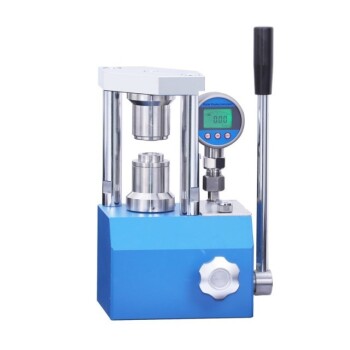
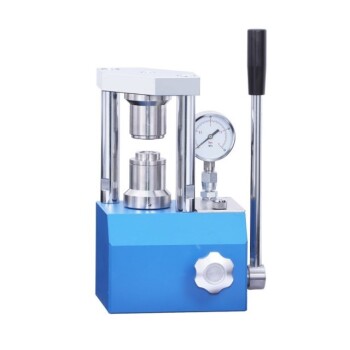
Standardized testing hardware is critical for data integrity. Standard battery test cells equipped with nickel-plated stainless steel electrodes offer superior chemical stability and a consistent conductive interface. Their standardized geometry ensures constant pressure and contact area, effectively eliminating experimental variables to guarantee reproducible impedance and ion migration data.
By combining chemically stable electrodes with fixed cell geometry, these test cells transform membrane evaluation from a variable-prone process into a precision science, ensuring that data reflects true material properties rather than setup inconsistencies.
Ensuring Electrochemical Stability
The Value of Nickel-Plated Electrodes
The use of nickel-plated stainless steel is a deliberate choice for chemical robustness. This material combination provides excellent chemical stability, ensuring the electrodes do not degrade or react unexpectedly during testing.
Creating a Stable Interface
Accurate measurements require a reliable connection between the instrument and the sample. These electrodes provide a stable conductive contact interface, which minimizes noise and prevents fluctuations that could obscure the performance of the polymer membrane.
Eliminating Experimental Variables
Controlling Mechanical Pressure
One of the greatest sources of error in membrane testing is variable pressure. Standardized test cells are engineered to apply constant pressure to the membrane, preventing physical deformation or poor contact that often occurs in makeshift setups.
Defining the Contact Area
To calculate conductivity and impedance accurately, the active area must be known and fixed. The standardized geometry of these cells ensures the contact area remains identical across every test, removing geometry as a variable.
Achieving Data Reproducibility
Reliable Impedance Spectroscopy
Impedance data is highly sensitive to external factors. By fixing the pressure and contact area, these test cells ensure that impedance data is consistent and reproducible, allowing you to confidently compare different membrane samples.
Accurate Ion Migration Characteristics
Evaluating how ions move through a polymer requires a noise-free environment. The stability provided by the constant contact area and pressure ensures that measurements of ion migration characteristics are accurate and reflective of the material's intrinsic behavior.
Understanding the Limitations
Material Compatibility Checks
While nickel-plated stainless steel is highly stable, it is not universally inert to every possible electrolyte or high-voltage condition. Always verify that your specific polymer chemistry is compatible with nickel to avoid subtle side reactions.
Rigid Geometry Constraints
The "standard" nature of these cells is a strength for reproducibility but a limitation for form-factor testing. These cells may not replicate the mechanical stresses or flexibility required in specific real-world applications, such as flexible electronics or pouch cells.
Making the Right Choice for Your Research
Standardizing your testing hardware allows you to isolate variables and trust your data.
- If your primary focus is fundamental material characterization: Prioritize these cells to ensure that impedance and conductivity calculations are based on a precise, fixed contact area.
- If your primary focus is comparative analysis: Use this standardized setup to eliminate mechanical variables, ensuring that performance differences are due strictly to the membrane chemistry.
By standardizing your test cell, you isolate the membrane's performance, ensuring your data stands up to rigorous scrutiny.
Summary Table:
| Feature | Advantage for Polymer Membrane Testing |
|---|---|
| Nickel-Plated Electrodes | Superior chemical stability and stable conductive interface |
| Standardized Geometry | Ensures constant contact area for accurate calculations |
| Engineered Pressure | Eliminates experimental variables and membrane deformation |
| Data Consistency | Guarantees reproducible impedance and ion migration results |
Elevate Your Battery Research with KINTEK Precision
Don’t let experimental variables compromise your data integrity. KINTEK specializes in comprehensive laboratory solutions, providing the standardized hardware necessary for accurate material characterization.
Whether you are evaluating polymer membranes or developing next-generation energy storage, our range of manual, automatic, heated, and glovebox-compatible battery test cells, along with our advanced isostatic presses, are designed to meet the rigorous demands of battery research.
Ready to achieve reproducible results? Contact KINTEK today to find the perfect testing setup for your laboratory!
References
- Robert J. Spranger, Tom Nilges. Highly‐Conductive Mixed PEO/PAN‐Based Membranes for Solid State Li‐Ion Batteries via Electro‐Spinning and Hot‐Press Synthesis Routes. DOI: 10.1002/zaac.202500062
This article is also based on technical information from Kintek Solution Knowledge Base .
Related Products
- Button Battery Sealing Press Machine for Lab
- Lab Button Battery Tablet Press Sealing Mold
- Button Battery Sealing Machine for Button Batteries
- Manual Button Battery Sealing Machine for Battery Sealing
- Lab Button Battery Disassembly and Sealing Mold
People Also Ask
- Why use standardized CR2032 components & high-precision presses? Ensure reliability in lithium metal battery research.
- Why is a laboratory battery sealing press essential for desolvation energy testing? Ensure Reliable Kinetic Data
- Why is a laboratory hydraulic press or battery sealing machine essential? Ensure Coin Cell Data Integrity
- How do laboratory battery sealing machines ensure performance consistency? Master Your Lithium and LFP Battery Assembly
- What role does a laboratory sealing press play in thermal analysis of solid dispersion films? Ensure Data Integrity