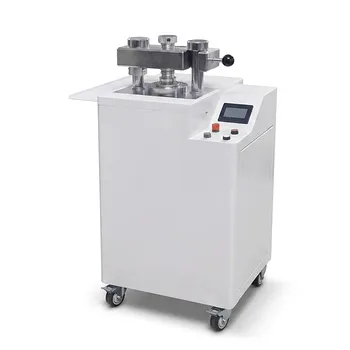
High-quality pellet pressing results from a disciplined combination of material preparation, equipment maintenance, and process standardization. To minimize errors, you must optimize the particle size for your specific die, strictly control moisture levels through drying, ensure pressure is applied consistently, maintain dies proactively, and adhere to a fixed method for every batch.
Success in pellet pressing is rarely about applying more force; it is about eliminating variables. The foundation of high-quality results lies in uniform material preparation and the rigorous maintenance of your tools to ensure every press cycle is identical.
Optimizing Material Preparation
The physical characteristics of your sample material are the primary determinants of pellet quality. If the input material is inconsistent, the output will be flawed regardless of the press quality.
Controlling Particle Size
You must ensure the particle size is appropriate for the dimensions of the die you are using. Large or irregular particles can create weak points within the pellet structure. This often leads to crumbling or low mechanical strength.
Managing Moisture Content
Moisture acts as a variable that can ruin stability. It is critical to properly dry the material before pressing. Excess moisture can cause pellets to crack upon release or compromise their analytical utility.
Operational Consistency
Once the material is prepared, the focus shifts to how the force is delivered. Human error and machine variance are the enemies of reproducibility.
Applying Pressure Uniformly
Pressure must not be applied haphazardly. You must apply pressure uniformly and consistently across the sample. Sudden spikes or uneven distribution of force will result in density gradients, leading to pellets that warp or break.
Standardizing the Method
Reproducibility is impossible without a defined process. You must develop and adhere to a standardized method for the entire workflow. This ensures that any variation in results is due to the sample itself, not a change in how the operator handled the press.
Equipment Maintenance and Health
A pellet press is a precision instrument. Neglecting the physical condition of the press and its components ensures diminishing returns on quality.
Routine Die Inspection
Regularly inspecting your dies is non-negotiable. Surface imperfections on the die face will transfer directly to the pellet. Regular checks allow you to catch damage before it ruins a batch.
Prompt Replacement of Worn Parts
Do not attempt to extend the life of damaged components. Replace worn parts promptly to maintain geometric accuracy. A degraded die will struggle to release pellets cleanly, often inducing stress fractures during ejection.
Common Pitfalls to Avoid
While following best practices ensures quality, it is important to understand the operational trade-offs involved in strict adherence.
The Trade-off of Preparation Time
Implementing rigorous drying and sizing protocols significantly increases the time per sample. However, skipping these steps to save time is the most common cause of pellet failure and wasted material.
The Cost of Deferred Maintenance
It is tempting to delay die replacement to save on consumable costs. This is a false economy. Using worn dies leads to increased rejection rates, effectively costing more in labor and lost samples than the price of a replacement part.
Making the Right Choice for Your Goal
To implement these practices effectively, prioritize based on your immediate requirements:
- If your primary focus is mechanical stability: Prioritize particle size control and moisture reduction, as these factors dictate the internal binding strength of the pellet.
- If your primary focus is reproducibility: Prioritize standardizing the method and pressure application, ensuring that every pellet is formed under identical conditions.
- If your primary focus is surface finish: Prioritize die maintenance and replacement, ensuring the contact surfaces are flawless.
By treating the pressing process as a controlled scientific standard rather than a mechanical chore, you ensure consistent, high-quality results every time.
Summary Table:
| Best Practice Category | Key Action | Primary Benefit |
|---|---|---|
| Material Preparation | Control particle size & moisture | Ensures mechanical stability and prevents cracking |
| Operational Process | Uniform pressure & standardized methods | Guarantees reproducibility and density uniformity |
| Equipment Care | Routine die inspection & part replacement | Maintains surface finish and prevents stress fractures |
| Troubleshooting | Avoid skipping preparation or maintenance | Reduces material waste and lowers long-term costs |
Elevate Your Research with KINTEK Precision Solutions
Don't let inconsistent sample preparation compromise your analytical results. KINTEK specializes in comprehensive laboratory pressing solutions, offering a diverse range of manual, automatic, heated, multifunctional, and glovebox-compatible models, alongside advanced cold and warm isostatic presses tailored for cutting-edge battery research.
Whether you need to improve mechanical stability or ensure flawless reproducibility, our expert team is ready to help you select the ideal pressing technology for your specific application. Contact us today to optimize your lab's performance!
Related Products
- Lab XRF Boric Acid Powder Pellet Pressing Mold for Laboratory Use
- XRF KBR Plastic Ring Lab Powder Pellet Pressing Mold for FTIR
- Laboratory Hydraulic Split Electric Lab Pellet Press
- Lab Ring Press Mold for Sample Preparation
- Lab Infrared Press Mold for No Demolding
People Also Ask
- Why are pellets used in XRF analysis, and what is their limitation? Boost Accuracy and Speed in Your Lab
- What are the primary factors to consider when deciding between a manual and an automatic XRF pellet press? Optimize Your Lab's Efficiency
- What are the main methods for preparing XRF pellets? Boost Accuracy and Efficiency in Your Lab
- What are the differences between manual and automatic XRF pellet presses? Choose the Right Press for Your Lab's Needs
- What checklist of factors should be considered when choosing an XRF pellet press? Ensure Accurate Sample Preparation