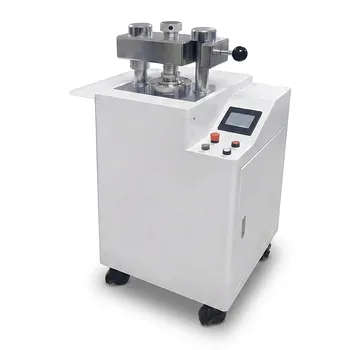
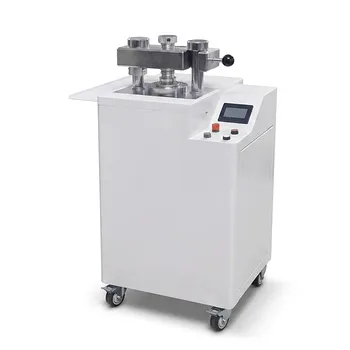
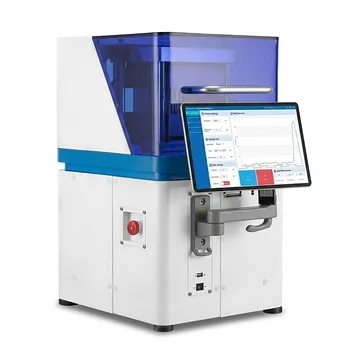
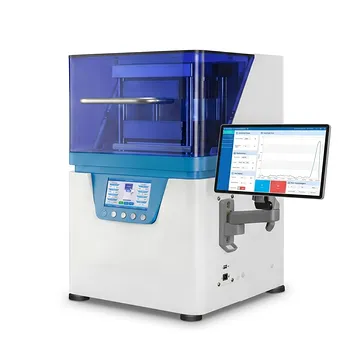
The three common operational types of lab pellet presses are manual, automatic, and hydraulic systems.
Manual presses are best suited for low-volume, occasional research where labor intensity is acceptable. Automatic presses provide programmable consistency for high-throughput environments, while hydraulic presses are distinguished by their versatility and capacity to apply high pressure to diverse materials like ceramics and pharmaceuticals.
Core Takeaway The choice between press types is fundamentally a trade-off between operational control and labor. While manual presses offer a lower barrier to entry, automatic and hydraulic systems are non-negotiable for workflows requiring high reproducibility, precise dwell times, and standardized density.
Primary Operational Categories
Manual Presses
Manual presses represent the entry point for laboratory sample preparation. They are specifically designed for small-scale operations or occasional research tasks where high throughput is not a priority.
Because they are labor-intensive, the quality of the pellet relies heavily on the operator's physical effort and consistency. These are generally not recommended for industrial-scale production but serve well for basic R&D testing.
Automatic Presses
Automatic presses are the standard for environments requiring rigorous consistency and time efficiency. They are widely used in both research and industrial settings because they eliminate operator variables.
Key features include the ability to preset pressure levels and holding times. This automation ensures that every sample is subjected to identical conditions, resulting in highly reproducible data essential for reliable analysis.
Hydraulic Presses
While often utilizing similar mechanics to the other types, presses explicitly categorized as "hydraulic" in this context are defined by their versatility and high-pressure capabilities.
They are engineered to handle a broad spectrum of challenging materials, including robust polymers, ceramics, and pharmaceuticals. If your application requires extreme force to bind difficult powders, a dedicated hydraulic system is often the requisite tool.
Advanced Configurations and Features
Heated and Temperature-Controlled Units
Beyond basic pressure application, many modern presses feature precision digital temperature control. These units allow for heated pressing, which is critical when specific thermal conditions are required to bond or mold materials.
Safety is a priority in these designs; heated presses often include closed molding areas to contain fumes and protection doors with safety locks to prevent accidental contact during operation.
Modular and Adaptive Design
A significant trend in press technology is the move toward modular designs. Modern units are increasingly built to accept interchangeable parts, allowing researchers to switch between different die shapes or sample sizes easily.
This adaptability extends to form factor as well. Many presses are designed as benchtop units for space efficiency, though optional pedestals are available to convert them into floor-standing models for larger laboratories.
Understanding the Trade-offs
Maintenance Overhead
The reliability of a press is directly tied to its maintenance regimen. Hydraulic fluids degrade over time and must be replaced to prevent system failure; ignoring this can lead to inconsistent pressure application.
Operators must also inspect for leaks in hoses and seals and ensure moving parts are lubricated. Neglecting these basics leads to excessive vibration and premature wear.
Calibration and Accuracy
Regardless of the operational type, the force gauge must be calibrated regularly. An uncalibrated press may display a specific pressure while applying a different amount of force, rendering experimental data invalid.
This is particularly critical for automatic systems where users rely blindly on the digital readout. Regular verification ensures that the applied force matches the preset requirements for both safety and efficacy.
Making the Right Choice for Your Goal
Selecting the correct lab pellet press depends on balancing your sample volume against your need for precision.
- If your primary focus is occasional, low-cost testing: Opt for a manual press, which handles small-scale research effectively without the cost of automation.
- If your primary focus is data reproducibility and high volume: Choose an automatic press, as the ability to preset pressure and time ensures every sample is identical.
- If your primary focus is high-density materials or ceramics: Invest in a high-capacity hydraulic press, which provides the extreme versatility and force needed for difficult binders.
Ultimately, the right press is the one that removes variability from your sample preparation, allowing you to focus on the chemistry rather than the mechanics.
Summary Table:
| Press Type | Best For | Key Features | Labor Level |
|---|---|---|---|
| Manual | Low-volume / Basic R&D | Entry-level, cost-effective | High |
| Automatic | High-throughput / Industry | Programmable pressure & dwell time | Low |
| Hydraulic | Ceramics / Pharmaceuticals | High-pressure versatility, robust force | Moderate |
| Heated | Material Bonding / Molding | Digital temperature control, safety locks | Variable |
Elevate Your Material Research with KINTEK
Precision in sample preparation is the foundation of reliable analysis. KINTEK specializes in comprehensive laboratory pressing solutions designed to remove variability from your workflow. Whether you are conducting fundamental battery research or complex ceramic synthesis, our diverse range of equipment—including manual, automatic, heated, multifunctional, and glovebox-compatible models, as well as cold and warm isostatic presses—ensures you have the exact force and control your application demands.
Ready to optimize your lab's efficiency? Our experts are here to help you select the ideal pressing solution tailored to your specific research goals.
Related Products
- Laboratory Hydraulic Split Electric Lab Pellet Press
- Automatic Laboratory Hydraulic Press Lab Pellet Press Machine
- Automatic Fluorescence Sample Preparation Press 40 Ton Lab Pellet Press for XRF Analysis
- Laboratory Hydraulic Press 2T Lab Pellet Press for KBR FTIR
- Laboratory Hydraulic Pellet Press for XRF KBR FTIR Lab Press
People Also Ask
- What are the emerging trends in the design and materials of lab pellet presses? Modernize Your Lab Efficiency
- How do lab pellet presses support customization and flexibility? Optimize Your Sample Prep for Any Material
- What are common lab pellet press issues? Expert Troubleshooting Guide for Reliable Material Research
- Why use a laboratory pellet press for solid-state battery evaluation? Ensure Accuracy in Interface Stability Testing
- Why Use a Laboratory Pellet Press for PXRD Anode Material Prep? Standardize Samples for Precise Analysis