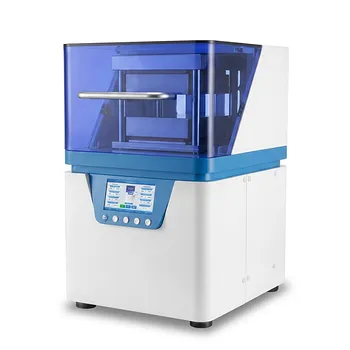
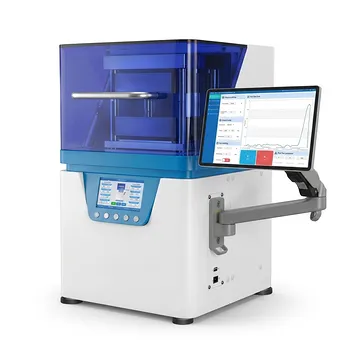
The primary distinction in hydraulic presses lies in their method of operation: automatic or hand-operated. Automatic presses utilize microprocessor-controlled systems to prioritize speed and production efficiency, whereas hand-operated (manual) models offer power-assisted control suited for smaller workshops and laboratory settings.
Core Takeaway While hydraulic presses can be categorized by specific tasks like stamping or bending, the fundamental choice is between automatic systems for high-volume efficiency and hand-operated units for precise, lower-volume control.
Operational Categories: The Main Divide
The most critical classification of hydraulic presses is based on how the operator interacts with the machine. This distinction dictates the press's suitability for either mass production or specialized research.
Automatic Hydraulic Presses
These machines are designed for high-speed, repetitive environments. They utilize microprocessor-controlled systems to automate the pressing cycle.
This automation ensures consistent pressure and timing, making them the standard for large-scale manufacturing lines where efficiency is the primary metric.
Hand-Operated (Manual) Presses
Manual presses rely on human input for operation, though they are power-assisted to generate the necessary force.
These are typically found in smaller workshops, repair shops, and laboratories. They offer the operator granular control over the process, which is essential for low-volume tasks or sensitive sample preparation.
Functional Classifications
Beyond the operational method, presses are often classified by the specific physical action they perform on a material. These functional types can be found in both automatic and manual configurations.
Assembly Presses
These are engineered specifically for joining parts. They are used for tasks such as riveting, crimping, or pressing bearings and fittings into place with high precision.
Fabrication Presses
This category includes bending presses, which alter the shape of materials (common in construction and automotive work), and stamping presses, which create indentations or impressions.
Specialized Thermal Presses
A distinct variant known as the hydraulic hot press incorporates heating elements. This machine is critical for handling temperature-sensitive materials, often used in laboratories or for creating composite materials.
Understanding the Trade-offs
Choosing the wrong type of press can lead to inefficiencies or compromised results. It is vital to weigh the benefits of automation against the flexibility of manual control.
Volume vs. Control
Automatic presses excel at volume but can lack the "feel" required for delicate work. If a process requires constant adjustment or observation—such as in R&D or failure analysis—automation may be a hindrance.
Complexity and Maintenance
Hand-operated presses are generally simpler and easier to maintain. Automatic systems, while faster, introduce electronic complexity via microprocessors, requiring more specialized maintenance protocols.
Pressure Requirements
While pneumatic systems top out around 100 psi, hydraulic systems can reach 10,000 psi. However, achieving these high pressures safely in a manual setup requires significant physical effort or time compared to an automatic system.
Making the Right Choice for Your Goal
To select the correct hydraulic press, you must align the machine capabilities with your production volume and precision requirements.
- If your primary focus is High-Volume Manufacturing: Prioritize automatic hydraulic presses to leverage microprocessor control for maximum speed and consistent repeatability.
- If your primary focus is Laboratory Research or R&D: Choose a hand-operated (manual) press or a hot press to ensure precise control over pressure application and sample preparation.
- If your primary focus is Component Fabrication: Select a function-specific machine, such as a bending or stamping press, tailored to the specific geometry you need to create.
The optimal hydraulic press is one that balances your need for force with your requirement for operator control.
Summary Table:
| Press Type | Operation Method | Best For | Key Features |
|---|---|---|---|
| Automatic | Microprocessor Controlled | High-volume production | Speed, consistency, efficiency |
| Manual | Power-assisted hand control | Labs, workshops, R&D | Granular control, low maintenance |
| Hot Press | Integrated heating elements | Composite materials, research | Thermal & pressure control |
| Fabrication | Bending/Stamping focus | Automotive, construction | Material shaping & indentation |
Maximize Your Pressing Efficiency with KINTEK
Whether you are scaling high-volume production or conducting sensitive laboratory research, KINTEK provides the precision engineering your projects demand. We specialize in comprehensive laboratory pressing solutions tailored to your unique workflows, including:
- Manual & Automatic Models: Choose between granular control or microprocessor-driven efficiency.
- Advanced Capabilities: Explore heated, multifunctional, and glovebox-compatible presses.
- Specialized Systems: High-performance cold and warm isostatic presses for battery research and material science.
Don't settle for a one-size-fits-all solution. Contact our experts today to find the perfect press for your specific application and experience the KINTEK difference in quality and durability.
Related Products
- Automatic Hydraulic Hot Press with Large Plate and Precision Temperature Control for Advanced Material Sample Preparation and Industrial Research
- Automatic Hydraulic Heat Press Machine with Multi Stage Programmable Control and Integrated Water Cooling Plate Size 180x180mm
- Automatic High Temperature Heated Hydraulic Press Machine with Heated Plates for Lab
- Automatic Heated Hydraulic Lab Press with Programmable Touch Screen Controls and Precision Temperature Regulation
- Manual Heated Hydraulic Lab Press with Integrated Hot Plates Hydraulic Press Machine
People Also Ask
- What are the specific features and applications of hydraulic hot press machines? Precision Solutions for Modern Labs
- How does an automatic hydraulic press operate? Achieve Precision and Consistency in Lab Pelleting
- What are the advantages and common applications of an automatic hydraulic press? Elevate Your Lab's Precision
- What is the technical significance of setting a precise dwell time? Achieve Peak Material Density and Stability
- When is an automatic hydraulic press more suitable than a manual press? Scale Your Lab with Precision & Speed