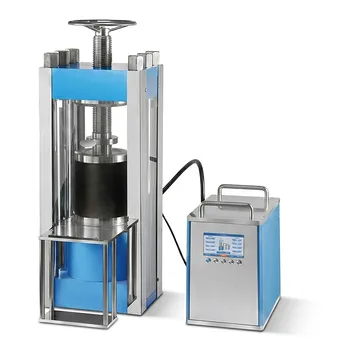
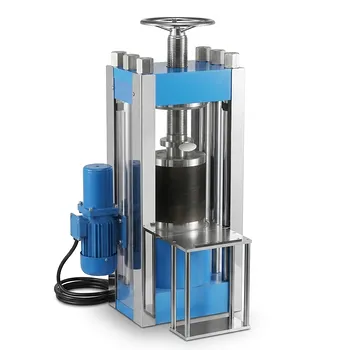
The essential guidelines for lubricating a heated lab press rely on strict adherence to the manufacturer’s specifications regarding the lubricant type and application schedule. To ensure operational integrity, you must regularly monitor the lubricant for signs of degradation—such as discoloration or loss of viscosity—and avoid over-lubrication, which can attract damaging contaminants.
Core Takeaway: Proper lubrication is a precision maintenance task, not a general application. Success depends on using the exact manufacturer-recommended agent to reduce friction while strictly limiting quantity to prevent the accumulation of abrasive dirt.
Core Lubrication Protocols
Follow Manufacturer Specifications
The primary rule of maintenance is to use only the lubricant specified by the manufacturer for your specific model.
Heated lab presses operate under specific thermal and pressure conditions. Using a generic substitute can lead to mechanical failure or safety hazards if the lubricant cannot withstand the press's operating environment.
adhere to a Regular Schedule
Lubrication must be performed consistently according to the manufacturer's recommended timeline.
Regular application ensures a continuous protective barrier against friction and wear. Sporadic maintenance allows friction to build up, degrading the moving parts before you realize damage has occurred.
Monitor Lubricant Condition
You must actively inspect the state of the lubricant, not just its level.
Watch for discoloration, contamination, or a loss of viscosity. If the lubricant appears dirty or too thin, it has lost its protective properties and must be replaced immediately to prevent component damage.
Differentiate Hydraulic Maintenance
While lubricating moving parts is essential, do not overlook the hydraulic fluid.
Hydraulic oil degrades over time and requires replacement according to a specific schedule. Ensure you use the proper hydraulic oil specified by the manufacturer to maintain pressure accuracy and machine longevity.
Common Pitfalls to Avoid
The Dangers of Over-Lubrication
A common misconception is that more lubricant equals better protection. This is false.
Over-lubrication is a critical error that causes the machine to attract dirt, dust, and other contaminants. This buildup creates a gritty paste that can abrade moving parts rather than protecting them.
Ignoring Cleanliness
Lubrication is ineffective if applied to dirty surfaces.
As noted in maintenance protocols, you must keep the working parts of the press clean from dirt and leaking fluid. Applying fresh lubricant over old, contaminated grease traps debris against the metal, accelerating wear.
Implementing a Maintenance Strategy
To maximize the lifespan and safety of your heated lab press, apply these guidelines based on your specific operational goals:
- If your primary focus is extending equipment lifespan: strictly avoid over-lubrication to prevent dirt accumulation and clean moving parts thoroughly before re-applying grease.
- If your primary focus is consistent performance: Prioritize the regular inspection of hydraulic fluid and lubricant viscosity to ensure the press maintains consistent pressure and smooth operation.
By treating lubrication as a precise, scheduled discipline rather than a casual task, you ensure the safety of your operators and the reliability of your data.
Summary Table:
| Guideline Category | Key Action | Primary Benefit |
|---|---|---|
| Lubricant Type | Use manufacturer-specified agents only | Prevents thermal degradation and failure |
| Application | Adhere to a strict schedule | Minimizes friction and mechanical wear |
| Quantity | Apply sparingly (avoid over-lubrication) | Prevents dirt/contaminant accumulation |
| Monitoring | Check viscosity and color regularly | Identifies oil degradation before damage |
| Cleanliness | Clean surfaces before application | Ensures smooth movement and safety |
Maximize Your Lab’s Productivity with KINTEK
Maintaining your equipment is critical, but having the right tools is the foundation of success. KINTEK specializes in comprehensive laboratory pressing solutions tailored for high-stakes environments like battery research and material science. Whether you need manual, automatic, heated, or multifunctional presses—or specialized cold and warm isostatic systems—we provide the precision engineering your research demands.
Don’t let maintenance hurdles or outdated equipment slow your innovation. Our experts are ready to help you select the perfect glovebox-compatible or heated model for your specific workflow.
Contact KINTEK Today to Enhance Your Laboratory Efficiency
Related Products
- 24T 30T 60T Heated Hydraulic Lab Press Machine with Hot Plates for Laboratory
- Automatic Heated Hydraulic Lab Press 120x120mm Plate Fully Automated Material Research Press
- Automatic Heated Hydraulic Lab Press with Programmable Touch Screen Controls and Precision Temperature Regulation
- Automatic Heated Hydraulic Lab Press Machine 200x200 Plate Size for Battery Research and Materials Science
- Manual Heated Hydraulic Lab Press with Integrated Hot Plates Hydraulic Press Machine
People Also Ask
- Function of a Laboratory Hydraulic Press with Heated Platens in SSE? Enhance Battery Density & Conductivity
- Why is a laboratory hydraulic press with heating plates required for PLA/TEC films? Achieve Precise Sample Integrity
- What role does a laboratory heated hydraulic press play in LTCC? Essential for High-Density Ceramic Lamination
- What is the primary function of a laboratory heated hydraulic press? Mastering Thermoplastic Carbon Fiber Composites
- What is the critical role of a laboratory heated hydraulic press? Mastering PVC Sample Prep for Testing