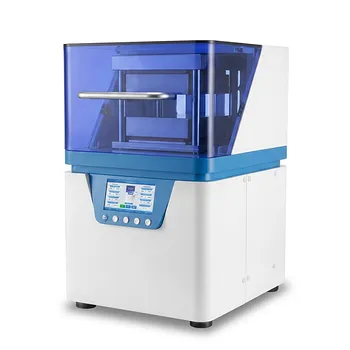
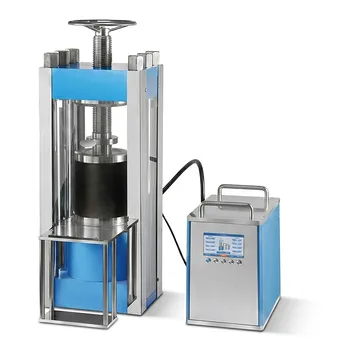
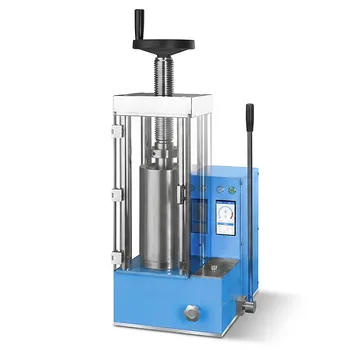
An electrical heat press is defined by its focus on precision control and automated consistency. At its most fundamental level, this equipment features dual built-in digital thermometers and heaters to maintain exact temperatures. It also integrates a digital timer that automatically starts a countdown when the unit is closed, signaling with an audible alarm when the cycle is finished.
The core value of an electrical heat press lies in removing human error; by automating time and temperature regulation, it ensures identical results across every single cycle.
Achieving Thermal Consistency
The primary advantage of an electrical heat press is its ability to regulate heat with distinct accuracy.
Dual Temperature Monitoring
To prevent cold spots, these machines often utilize dual built-in digital thermometers. By monitoring temperature from multiple points, the system ensures the entire platen remains at the target heat level.
Integrated Heating Elements
Paired with the thermometers are dual built-in heaters. These work in tandem to respond immediately to temperature drops, maintaining thermal stability even during continuous use.
Pulse Heating Technology
In more advanced industrial models, pulse heating technology may be employed. This allows for rapid temperature adjustments with a sampling frequency as fast as 0.1 seconds, offering granular control over the heating curve.
Automation and Workflow
Beyond temperature, the electrical heat press is designed to streamline the physical application process.
Automatic Cycle Timing
A standard feature is the digital timer, which removes the guesswork from processing. The timer engages the moment the unit is pressed shut and sounds an audible alarm upon completion, preventing scorching or over-processing.
Advanced Alignment Systems
High-end units may include a CCD vision system for precise alignment. This is often paired with a silicone belt indexing mechanism or stroke-adjustable cylinders to ensure the material is positioned exactly right every time.
Diversified Platform Modes
To suit different production lines, these machines can offer various working modes. These include single, rotating, or left-right moving platforms, allowing operators to prepare one item while another is being pressed.
Operator Safety and Structure
For larger or industrial-grade electrical presses, structural integrity and safety become critical features.
Rigorous Safety Mechanisms
Advanced units prioritize operator safety with features like two-hand start buttons and emergency stop switches. Some also include safety hand gratings and three-sided sealed safety doors to prevent accidental contact during the heating cycle.
High-Precision Structure
To handle high pressure without warping, these machines often utilize a four-column and three-plate structure. This design ensures the platen descends evenly, applying uniform pressure across the entire surface area.
Understanding the Trade-offs
While advanced features offer precision, they introduce complexity that must be managed.
Complexity vs. Maintenance
Features like CCD vision systems and pulse heating significantly increase the machine's complexity. While they offer superior precision, they also require more specialized maintenance and calibration than simpler, standard units.
Throughput vs. Setup Time
Machines with diversified working modes and adjustable strokes are excellent for versatility. However, switching between these modes can increase setup time, potentially slowing down operations if you frequently change product types.
Making the Right Choice for Your Goal
Selecting the right feature set depends entirely on your production volume and precision requirements.
- If your primary focus is consistent small-batch production: Prioritize a unit with dual digital thermometers and an automatic timer to ensure basic repeatability without overcomplicating the workflow.
- If your primary focus is high-precision industrial manufacturing: Look for pulse heating technology and a four-column structure to guarantee the extreme accuracy required for sensitive materials.
Automation in a heat press is not just about convenience; it is about guaranteeing that the hundredth press is identical to the first.
Summary Table:
| Feature Category | Key Component | Primary Benefit |
|---|---|---|
| Thermal Control | Dual Digital Thermometers & Heaters | Eliminates cold spots; ensures exact, uniform temperature. |
| Automation | Digital Timer & Audible Alarm | Removes human error; guarantees cycle-to-second consistency. |
| Precision | Pulse Heating & CCD Vision | Rapid temperature adjustments and perfect material alignment. |
| Construction | Four-Column & Three-Plate Structure | Distributes pressure evenly to prevent platen warping. |
| Safety | Two-Hand Start & Emergency Stops | Minimizes risk of injury during high-heat/high-pressure cycles. |
Elevate Your Material Research with KINTEK
Consistency is the backbone of scientific excellence. KINTEK specializes in comprehensive laboratory pressing solutions tailored for precision-driven research. From manual and automatic heated models to glovebox-compatible and isostatic presses, we provide the tools you need for reliable battery research and material synthesis.
Why choose KINTEK?
- Unmatched Precision: Advanced pulse heating and dual-monitoring systems.
- Versatile Solutions: Cold and warm isostatic presses for specialized applications.
- Safety First: Industrial-grade safety mechanisms integrated into every design.
Contact KINTEK Today for a Tailored Consultation
Related Products
- Cylindrical Lab Electric Heating Press Mold for Laboratory Use
- Automatic Hydraulic Heat Press Machine with Multi Stage Programmable Control and Integrated Water Cooling Plate Size 180x180mm
- Automatic Hydraulic Hot Press with Large Plate and Precision Temperature Control for Advanced Material Sample Preparation and Industrial Research
- Automatic Heated Hydraulic Press Machine with Hot Plates for Laboratory
- Heated Hydraulic Press Machine with Heated Plates for Vacuum Box Laboratory Hot Press
People Also Ask
- How does a laboratory electric heated press ensure sample quality? Optimize SiR-EPDM vulcanization and molding.
- What role does a laboratory electric heated press play in polymer composite fabrication? Key for Standardized Specimens
- What role does a laboratory electric heating press play in NBR molding? Master Vulcanization & Material Density
- Why is a laboratory electric heating press required for PP/EPDM molding? Achieve Superior Specimen Integrity
- What is the purpose of incorporating cartridge heaters into a lab press mold for MLCC block compression? Optimize Results