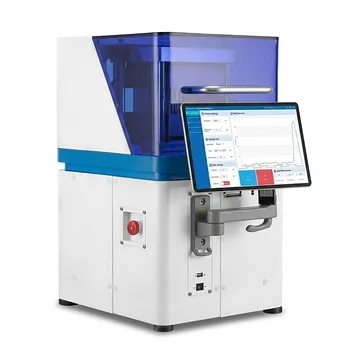
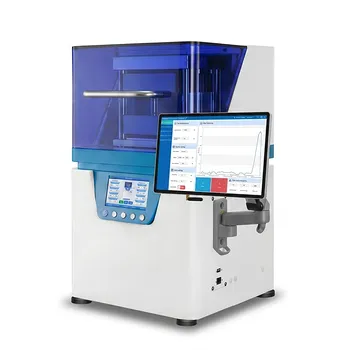
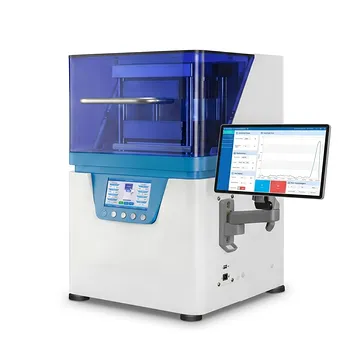
Laboratory presses are versatile precision instruments designed to bridge the gap between theoretical material science and physical application. While they serve as the backbone for research and development and materials testing, they are equally critical for short production runs, cell manufacturing, and lean manufacturing workflows across pharmaceutical, rubber, and plastic industries.
Core Takeaway A laboratory press is not merely a crushing tool; it is a scalability engine. It allows engineers to simulate full-scale manufacturing conditions on a benchtop, ensuring that R&D formulations, quality control samples, and limited production runs meet precise specifications before high-volume investment.
Bridging the Gap: Research and Development
Prototyping and Cell Manufacturing
In the early stages of product development, agility is essential. Laboratory presses facilitate cell manufacturing and lean manufacturing processes.
They allow engineers to produce small batches of a product to test feasibility without interrupting mass production lines. This capability is vital for verifying design concepts and material behaviors under stress.
New Material Formulation
Developing novel materials requires testing how they react to heat and pressure. Lab presses are used extensively to create new composite structures.
Researchers use them to study material properties under compression, determining the viability of new rubber, plastic, or ceramic formulations.
Critical Applications in Analysis and Quality Control
Sample Preparation for Spectroscopy
One of the most frequent uses of laboratory presses is preparing solid samples for analytical testing.
Technicians use these presses to create compressed pellets from powdered materials. These uniform pellets are essential for spectroscopy, specifically for infrared (IR) transmission sampling and X-ray fluorescence (XRF) spectroscopy.
Compacting and Pelletizing
Beyond analysis, the physical act of compacting powder is a critical test in itself.
In the pharmaceutical and metallurgy sectors, presses reduce porosity and increase density to create bricks, briquettes, or pills. This ensures consistent dosage and structural integrity in the final product.
Industrial Fabrication Capabilities
Molding and Lamination
Laboratory presses are capable of performing complex fabrication tasks on a smaller scale.
They are widely used for laminating—bonding different materials into multilayer structures—and molding plastics and ceramics into precise forms. This includes embossing and pressure forming operations.
Curing and Bonding
With heated platens often capable of reaching between 600°F and 1200°F, these presses enable thermal processing.
They promote the proper curing of adhesives, composites, and coatings. This thermal application enhances the chemical properties of the material, ensuring durability and performance.
Understanding Operational Trade-offs
Volume vs. Precision
The primary limitation of a laboratory press is throughput. They are optimized for short and limited production runs or single-sample preparation.
If your goal is high-speed mass production, a lab press acts only as the pilot unit, not the final manufacturing solution.
Tonnage Limitations
While powerful, laboratory presses typically generate force ranging from 15 to upwards of 100 tons.
This is sufficient for most R&D and pilot applications, but extremely large industrial components may require heavy industrial presses that exceed the footprint and tonnage of standard lab units.
Making the Right Choice for Your Goal
To maximize the value of a laboratory press, align the machine's capabilities with your specific operational phase:
- If your primary focus is Research & Development: Prioritize units with precise digital temperature control and heated platens to accurately simulate curing and molding conditions.
- If your primary focus is Analytical Quality Control: Focus on the press's ability to produce highly uniform pellets to ensure consistent spectroscopy results (FTIR or XRF).
- If your primary focus is Lean Manufacturing: Select a unit known for durability and repeatability to handle frequent short-run production cycles without variation.
By treating the laboratory press as a precision instrument rather than a blunt force tool, you ensure the integrity of your materials from the first test sample to the final product.
Summary Table:
| Application Category | Primary Uses & Benefits |
|---|---|
| Research & Development | Prototyping, cell manufacturing, and testing new material formulations |
| Analytical Testing | Creating pellets for XRF/FTIR spectroscopy and quality control |
| Material Processing | Compacting powders, pelletizing pharmaceuticals, and metallurgy |
| Industrial Fabrication | Laminating, molding, curing adhesives, and embossing ceramics |
| Process Simulation | Simulating full-scale production conditions on a benchtop scale |
Elevate Your Material Research with KINTEK Precision
From specialized battery research to high-stakes pharmaceutical development, KINTEK provides the precision pressing solutions your laboratory demands. Whether you need manual, automatic, heated, or multifunctional models, or advanced cold and warm isostatic presses, our equipment is engineered for accuracy and scalability.
Ready to optimize your R&D and quality control? Contact KINTEK Today to Find Your Ideal Pressing Solution
Related Products
- Laboratory Hydraulic Press Lab Pellet Press Button Battery Press
- Laboratory Hydraulic Press Lab Pellet Press Machine for Glove Box
- Laboratory Split Manual Heated Hydraulic Press Machine with Hot Plates
- Laboratory Hydraulic Pellet Press for XRF KBR FTIR Lab Press
- Laboratory Hydraulic Split Electric Lab Pellet Press
People Also Ask
- How is a laboratory hydraulic press used for HAP composite gels? Master Mineral Substrate Standardization
- What role does a laboratory hydraulic press play in the preparation of piezoelectric ceramic discs for DC-PG? | KINTEK
- What role does a laboratory hydraulic press play in reaction pellets? Optimizing Lunar Soil and Metal Fuel Density
- Why is a laboratory hydraulic press required for PBAT and PLA sample preparation? Achieve Flawless Characterization
- What role does a laboratory hydraulic press play in the assembly of all-solid-state battery test cells? Expert Guide