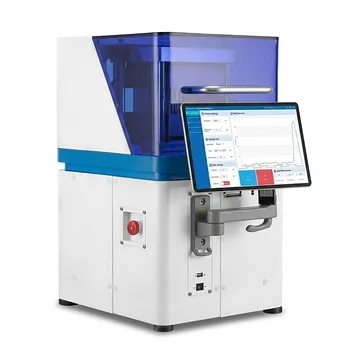
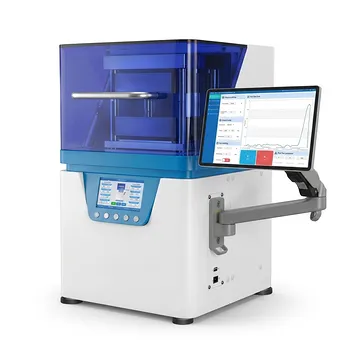
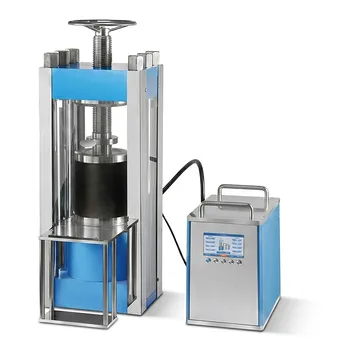
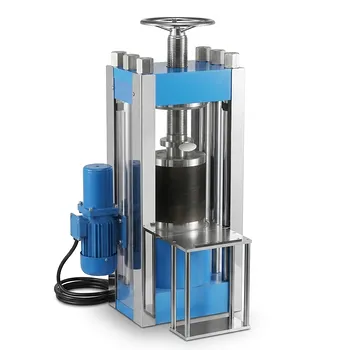
Safe operation of a heated lab press relies on a strict combination of operator training, protective gear, and equipment maintenance. To operate these machines safely, you must utilize appropriate personal protective equipment (PPE)—specifically high-temperature gloves and safety glasses—while strictly adhering to the manufacturer's operational guidelines and emergency procedures.
Core Takeaway Operating a heated lab press involves managing the dual hazards of extreme thermal energy and immense clamping force. Safety is ensured not just by following a checklist, but by validating material compatibility, maintaining a well-ventilated environment, and rigorously inspecting structural components to prevent mechanical failure.
Critical Personal Safety Protocols
Mandatory Protective Equipment
You must never operate a heated press without the correct PPE. This includes lab coats, safety glasses, and closed-toe shoes to protect against general laboratory hazards.
High-temperature gloves are non-negotiable when handling materials near the heated platens. These prevent severe burns during the loading and unloading process.
The "Hands-Off" Rule
Due to the high clamping pressure, the most significant risk of physical injury involves crushing. You must keep fingers and hands strictly away from the platens during the compression cycle.
Training and Authorization
Effective safety starts with knowledge. Every user must undergo a thorough training procedure that covers standard operation, specific machine quirks, and emergency shutdown protocols before touching the equipment.
Operational Environment and Material Handling
Assessing Material Compatibility
Before applying pressure, verify that your materials can withstand the press's specific temperature and pressure ranges. Incompatible materials can fail catastrophically, damaging the machine or causing injury.
Ensure all materials are securely positioned within the press to prevent shifting during operation.
Managing Environmental Hazards
Operate the press in a well-ventilated area. Heating certain materials can release fumes that are hazardous in confined spaces.
Keep the workspace clean and free of clutter. A disorganized work area increases the risk of accidental contact with hot surfaces or moving parts.
Guarding Against Debris
In the event of a material failure or improper handling, debris can be ejected from the press at high speeds. Always wear eye protection to safeguard against flying particles.
Common Pitfalls to Avoid in Maintenance
The Risk of Over-Lubrication
While regular lubrication reduces friction, over-lubrication is a common pitfall that attracts dirt and contaminants. This buildup can compromise the machine's precision and safety mechanisms.
Monitor the lubricant's condition strictly; if it appears discolored or loses viscosity, replace it immediately according to the manufacturer's schedule.
Ignoring Early Warning Signs
Do not ignore unusual vibrations or noises. These are often the first indicators of loose components or misalignment that could lead to structural failure.
Neglecting Seal and Hose Inspections
Regularly inspect hoses, seals, and gaskets for leaks, cracks, or wear. A failure in a hydraulic hose under pressure is a significant safety hazard that can be prevented through routine visual checks.
Making the Right Choice for Your Goal
To ensure your lab press operation remains safe and efficient, align your focus with your specific role:
- If your primary focus is daily operation: Prioritize wearing high-temperature gloves and maintaining a "hands-off" zone around the platens during compression.
- If your primary focus is equipment management: Establish a rigid schedule for inspecting hoses and seals, and ensure training protocols are updated for all new staff.
Safety in the lab is not an accident; it is the result of preparation, respect for the equipment, and consistent vigilance.
Summary Table:
| Safety Category | Key Guidelines & Actions |
|---|---|
| Personal Protection | Wear high-temp gloves, safety glasses, and lab coats; maintain 'hands-off' zones. |
| Environment | Ensure proper ventilation for fumes; keep the workspace clean and clutter-free. |
| Material Handling | Verify thermal/pressure compatibility; ensure materials are securely positioned. |
| Maintenance | Inspect hydraulic hoses and seals for leaks; avoid over-lubrication of moving parts. |
| Training | Mandatory authorization and training on emergency shutdown procedures. |
Elevate Your Research Safety with KINTEK Laboratory Solutions
Don't compromise on safety or precision. KINTEK specializes in comprehensive laboratory pressing solutions tailored for demanding research environments. Whether you are conducting advanced battery research or material synthesis, our range of manual, automatic, heated, and multifunctional models—including glovebox-compatible and isostatic presses—are designed with industry-leading safety features to protect your team and your results.
Ready to upgrade your lab's capabilities? Contact us today to find the perfect, high-performance press for your specific application!
Related Products
- 24T 30T 60T Heated Hydraulic Lab Press Machine with Hot Plates for Laboratory
- Automatic Heated Hydraulic Lab Press 120x120mm Plate Fully Automated Material Research Press
- Automatic Heated Hydraulic Lab Press with Programmable Touch Screen Controls and Precision Temperature Regulation
- Automatic Heated Hydraulic Lab Press Machine 200x200 Plate Size for Battery Research and Materials Science
- Manual Heated Hydraulic Lab Press with Integrated Hot Plates Hydraulic Press Machine
People Also Ask
- Function of a Laboratory Hydraulic Press with Heated Platens in SSE? Enhance Battery Density & Conductivity
- Why is a laboratory hydraulic press with heating plates required for PLA/TEC films? Achieve Precise Sample Integrity
- What role does a laboratory heated hydraulic press play in LTCC? Essential for High-Density Ceramic Lamination
- Why reduce load when applying composite strengthening tabs? Protect Specimen Integrity and Data Accuracy
- Why is a laboratory heated hydraulic press utilized during the lamination stage of NASICON green tapes?