Direct analysis of ground powder samples with X-ray Fluorescence (XRF) is technically feasible but inherently compromised by physical inconsistencies in the sample state. The primary limitations arise from the non-uniform nature of loose powder, specifically the presence of large void spaces, which disrupt the instrument's ability to collect a representative signal and negatively impact overall accuracy.
The presence of air gaps within loose powder leads to ineffective sampling and inconsistent density. To counteract this, a large depth of material is required, but the resulting data will still suffer from reduced accuracy compared to prepared solids.
The Physics of Powder Analysis
The Problem with Void Spaces
Ground powder is not a solid, continuous mass; it is an aggregation of particles separated by air. The primary reference highlights that large void spaces are inherent to this sample form.
When X-rays interact with the sample, these voids create inconsistencies. The beam is not striking a uniform surface, but rather a variable landscape of matter and empty space.
Ineffective Sampling
Because the X-rays are interacting with a mix of particles and air gaps, the resulting signal does not perfectly reflect the material's composition.
This structural inconsistency leads to ineffective sampling. The detector receives data that is skewed by the physical arrangement of the particles rather than just their chemical elemental makeup.
Understanding the Trade-offs
The Requirement for Sample Depth
Loose powder has a much lower density than a solid sample due to the trapped air.
To compensate for this low density, the method necessitates a large depth of material. You cannot analyze a thin dusting of powder; you need a significant volume to ensure the X-rays interact with enough matter to generate a signal.
The Impact on Accuracy
The combination of void spaces and the requirement for deep penetration introduces significant variability.
These physical limitations directly and negatively affect the accuracy of the analysis. Quantitative results derived from loose powder are generally less reliable than those obtained from fused beads or pressed pellets, where void spaces are eliminated.
Making the Right Choice for Your Goal
While direct analysis eliminates sample preparation time, it sacrifices data quality.
- If your primary focus is rapid, qualitative identification: Direct analysis may be acceptable for quick screening, provided you have a sufficient volume of material to create the required depth.
- If your primary focus is precise quantitative data: You should avoid direct powder analysis and process the sample to remove void spaces, ensuring higher accuracy.
Proper sample preparation is the price of precision in XRF analysis.
Summary Table:
| Factor | Loose Powder Analysis | Pressed Pellet/Solid Analysis |
|---|---|---|
| Sample Density | Low (due to air gaps) | High (compacted) |
| Accuracy | Lower (qualitative focus) | Higher (quantitative precision) |
| Void Spaces | Present; disrupt X-ray beam | Eliminated; uniform surface |
| Preparation Time | Minimal/None | Requires pressing or fusing |
| Sample Depth | High volume required | Minimal volume required |
Achieve High-Precision XRF Results with KINTEK
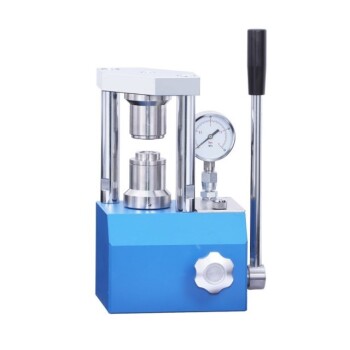
Don't let void spaces compromise your laboratory's data integrity. KINTEK specializes in comprehensive laboratory pressing solutions designed to transform loose powders into uniform, high-density samples for superior analysis.
Whether you are conducting battery research or material science studies, we offer a range of manual, automatic, heated, and multifunctional models, alongside specialized cold and warm isostatic presses. Elevate your analytical accuracy today—contact us now to find the perfect pressing solution for your lab!
Related Products
- XRF KBR Plastic Ring Lab Powder Pellet Pressing Mold for FTIR
- XRF KBR Steel Ring Lab Powder Pellet Pressing Mold for FTIR
- Lab XRF Boric Acid Powder Pellet Pressing Mold for Laboratory Use
- Laboratory Hydraulic Pellet Press for XRF KBR FTIR Lab Press
- Automatic Laboratory Hydraulic Press for XRF and KBR Pellet Pressing
People Also Ask
- What is the purpose of making KBr pellets for FTIR? Achieve Precise Molecular Analysis with Solid Samples
- What factors should be considered when choosing a lab press for XRF pellet preparation? Ensure Accurate and Consistent Results
- Why are pellets used in XRF analysis, and what is their limitation? Boost Accuracy and Speed in Your Lab
- How are pellets prepared for XRF analysis and what is a potential drawback? Master XRF Sample Prep and Accuracy
- What are the different types of XRF pellet preparation methods available? Manual, Hydraulic, and Automated Presses Explained