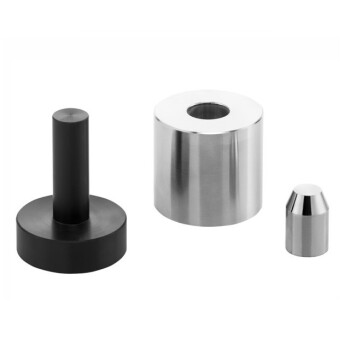
The integration of LiNi0.5Mn1.5O4 (LNMO) electrodes requires exacting standards for geometric precision and surface flatness. To ensure successful pouch cell performance, particularly with large-area electrodes having specific loadings (such as 8.2 mg/cm²), manufacturers must utilize precision cutting and controlled compaction. These processes are essential to establish uniform pressure distribution across the entire electrode surface.
Core Insight Processing consistency is the gatekeeper for LNMO performance; without absolute mechanical uniformity, the material suffers from uneven current distribution. This directly leads to local overheating and lithium plating, negating the long-term cycling benefits of the material.
The Criticality of Mechanical Uniformity
Geometric Precision and Flatness
For LNMO electrodes to function correctly within a pouch cell, high standards for flatness are non-negotiable. Variations in the electrode's geometry can lead to poor contact between cell layers.
Handling Large-Area Electrodes
Maintaining consistency becomes increasingly difficult as the electrode surface area grows. Specific attention is required for electrodes with significant mass loadings, such as 8.2 mg/cm², where physical irregularities can have magnified effects on cell behavior.
The Role of Forming Equipment
Ensuring Uniform Pressure
The primary goal of the integration equipment is to guarantee uniform pressure distribution. Advanced forming equipment achieves this through controlled compaction, ensuring that every millimeter of the electrode experiences the same mechanical stress during assembly.
Precision Cutting
In addition to compaction, the cutting process must be executed with high precision. Accurate cutting prevents edge defects and distortions that could disrupt the uniform physical profile of the electrode stack.
Understanding the Risks of Inconsistency
The Threat of Lithium Plating
The most significant trade-off when compromising on consistency is the increased risk of lithium plating. If the electrode surface is not uniform, current distribution becomes uneven during cycling.
Thermal and Current Instability
Inconsistent surfaces create areas of high resistance and local overheating. These "hot spots" accelerate degradation and prevent the cell from realizing the full potential of high-performance materials, such as fluoride-modified LNMO.
Ensuring Process Success
To maximize the performance of LNMO pouch cells, prioritize the following integration strategies:
- If your primary focus is Cycle Life: Ensure absolute electrode flatness to prevent local overheating and subsequent lithium plating.
- If your primary focus is Manufacturing Quality: Invest in forming equipment capable of delivering uniform pressure distribution across large-area electrodes.
Consistency in the integration process is the only way to fully unlock the long-term cycling advantages of LNMO materials.
Summary Table:
| Requirement Category | Key Specification | Impact on Performance |
|---|---|---|
| Geometric Precision | High standards for flatness | Prevents poor layer contact and edge defects |
| Mass Loading | Targeting ~8.2 mg/cm² | Requires controlled compaction for large areas |
| Pressure Distribution | Uniform across entire surface | Eliminates current hotspots and local overheating |
| Manufacturing Process | Precision cutting & forming | Prevents lithium plating and ensures thermal stability |
Elevate Your Battery Research with Precision Engineering
Unlock the full potential of LNMO materials by ensuring absolute mechanical uniformity in your electrode integration. KINTEK specializes in comprehensive laboratory pressing solutions designed to meet the exacting standards of modern battery research.
Whether you need to maintain perfect flatness for large-area electrodes or ensure uniform pressure distribution, our range of equipment—including manual, automatic, heated, multifunctional, and glovebox-compatible models, as well as cold and warm isostatic presses—provides the consistency your high-performance pouch cells demand.
Don't let inconsistent processing compromise your cycle life. Contact KINTEK today to find the perfect pressing solution and secure your path to reliable, high-energy-density results.
References
- Xingqi Chang, Andreu Cabot. Mitigating the Rock‐Salt Phase Transformation in Disordered LNMO Through Synergetic Solid‐State AlF <sub>3</sub> /LiF Modifications. DOI: 10.1002/advs.202515962
This article is also based on technical information from Kintek Solution Knowledge Base .
Related Products
- Lab Anti-Cracking Press Mold
- Special Shape Lab Press Mold for Laboratory Applications
- Lab Isostatic Pressing Molds for Isostatic Molding
- Lab Round Bidirectional Press Mold
- Lab Infrared Press Mold for Laboratory Applications
People Also Ask
- What is the purpose of incorporating cartridge heaters into a lab press mold for MLCC block compression? Optimize Results
- What is the function of a pressing tool in thermoplastic panels? Master Precision Shaping & Fusion Bonding
- Why is precise cooling management of the lab press mold necessary? Protect Core Integrity in Thermoforming
- What are the requirements for pressing molds when using SSCG? Key Materials for Complex Single Crystal Production
- How do industrial-grade pressure molds affect zinc metal pouch cells? Maximize Energy Density & Performance