The two main types of isostatic pressing are Cold Isostatic Pressing (CIP) and Hot Isostatic Pressing (HIP).
While both methods utilize omni-directional pressure to compact powders, the fundamental differentiator is temperature. CIP operates at ambient room temperature to shape materials, whereas HIP applies high heat simultaneously with pressure to modify material properties and eliminate porosity.
Core Takeaway Isostatic pressing is defined by its ability to apply equal pressure from all directions, resulting in highly uniform density. The choice between Cold (CIP) and Hot (HIP) depends on whether your goal is initial compaction (forming a shape) or full densification (perfecting the microstructure).
Cold Isostatic Pressing (CIP)
CIP is primarily used to consolidate powder into a solid, shaped mass known as a "green" part. It operates at room temperature using a liquid medium to transmit pressure.
The Basic Mechanism
In this process, powder is compacted at ambient temperatures. The material is typically sealed within a flexible mold (often rubber or elastomer).
Achieving Uniformity
Because the pressure is applied via a fluid, it acts equally against the mold from every angle. This results in a "green" compact with highly uniform density, which is often processed further (e.g., sintered) to achieve final strength.
The Two Sub-categories of CIP
Within the category of Cold Isostatic Pressing, there are two distinct tooling methods:
1. Wet-Bag Technology The powder is encased in a rubber sheath and completely immersed in a liquid pressure vessel. This method is versatile and ideal for large or complex parts, but it is generally a batch process.
2. Dry-Bag Technology The tooling is fixed within the pressure vessel and not immersed. Instead, high-pressure fluid is pumped into internal channels within the tooling itself. This allows for faster cycles and is better suited for high-volume automated production.
Hot Isostatic Pressing (HIP)
HIP is a more aggressive process that combines high pressure with extreme temperatures to achieve near-zero porosity.
Simultaneous Heat and Pressure
Unlike CIP, HIP subjects the material to heat (up to 2,200°C) and pressure at the same time. The pressurizing medium is typically a gas rather than a liquid.
Material Densification
This environment causes plastic deformation, creep, and diffusion bonding. The primary goal is to close internal voids and microporosity in metals and ceramics, significantly improving fatigue life and structural integrity.
Common Applications
HIP is essential for critical, high-performance components. It is widely used in aerospace, nuclear fuel production, and medical implants where material failure is not an option.
Understanding the Trade-offs
While CIP and HIP are the two dominant categories, it is important to understand the nuance of the technology landscape to avoid selecting the wrong process.
Warm Isostatic Pressing (WIP)
A third, less common variation exists called Warm Isostatic Pressing. This operates at temperatures up to approximately 100°C. It serves as a middle ground for specific chemical compounds or plastics that require slight heating to bond but cannot withstand the extreme temperatures of HIP.
Cost vs. Capability
CIP is generally more cost-effective for creating the initial shape of a component. HIP is a capital-intensive process usually reserved for final densification or rejuvenating used parts to extend their service life.
Making the Right Choice for Your Goal
Selecting the correct method depends entirely on the stage of manufacturing and the material requirements.
- If your primary focus is initial forming: Choose Cold Isostatic Pressing (CIP) to turn loose powder into a handleable, uniformly dense "green" shape ready for sintering.
- If your primary focus is material perfection: Choose Hot Isostatic Pressing (HIP) to eliminate internal voids, maximize density, and ensure the structural integrity of critical components.
- If your primary focus is high-volume automation: Look specifically into Dry-Bag CIP, which offers the uniformity of isostatic pressing with cycle times suitable for mass production.
Ultimately, CIP creates the shape, while HIP perfects the material structure.
Summary Table:
| Feature | Cold Isostatic Pressing (CIP) | Hot Isostatic Pressing (HIP) |
|---|---|---|
| Operating Temp. | Ambient (Room Temperature) | Up to 2,200°C |
| Pressure Medium | Liquid (Water/Oil) | Inert Gas (Argon) |
| Primary Goal | Shaping & Initial Compaction | Full Densification & Void Removal |
| Tooling Type | Wet-Bag or Dry-Bag | Steel/Ceramic Can or Containerless |
| Output State | "Green" part (requires sintering) | Fully dense, high-strength part |
Optimize Your Material Engineering with KINTEK
Precision in material density starts with selecting the right pressing technology. KINTEK specializes in comprehensive laboratory pressing solutions, offering a versatile range of manual, automatic, heated, and multifunctional models. Whether you are conducting cutting-edge battery research or developing high-performance ceramics, our equipment is designed to meet your exact specifications.
Our value to you:
- Versatility: Solutions ranging from glovebox-compatible units to specialized Cold and Warm Isostatic Presses.
- Precision: High-uniformity pressure application for consistent "green" parts and full material densification.
- Expertise: Targeted solutions for advanced industries, including aerospace, medical, and energy storage.
Ready to elevate your lab's capabilities? Contact KINTEK today to find the perfect pressing solution for your application!
Related Products
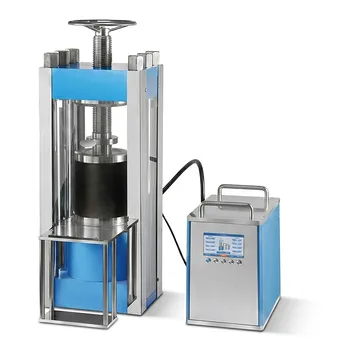
- Split Hot Isostatic Pressing Machine 150 Ton Laboratory Heated Isostatic Press
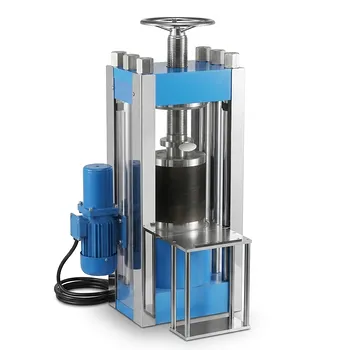
- Electric Split Lab Cold Isostatic Pressing CIP Machine
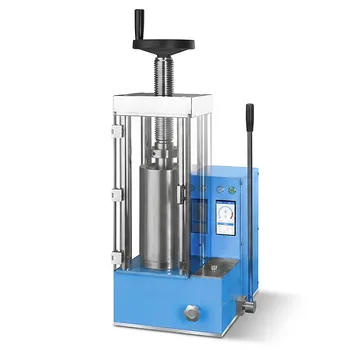
- Electric Lab Cold Isostatic Press CIP Machine
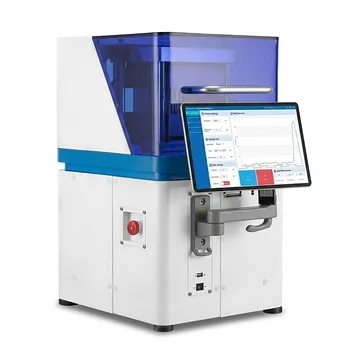
- Automatic Lab Cold Isostatic Pressing CIP Machine
- Warm Isostatic Press for Solid State Battery Research Warm Isostatic Press
People Also Ask
- What is the difference between Hot Isostatic Pressing (HIP) and hot pressing? Choose the Best Method for Your Lab
- What is Hot Isostatic Pressing (HIP)? Learn Operating Conditions for Maximum Density
- What treatment methods are used in Hot Isostatic Pressing (HIP)? Optimize Your Material Densification
- Why is it necessary to reduce the temperature to 80 °C before releasing pressure? Lock Wood Stability & Density
- What is the function of a laboratory heated press in manufacturing thermoplastic syntactic cores? Precision Bonding