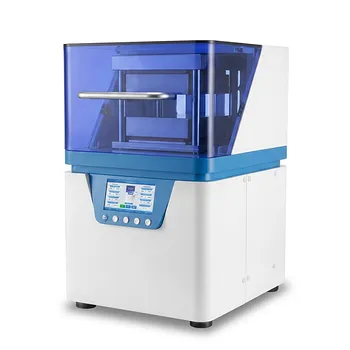
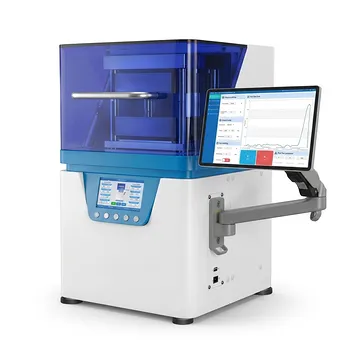
Hydraulic presses derive their durability and efficiency from a combination of robust structural engineering and precise control mechanisms. Their longevity is ensured by hardened steel construction capable of withstanding high-pressure environments, while their efficiency stems from the ability to generate immense force with low input power, significantly reducing sample preparation time compared to manual methods.
Core Takeaway: The value of a hydraulic press lies in its ability to pair heavy-duty physical resilience with sophisticated electronic control. This synergy allows for consistent, high-force operations with minimal maintenance, ensuring long-term stability in both industrial and laboratory settings.
The Engineering Behind Durability
Robust Physical Construction
The primary driver of a hydraulic press's lifespan is its hardened steel construction. These machines are engineered specifically to tolerate the structural stresses of high-pressure operations without warping or fatiguing. This rigid design is essential for maintaining accuracy over years of use in demanding environments.
Leak-Free Design
Modern hydraulic presses often feature an all-in-one leak-free design. By minimizing the number of distinct connection points and seals where fluid can escape, these systems maintain consistent pressure and reduce the likelihood of mechanical failure.
Electronic Stability
Durability extends beyond the metal frame to the internal electronics. High-quality presses integrate well-known, standardized electronic components. This integration ensures operational stability and significantly lowers long-term maintenance costs and downtime associated with proprietary or fragile circuitry.
Built-in Safety Mechanisms
Long-term durability is also a result of preventing catastrophic overload. Features such as pressure relief valves and overload protection ensure the machine never exceeds its design limits. Additionally, physical barriers like Perspex safety guards protect the equipment (and the operator) from debris or sudden material failures.
Operational Efficiency and Performance
High Force, Low Input
Hydraulic systems are inherently efficient because they generate immense force with relatively low energy input. While a pneumatic system might top out around 100 psi, a hydraulic system can efficiently transmit power to achieve pressures in the range of 10,000 psi, making them suitable for heavy-duty tasks like powder compacting and parts manufacturing.
Automation and Programmability
Electric hydraulic presses utilize electric motors to automate the pressing cycle, removing the variability of manual operation. Features like auto top-up (to maintain a consistent load) and step functions (for gradual load increases) allow for "set it and forget it" operations.
Precision Control
Efficiency is lost if the output is inaccurate. Hydraulic presses offer precise control over piston movement, speed, and pressure via advanced control valves and LED touchscreens. This allows operators to run custom-programmed cycles, ensuring that specific parameters for tasks like XRF sample preparation or hot embossing are met exactly every time.
Versatility of Application
A single hydraulic press can often replace multiple single-purpose machines. Their ability to switch between working modes and adapt to different tasks—from simple flattening and stamping to complex molding and laminating—optimizes workflow and floor space usage.
Understanding the Trade-offs
While hydraulic presses are powerful, their complexity requires careful consideration.
Complexity vs. Maintenance
The integration of advanced electronics and touchscreens boosts efficiency but introduces more potential points of failure than a purely mechanical manual press. Reliability depends heavily on the quality of the electronic components used.
Speed vs. Precision
Hydraulic presses are generally slower than mechanical flywheel presses used in high-speed stamping. They excel in pressure maintenance and depth accuracy, but if your primary metric is parts-per-minute speed rather than force or precision, a hydraulic system may not be the optimal choice.
Making the Right Choice for Your Goal
To maximize the return on your investment, align the press features with your specific operational needs.
- If your primary focus is Laboratory Precision: Prioritize programmability and auto top-up features to ensure every sample pellet is prepared with identical pressure and dwell times.
- If your primary focus is Industrial Durability: Prioritize hardened steel construction and overload protection to withstand continuous, heavy-duty cycling without structural fatigue.
- If your primary focus is Workflow Efficiency: Prioritize electric motor automation and pre-stored programs to reduce operator intervention and speed up cycle completion.
Select a press that balances raw force with the specific level of control your application demands.
Summary Table:
| Feature | Durability Benefit | Efficiency Benefit |
|---|---|---|
| Hardened Steel | Resists warping under high pressure | Ensures consistent structural accuracy |
| Electric Automation | Reduces manual wear and tear | Enables programmable "set-and-forget" cycles |
| Leak-Free Design | Prevents fluid loss and mechanical failure | Maintains steady pressure with low energy input |
| Safety Valves | Prevents catastrophic overload damage | Protects equipment for continuous operation |
| Precision Controls | Minimizes operational stress | Optimized for XRF, battery, and powder research |
Maximize Your Lab’s Productivity with KINTEK Pressing Solutions
At KINTEK, we specialize in comprehensive laboratory pressing solutions designed to meet the rigorous demands of modern research. Whether you are conducting advanced battery research or routine sample preparation, our diverse range of equipment provides the resilience and precision you need to succeed.
Our value to your research includes:
- Unmatched Versatility: Choose from manual, automatic, heated, and multifunctional models.
- Specialized Applications: Glovebox-compatible designs and high-performance cold/warm isostatic presses.
- Reliable Engineering: Robust systems built for long-term stability and high-force accuracy.
Ready to upgrade your laboratory capabilities? Contact KINTEK today to find your perfect pressing solution!
Related Products
- Automatic Hydraulic Hot Press with Large Plate and Precision Temperature Control for Advanced Material Sample Preparation and Industrial Research
- Automatic Hydraulic Heat Press Machine with Multi Stage Programmable Control and Integrated Water Cooling Plate Size 180x180mm
- Automatic High Temperature Heated Hydraulic Press Machine with Heated Plates for Lab
- Automatic Heated Hydraulic Lab Press with Programmable Touch Screen Controls and Precision Temperature Regulation
- Manual Heated Hydraulic Lab Press with Integrated Hot Plates Hydraulic Press Machine
People Also Ask
- What are the specific features and applications of hydraulic hot press machines? Precision Solutions for Modern Labs
- How does an automatic hydraulic press operate? Achieve Precision and Consistency in Lab Pelleting
- What are the advantages and common applications of an automatic hydraulic press? Elevate Your Lab's Precision
- What is the technical significance of setting a precise dwell time? Achieve Peak Material Density and Stability
- When is an automatic hydraulic press more suitable than a manual press? Scale Your Lab with Precision & Speed