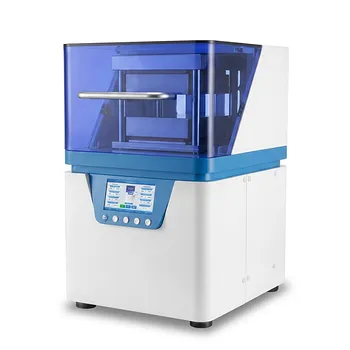
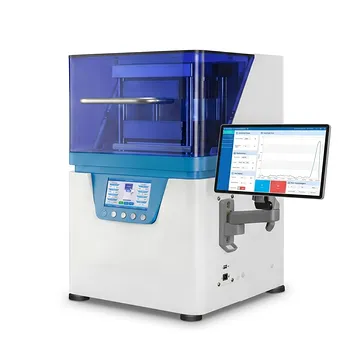
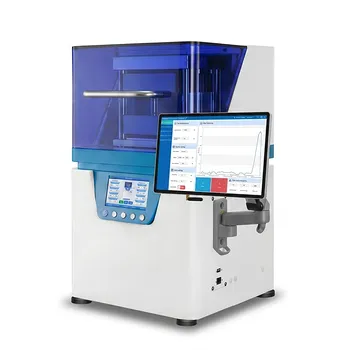
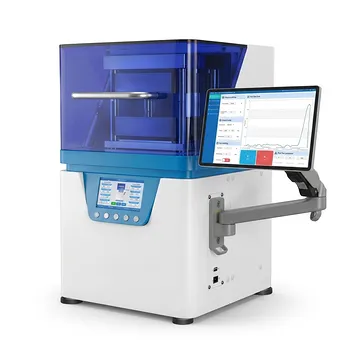
Modern hydraulic presses achieve precision through a combination of adjustable pressure regulation, digital monitoring systems, and programmable automation. These features allow operators to replace manual estimation with exact, repeatable force application, ensuring that critical variables remain constant across experiments or production runs.
Core Takeaway: The primary advantage of modern hydraulic press features is the shift from operator-dependent results to mechanical reproducibility. By digitizing control and automating pressure application, these machines eliminate the variability inherent in manual operation, guaranteeing consistent pellet quality and reliable data.
Mechanisms for Precise Force Application
Adjustable Pressure Settings
To achieve valid scientific results, you must have total command over the force applied to your sample. Adjustable pressure settings allow the operator to dictate the exact load required for a specific material or application. This capability is the baseline requirement for producing high-quality pellets with uniform density.
Custom Programmable Loads
Advanced powered presses often feature the ability to set custom programmable loads. This allows for the creation of specific pressure "recipes" that can be saved and repeated. This is particularly vital when working with materials that require specific ramp-up rates or dwell times to prevent cracking or structural failure.
Multiple Working Modes
Versatility plays a crucial role in control. Modern units often include multiple working modes and pre-stored programs. Whether the task is routine sample preparation or complex material testing, the machine can adapt its operation to fit the specific industrial or laboratory requirement without requiring manual reconfiguration.
Visibility and Monitoring Systems
Digital Displays and LED Touchscreens
Control is impossible without accurate feedback. Modern presses utilize digital displays and, in premium models, LED touchscreens. These interfaces provide real-time data on the pressure being applied, moving the operator away from vague analog gauges to precise numerical values.
Real-Time Error Detection
Visual monitoring systems also serve as a diagnostic tool. By clearly displaying performance metrics, these interfaces allow operators to instantly spot deviations or irregularities. This ensures that any issue affecting the sample quality is identified and corrected immediately.
Enhancing Stability and Usability
Integrated Safety Mechanisms
Precision cannot exist without a safe operating environment. Built-in safety mechanisms ensure that the machine operates within its mechanical limits, preventing over-pressurization that could damage the machine or the sample. This reliability is essential for maintaining long-term consistency in experimental setups.
High-Quality Electronic Components
The reliability of a press is dictated by its internal architecture. The integration of well-known, high-quality electronic components ensures operational stability. By reducing the risk of electronic drift or failure, these components minimize downtime and lower maintenance costs, ensuring the machine remains precise over years of use.
Reducing Operator Fatigue
While often overlooked, operator fatigue is a major enemy of precision. Hydraulic presses—especially mini versions—require significantly less physical effort than manual alternatives. By reducing the physical burden, the risk of human error decreases, leading to higher repeatability in sample production.
Understanding the Trade-offs
Complexity vs. Necessity
While features like LED touchscreens and custom programmable loads offer superior control, they may exceed the needs of every laboratory. Powered presses come in variations with or without these advanced interfaces.
Application Suitability
For basic tasks, a simpler hydraulic setup may suffice. However, as the need for high-volume production or complex material analysis increases, the absence of programmable automation becomes a bottleneck. Investing in advanced features is a trade-off between higher initial capability and the specific demands of your daily workflow.
Making the Right Choice for Your Goal
When selecting a hydraulic press, match the feature set to your specific output requirements.
- If your primary focus is High-Volume Production: Prioritize presses with custom programmable loads and pre-stored programs to automate the workflow and ensure every unit is identical.
- If your primary focus is Complex Material Research: Look for models with LED touchscreens and adjustable pressure settings to gain the granular control needed to investigate material behavior under extreme conditions.
- If your primary focus is Basic Sample Prep: Ensure the unit has digital displays and safety mechanisms, which provide sufficient precision without the complexity of full automation.
True precision comes not just from applying force, but from the ability to apply the exact same force every single time.
Summary Table:
| Feature | Functionality | Primary Benefit |
|---|---|---|
| Digital Displays | Real-time numerical feedback | Eliminates operator estimation error |
| Programmable Loads | Saveable pressure 'recipes' | Ensures high-volume repeatability |
| Multiple Modes | Pre-stored operation programs | Versatility for diverse material testing |
| Safety Mechanisms | Over-pressurization limits | Protects sample integrity and equipment |
| Touchscreen Interface | Intuitive control & monitoring | Simplifies complex parameter adjustments |
Elevate Your Laboratory Precision with KINTEK
Maximize your research accuracy with KINTEK’s comprehensive laboratory pressing solutions. Whether you require manual simplicity, heated plate precision, or fully automated systems, our equipment is engineered to deliver mechanical reproducibility every time.
Our Value to You:
- Versatile Range: Specialized models including manual, automatic, and multifunctional presses.
- Expert Applications: Ideal for battery research, material science, and sample preparation.
- Advanced Technology: High-quality electronic components and glovebox-compatible designs.
- Custom Solutions: From cold to warm isostatic presses, we match the tool to your exact workflow requirements.
Ready to transform your results from operator-dependent to digitally precise?
Related Products
- Automatic Hydraulic Hot Press with Large Plate and Precision Temperature Control for Advanced Material Sample Preparation and Industrial Research
- Automatic Hydraulic Heat Press Machine with Multi Stage Programmable Control and Integrated Water Cooling Plate Size 180x180mm
- Automatic High Temperature Heated Hydraulic Press Machine with Heated Plates for Lab
- Automatic Heated Hydraulic Lab Press with Programmable Touch Screen Controls and Precision Temperature Regulation
- Manual Heated Hydraulic Lab Press with Integrated Hot Plates Hydraulic Press Machine
People Also Ask
- What are the specific features and applications of hydraulic hot press machines? Precision Solutions for Modern Labs
- How does an automatic hydraulic press operate? Achieve Precision and Consistency in Lab Pelleting
- What are the advantages and common applications of an automatic hydraulic press? Elevate Your Lab's Precision
- What is the technical significance of setting a precise dwell time? Achieve Peak Material Density and Stability
- When is an automatic hydraulic press more suitable than a manual press? Scale Your Lab with Precision & Speed