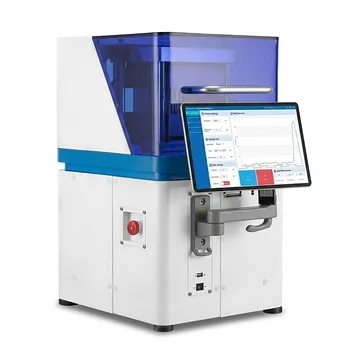
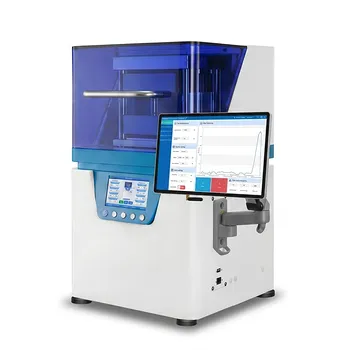
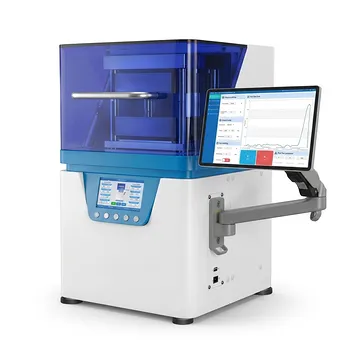
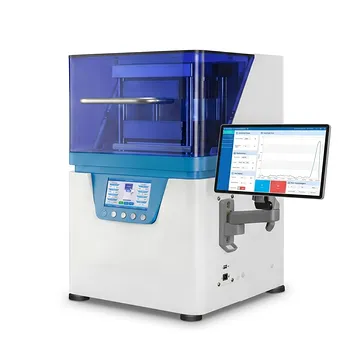
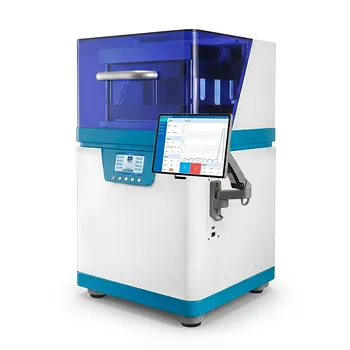
The molded board capabilities of a laboratory platen press are centered on the preparation of samples for research, development, and quality testing. These presses offer the flexibility to easily switch between different sample types, making them effective for processing wood and laminates as well as a vast array of other industrial materials.
By prioritizing versatility, this equipment allows laboratories to efficiently prepare test specimens across diverse categories, from wood composites and laminates to advanced polymers.
Core Capabilities in Sample Preparation
The primary function of the laboratory platen press in this context is to support the rigorous demands of Research and Development (R&D) and quality control.
Versatility Across Material Types
The press is not limited to a single substrate. It is engineered to handle molded board applications such as wood and laminating, while retaining the ability to process rubbers, polymers, and composites.
Agility in Material Switching
A standout feature is the system's design for rapid changeovers. Operators can transition between testing thermoplastic resins, ceramics, or textiles without significant downtime, streamlining the workflow in a multi-disciplinary lab.
Scope of Industrial Application
While effective for molded boards, the press functions as a central hub for material characterization across several sectors.
Broad Industry Compliance
The equipment supports sample generation for a wide spectrum of industries. This includes heavy industrial applications like ceramics and composites as well as highly regulated sectors like pharmaceutical applications.
Understanding the Operational Focus
To maximize the value of a laboratory platen press, it is critical to understand its specific operational role compared to production machinery.
Sample Preparation vs. Mass Production
These presses are specifically optimized for creating test samples, not for high-volume manufacturing. Their strength lies in precision and adaptability for R&D and Quality Assurance, rather than the speed required for commercial output.
Making the Right Choice for Your Goal
When integrating a platen press into your laboratory workflow, consider your primary objectives:
- If your primary focus is Material Versatility: Ensure the press is configured to handle the specific pressure and thermal requirements of diverse materials like wood, ceramics, and polymers.
- If your primary focus is R&D Efficiency: Leverage the machine's ability to easily switch between sample types to accelerate your development cycles and prototyping.
This technology empowers laboratories to maintain high standards of quality control while fostering innovation across multiple material disciplines.
Summary Table:
| Feature | Functionality & Benefit |
|---|---|
| Material Range | Processes wood, laminates, polymers, rubbers, and ceramics. |
| Switching Agility | Rapid changeovers between different thermoplastic resins and composites. |
| Primary Use Case | Optimized for Research & Development (R&D) and Quality Assurance. |
| Industry Scope | Supports pharmaceuticals, textiles, and heavy industrial applications. |
| Core Advantage | High-precision sample creation tailored for material characterization. |
Elevate Your Material Research with KINTEK Precision
Are you looking to streamline your R&D workflow? KINTEK specializes in comprehensive laboratory pressing solutions, offering manual, automatic, heated, multifunctional, and glovebox-compatible models, as well as cold and warm isostatic presses. Whether you are focused on battery research, advanced polymers, or wood composites, our equipment provides the precision and versatility needed for rigorous material characterization.
Unlock superior sample quality and efficiency today. Contact us now to find the perfect press for your lab!
Related Products
- 24T 30T 60T Heated Hydraulic Lab Press Machine with Hot Plates for Laboratory
- Automatic Heated Hydraulic Lab Press Machine 200x200 Plate Size for Battery Research and Materials Science
- Automatic Heated Hydraulic Lab Press 120x120mm Plate Fully Automated Material Research Press
- Laboratory Split Manual Heated Hydraulic Press Machine with Hot Plates
- Automatic High Temperature Heated Hydraulic Press Machine with Heated Plates for Lab
People Also Ask
- Function of a Laboratory Hydraulic Press with Heated Platens in SSE? Enhance Battery Density & Conductivity
- Why is a laboratory hydraulic press with heating plates required for PLA/TEC films? Achieve Precise Sample Integrity
- What role does a laboratory heated hydraulic press play in LTCC? Essential for High-Density Ceramic Lamination
- Why reduce load when applying composite strengthening tabs? Protect Specimen Integrity and Data Accuracy
- Why is a laboratory heated hydraulic press utilized during the lamination stage of NASICON green tapes?