Heated lab presses act as specialized high-pressure reactors that apply simultaneous mechanical force and thermal energy to raw materials. In the fields of material science and nanotechnology, they are the primary mechanism for synthesizing advanced materials and nanoparticles with engineered physical properties.
By precisely controlling pressure and temperature cycles, these devices facilitate the creation of unique materials with enhanced characteristics—such as superior mechanical strength, optimized electrical conductivity, and improved catalytic activity—that cannot be achieved through standard mixing or heating alone.
Driving Advanced Material Synthesis
The High-Pressure Reactor Mechanism
At their core, heated lab presses function as high-pressure reactors. They do not merely shape materials; they fundamentally alter them.
By subjecting materials to high pressure and heat simultaneously, researchers can drive chemical synthesis and structural changes at the molecular level. This capability is essential for producing advanced nanoparticles and composite materials.
Engineering Specific Properties
The primary function of these presses is to imbue materials with desirable performance metrics.
Through controlled compression and heating, scientists can enhance the mechanical strength of a composite. Similarly, the process allows for the optimization of electrical conductivity and catalytic activity, which are critical for developing next-generation electronic components and energy solutions.
Applications in Nanotechnology and Automation
High-Throughput Research
In modern nanotechnology, the heated lab press is often a critical component of integrated laboratory automation systems.
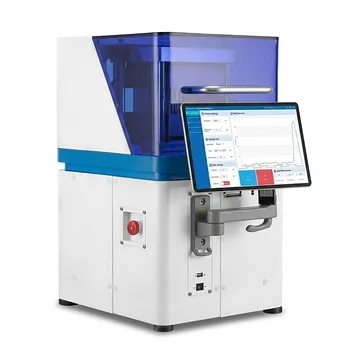
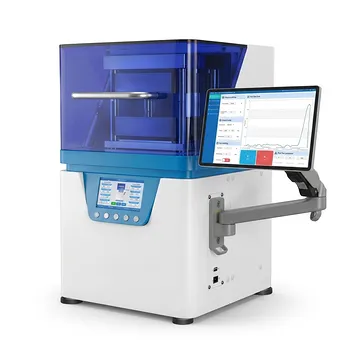
Advanced automatic presses interact with AI models to execute material compaction and pelletizing without manual intervention. This allows for high-throughput screening of theoretical designs, significantly speeding up the cycle from concept to experimental validation.
Reducing Experimental Variation
Automatic presses provide precise control over pressure cycles and dwell times.
By removing the variable of human error, these systems ensure that batch-to-batch variation is minimized. This consistency is vital when validating the properties of new nanostructures, where even minor deviations in processing can alter the material's behavior.
Critical Research and Preparation Functions
Simulating Industrial Conditions
Heated presses allow researchers to simulate industrial hot-pressing processes on a manageable scale.
This creates a controlled environment for studying polymer rheological behavior and phase transition kinetics. It also allows scientists to analyze multi-layer interface bonding properties before moving to mass production.
Versatile Sample Preparation
Beyond synthesis, these presses are indispensable for analytical sample preparation.
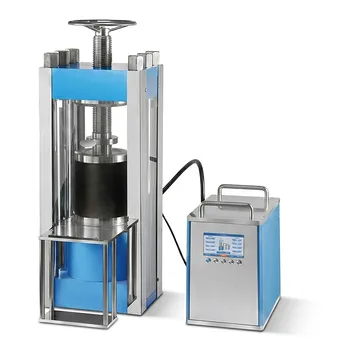
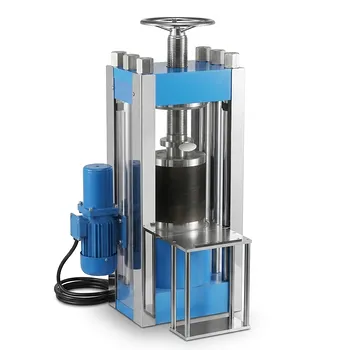
They are widely used to prepare samples for infrared spectroscopy and XRF spectroscopy. Additionally, with heating capabilities up to 500 °C, they are ideal for forming polymer films, laminates, and pellets from ceramic powders.
Understanding the Operational Trade-offs
Scale vs. Precision
While heated lab presses offer enhanced heating efficiency and uniform temperature distribution, they are inherently designed for small-scale operations.
They excel at creating high-quality workpieces with consistent thickness for testing, but they are not substitutes for high-volume industrial manufacturing equipment. Their value lies in the repeatability of characteristics during the R&D and testing phases.
Energy and Environment
Modern presses are designed to be environmentally friendly and minimize heat generation to the surrounding environment.
However, the requirement for flat heating elements to ensure uniformity means the system is specialized. Users must ensure their specific temperature requirements (up to 500 °C) match the press's capabilities, as thermal management is the limiting factor in material compatibility.
Making the Right Choice for Your Goal
When selecting or utilizing a heated lab press, your objective dictates your approach.
- If your primary focus is Advanced Material Synthesis: Prioritize programmable presses that function as high-pressure reactors to optimize specific properties like conductivity and catalytic activity.
- If your primary focus is Nanotechnology Research: Look for automatic presses capable of integrating with AI models to ensure high-throughput consistency and reduced batch variation.
- If your primary focus is Analytical Testing: Ensure the press offers precise temperature control up to 500 °C for accurate spectroscopy sample prep and polymer film creation.
Effective use of a heated lab press transforms raw theoretical data into tangible, high-performance material realities.
Summary Table:
| Feature | Function in Material Science | Key Benefits |
|---|---|---|
| High-Pressure Reaction | Molecular level synthesis | Creates unique physical & chemical properties |
| Thermal Control | Heating up to 500°C | Optimizes catalytic activity & electrical conductivity |
| Automation/AI | High-throughput screening | Minimizes batch variation & speeds up R&D cycles |
| Sample Prep | XRF, IR, & Polymer filming | Produces consistent, high-quality test workpieces |
Elevate Your Material Research with KINTEK Precision
From synthesis to high-throughput screening, KINTEK specializes in comprehensive laboratory pressing solutions designed for the most demanding research environments. Whether you are developing next-generation battery technologies or advanced nanostructures, our range of manual, automatic, heated, and multifunctional presses—including glovebox-compatible and isostatic models—delivers the repeatability and precision your lab requires.
Ready to transform your theoretical designs into high-performance realities? Contact KINTEK today to find your ideal pressing solution
Related Products
- 24T 30T 60T Heated Hydraulic Lab Press Machine with Hot Plates for Laboratory
- Automatic Heated Hydraulic Lab Press 120x120mm Plate Fully Automated Material Research Press
- Automatic Heated Hydraulic Lab Press with Programmable Touch Screen Controls and Precision Temperature Regulation
- Automatic Heated Hydraulic Lab Press Machine 200x200 Plate Size for Battery Research and Materials Science
- Manual Heated Hydraulic Lab Press with Integrated Hot Plates Hydraulic Press Machine
People Also Ask
- Function of a Laboratory Hydraulic Press with Heated Platens in SSE? Enhance Battery Density & Conductivity
- Why is a laboratory hydraulic press with heating plates required for PLA/TEC films? Achieve Precise Sample Integrity
- What role does a laboratory heated hydraulic press play in LTCC? Essential for High-Density Ceramic Lamination
- Why reduce load when applying composite strengthening tabs? Protect Specimen Integrity and Data Accuracy
- Why is a laboratory heated hydraulic press required? Ensure Precise Vulcanization for NBR/EPDM Nanocomposites