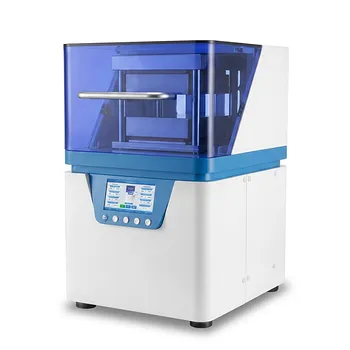
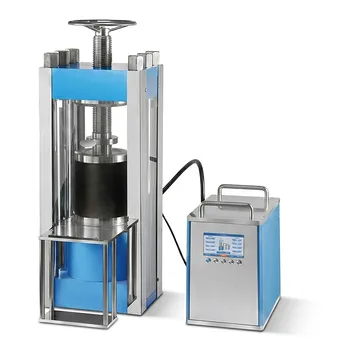
The principle of pulse heating centers on the controlled application of high electrical current through a welding head designed with specific resistance properties. By routing current through a surface characterized by very low electrical resistance, the machine generates immediate thermal energy at the precise point of contact. This process utilizes a transformer to convert power into a high-current, low-voltage state, ensuring rapid and efficient heating.
Core Takeaway: Pulse heating works by directing high current through the path of least resistance—the welding head itself. By manipulating the voltage and pulse ratio, you can instantly control the heating speed and peak temperature, allowing for precise thermal cycling.
The Mechanics of Heat Generation
The Path of Least Resistance
The core mechanism relies on the physical design of the welding head's surface. This component is engineered to have very low electrical resistance.
Because electrical current naturally flows through the path of least resistance, the energy is concentrated specifically within this designed section of the welding head. This concentration of energy is what creates the necessary heat for the bonding process.
High Current, Low Voltage
To achieve the necessary thermal output safely, the hot press machine employs a transformer.
This transformer is responsible for generating a high current while keeping the voltage low. This combination is essential for generating significant heat at the weld head without the risks associated with high-voltage arcing.
Precision and Temperature Control
Regulating via Pulse Ratio
The temperature of the welding head is not fixed; it is dynamically controlled by adjusting the pulse ratio.
The pulse ratio directly dictates the current output. By increasing the pulse ratio, you increase the level of current flowing through the head.
Controlling Heating Speed
There is a direct correlation between the current level and the speed of the thermal cycle.
A greater pulse ratio results in higher current output, which causes the weld head to heat up faster. Conversely, lowering the current allows for a slower, more gradual temperature rise, giving operators distinct control over the process timing.
Operational Considerations
Voltage Management
Precise temperature control requires the constant adjustment of voltage. By changing the voltage, the machine establishes the specific positive current level required for the task.
Responsiveness vs. Stability
The system's ability to heat up rapidly is a significant advantage, but it relies on the correct input settings. An excessively high pulse ratio will yield the fastest heating times, but this requires the system to handle the thermal ramp-up effectively to avoid overshooting the target temperature.
Optimizing Your Process
To apply this principle effectively, you must balance the current input with your material's thermal requirements.
- If your primary focus is Cycle Speed: Increase the pulse ratio to maximize current output, ensuring the weld head reaches the target temperature as quickly as possible.
- If your primary focus is Thermal Precision: Use a lower current level to slow the heating rate, allowing for more granular control over the final bonding temperature.
Mastering pulse heating requires understanding that the weld head itself is the active heating element, driven by the path of least resistance.
Summary Table:
| Feature | Pulse Heating Mechanism | Impact on Process |
|---|---|---|
| Energy Source | High Current, Low Voltage | Safe, rapid heat generation without arcing |
| Heating Element | Welding Head Surface | Focused heat at the path of least resistance |
| Speed Control | Pulse Ratio Adjustment | Higher ratio leads to faster thermal ramp-up |
| Precision | Voltage Management | Dynamic control over peak temperature stability |
| Cooling | Instant Current Cut-off | Rapid cycling for high-efficiency production |
Elevate Your Material Research with KINTEK Precision
Maximize your laboratory efficiency with KINTEK’s advanced pressing solutions. Whether you require manual, automatic, heated, or multifunctional models, our equipment is engineered for the rigorous demands of battery research and material science.
Why choose KINTEK?
- Versatile Range: From glovebox-compatible units to cold and warm isostatic presses.
- Precision Control: Achieve exact thermal and pressure profiles for consistent results.
- Expert Support: Specialized solutions tailored to your specific research applications.
Ready to optimize your bonding and pressing workflows? Contact us today to find the perfect solution!
Related Products
- Automatic High Temperature Heated Hydraulic Press Machine with Heated Plates for Lab
- Heated Hydraulic Press Machine with Heated Plates for Vacuum Box Laboratory Hot Press
- Automatic Hydraulic Heat Press Machine with Multi Stage Programmable Control and Integrated Water Cooling Plate Size 180x180mm
- Automatic Heated Hydraulic Press Machine with Hot Plates for Laboratory
- Laboratory Split Manual Heated Hydraulic Press Machine with Hot Plates
People Also Ask
- Function of a Laboratory Hydraulic Press with Heated Platens in SSE? Enhance Battery Density & Conductivity
- How does a laboratory heated hydraulic press facilitate PBN sample prep for WAXS? Achieve Precise X-Ray Scattering
- What are the requirements for electrode pressing with high-viscosity ionic liquids like EMIM TFSI? Optimize Performance
- What are the industrial applications of heated hydraulic presses? Master Heat & Force for Precision Manufacturing
- Why is a laboratory hydraulic press with heating plates required for PLA/TEC films? Achieve Precise Sample Integrity