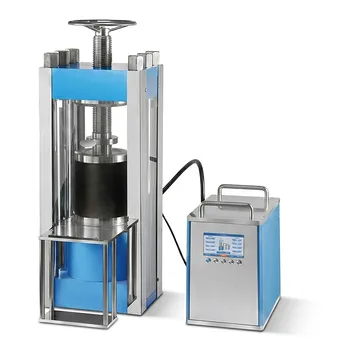
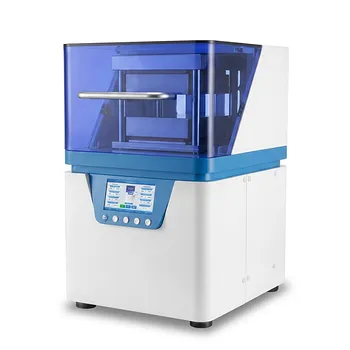
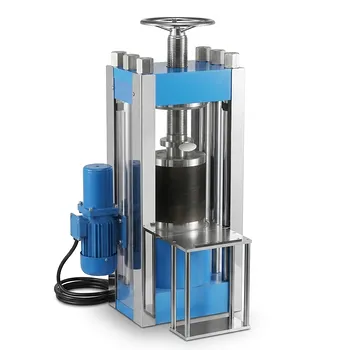
In All-Polypropylene Composite (APPC) fabrication, the high-precision heated press serves as the primary instrument for thermal consolidation. It facilitates the full impregnation of polypropylene reinforcement fabrics by the polypropylene film matrix through the simultaneous application of specific temperatures—typically around 167°C—and segmented pressures ranging from atmospheric levels to 6 MPa. This precise control ensures the transition from individual material layers into a single, structurally uniform, and stable orthotropic plate.
The role of the high-precision heated press is to create a controlled thermal-pressure field that melts the matrix and drives it into the reinforcement structure. By managing the delicate balance between temperature, pressure, and cooling, the press eliminates internal voids and ensures a high-density, cohesive bond between identical polymer types.
Achieving Full Impregnation and Consolidation
The Vital Balance of Thermal Control
The press maintains a precise temperature, such as 167°C, which is high enough to melt the polypropylene film matrix into a flowable state. This thermal precision is critical because it allows the matrix to become mobile without degrading the structural integrity of the polypropylene reinforcement fibers.
Segmented Pressure Application
Pressure is applied in stages, often scaling from atmospheric pressure up to 6 MPa, to physically force the molten matrix into the interstitial spaces of the fabric. This mechanical force is essential for wetting the fibers and ensuring that the matrix fully encapsulates the reinforcement layer.
Elimination of Internal Voids
By providing a constant and uniform pressure field, the heated press effectively expels trapped air bubbles and gases. This process results in a dense microstructure, which is a prerequisite for the composite to achieve its maximum theoretical mechanical strength.
Ensuring Structural Uniformity and Stability
Thickness Consistency and Dimensional Accuracy
The precision of the platens in a heated press ensures that the final APPC sheet has a standardized thickness across its entire surface. This consistency is vital for engineering applications where variations in thickness could lead to unpredictable stress distributions or failure points.
Reduction of Internal Stresses
A high-quality press allows for a controlled cooling process following the heating phase. By managing the rate at which the material solidifies, the press minimizes the buildup of internal processing stresses that could otherwise lead to warping or delamination.
Development of the Orthotropic Plate
The combination of heat and pressure aligns the layers into a structurally stable orthotropic plate. This means the resulting material possesses different, yet controlled, mechanical properties in mutually perpendicular directions, tailored specifically by the stacking sequence.
Understanding the Trade-offs and Pitfalls
The Risk of Thermal Overexposure
While heat is necessary for melting the matrix, exceeding the optimal temperature window can lead to the thermal degradation of the polypropylene. If the temperature is too high, the reinforcement fibers may lose their crystalline structure, significantly weakening the final composite.
Consequences of Inadequate Pressure
Insufficient pressure during the consolidation phase often results in micro-voids and poor interlaminar bonding. These internal defects act as stress concentrators, which can lead to premature material failure under tension or impact.
Pressure Uniformity Challenges
If the press platens are not perfectly parallel or if the pressure distribution is uneven, the composite will suffer from variations in fiber volume fraction. This results in a "patchy" material where some areas are resin-rich and brittle, while others are resin-poor and prone to fraying.
How to Optimize Your Fabrication Strategy
To achieve the best results with a high-precision heated press, your operational parameters should align with your specific material goals:
- If your primary focus is Maximum Mechanical Strength: Prioritize the precise calibration of the 167°C thermal window and use the full 6 MPa pressure range to ensure zero-void consolidation.
- If your primary focus is Dimensional Precision: Focus on the cooling rate control and the parallelism of the press platens to prevent warping and thickness deviations.
- If your primary focus is Research and Testing: Ensure the press is used to create standardized films of specific thicknesses (e.g., 200 µm) to eliminate physical variables that could bias experimental data.
Mastering the high-precision heated press transforms separate polypropylene components into a singular, high-performance material through the expert application of a controlled thermal-pressure field.
Summary Table:
| Parameter | Typical Requirement | Role in APPC Fabrication |
|---|---|---|
| Temperature | ~167°C | Melts the PP matrix for flow without degrading reinforcement fibers. |
| Pressure Range | Atmospheric to 6 MPa | Forces molten matrix into fabric spaces to ensure full wetting. |
| Consolidation | Segmented Application | Eliminates internal voids and air bubbles for high-density bonding. |
| Cooling Control | Managed Rate | Minimizes internal stresses to prevent warping or delamination. |
| Platen Precision | High Parallelism | Ensures standardized thickness and uniform fiber volume fraction. |
Elevate Your Composite Research with KINTEK Precision
Achieving the perfect orthotropic plate requires more than just heat—it requires absolute control. KINTEK specializes in comprehensive laboratory pressing solutions designed to eliminate micro-voids and ensure structural uniformity in APPC and battery research applications.
Whether your workflow demands manual, automatic, heated, multifunctional, or glovebox-compatible models, or even advanced cold and warm isostatic presses, our equipment provides the thermal-pressure field precision necessary for high-performance material development.
Ready to optimize your fabrication strategy? Contact KINTEK today to find the perfect press for your lab!
References
- Zoltán Kiss, Tibor Czigány. Ultrasonic welding of all‐polypropylene composites. DOI: 10.1002/app.48799
This article is also based on technical information from Kintek Solution Knowledge Base .
Related Products
- Automatic Hydraulic Hot Press with Large Plate and Precision Temperature Control for Advanced Material Sample Preparation and Industrial Research
- Lab Polygon Press Mold
- Automatic High Temperature Heated Hydraulic Press Machine with Heated Plates for Lab
- Automatic Heated Hydraulic Lab Press with Programmable Touch Screen Controls and Precision Temperature Regulation
- Lab Heat Press Special Mold
People Also Ask
- What are the specific features and applications of hydraulic hot press machines? Precision Solutions for Modern Labs
- How does an automatic hydraulic press operate? Achieve Precision and Consistency in Lab Pelleting
- What are the advantages and common applications of an automatic hydraulic press? Elevate Your Lab's Precision
- What is the technical significance of setting a precise dwell time? Achieve Peak Material Density and Stability
- When is an automatic hydraulic press more suitable than a manual press? Scale Your Lab with Precision & Speed