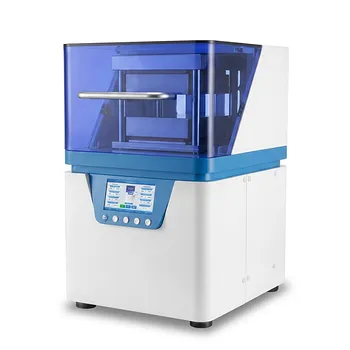
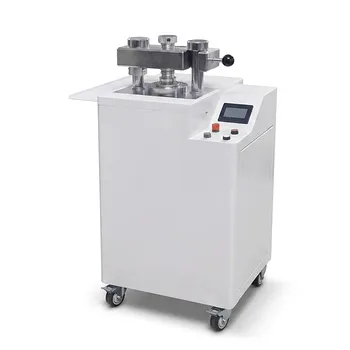
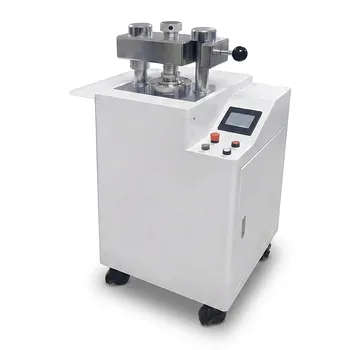
Automatic hydraulic presses represent a definitive upgrade in laboratory efficiency and precision. These systems utilize microprocessor controls to operate autonomously, removing the physical variability and labor associated with manual alternatives. By standardizing the application of force, they deliver superior consistency and accuracy, making them the preferred choice for high-volume workflows and critical material analysis.
The core value of an automatic hydraulic press lies in repeatability. While manual operation introduces human error, automatic presses execute programmed cycles with exact precision, ensuring that sample preparation never becomes a variable in your analytical data.
The Strategic Advantages of Automation
Enhancing Laboratory Workflow
The primary advantage of an automatic press is the ability to improve workflow through autonomy. Once the specific pressure and time parameters are programmed, the machine operates without constant supervision. This frees up technicians to perform other critical tasks while the press cycle completes, significantly boosting overall lab productivity.
Eliminating Operator Variation
Manual pressing is inherently laborious and subject to operator fatigue, which can lead to inconsistent results. Automatic versions are less laborious and power-assisted, ensuring the same pressure is applied every time regardless of the operator. This mechanical consistency is vital for maintaining data integrity across different test batches.
Precision and Control
These units are controlled by microprocessors, allowing for highly accurate management of load and release rates. This programmable control enables users to investigate the effects of high pressure with a level of granularity that manual pumps cannot achieve.
Common Applications in Research and Industry
Spectroscopic Sample Preparation
One of the most frequent uses for these presses is the creation of pellets for spectroscopic analysis. They are essential for preparing homogenous samples for Industrial XRF (X-ray fluorescence) and FTIR (Fourier-transform infrared spectroscopy). The press compacts powders into stable discs, ensuring the flat, uniform surface required for accurate chemical analysis.
Polymer Processing and Thin Films
Automatic presses are widely used for manipulating polymers. Specific applications include hot embossing, laminating, and melting polymers to create thin films. The ability to maintain steady pressure and temperature (in heated models) makes them ideal for these delicate forming processes.
Material Testing and Forming
Beyond sample prep, these presses are utilized for general laboratory sample manipulations and material testing. They allow researchers to evaluate material strength, durability, and the physical changes substances undergo when subjected to specific high-pressure environments.
Understanding the Operational Considerations
Infrastructure Dependencies
Unlike manual presses which are self-contained and portable, automatic hydraulic presses are power-assisted and require a reliable electrical source. This dependence on power infrastructure can limit where the unit can be positioned within a facility compared to a manual hand pump.
Complexity vs. Necessity
While these presses offer superior features, they are designed for frequent pressing and high-precision needs. For laboratories with extremely low throughput or applications where pressure consistency is not critical, the advanced programming features and "power-assisted" capabilities may represent an over-investment compared to simpler manual tools.
Making the Right Choice for Your Goal
To determine if an automatic hydraulic press is the right investment for your laboratory, consider your specific output requirements:
- If your primary focus is High-Volume Throughput: Select an automatic press to utilize its autonomous operation, allowing technicians to multitask while the equipment handles the repetitive labor.
- If your primary focus is Analytical Data Quality: Rely on the programmable microprocessor controls to eliminate human error and ensure every XRF or FTIR pellet is chemically and physically identical.
Ultimately, the transition to an automatic hydraulic press is not just about reducing effort; it is about standardizing your science to ensure that your results are defined by your materials, not your equipment.
Summary Table:
| Feature | Advantage | Ideal Application |
|---|---|---|
| Microprocessor Control | Eliminates operator variability and ensures repeatability | Critical material analysis & data integrity |
| Autonomous Operation | Frees up technicians for multitasking and increases throughput | High-volume laboratory workflows |
| Programmable Load/Release | High precision in pressure application and decompression | XRF and FTIR pellet preparation |
| Power-Assisted Mechanism | Reduced physical labor and operator fatigue | Consistent polymer processing & thin film creation |
Optimize Your Lab Performance with KINTEK Pressing Solutions
Maximize your research potential and ensure uncompromising data accuracy with KINTEK. As specialists in comprehensive laboratory pressing solutions, we provide a versatile range of equipment including manual, automatic, heated, multifunctional, and glovebox-compatible models, alongside cold and warm isostatic presses specifically optimized for battery research and material science.
Whether you need to standardize your spectroscopic sample preparation or require precise control for complex polymer processing, KINTEK delivers the durability and technological edge your facility demands. Contact us today to find the perfect press for your application!
Related Products
- Automatic Hydraulic Hot Press with Large Plate and Precision Temperature Control for Advanced Material Sample Preparation and Industrial Research
- Automatic Hydraulic Heat Press Machine with Multi Stage Programmable Control and Integrated Water Cooling Plate Size 180x180mm
- Automatic Heated Hydraulic Lab Press with Programmable Touch Screen Controls and Precision Temperature Regulation
- Automatic Laboratory Hydraulic Press Lab Pellet Press Machine
- Automatic Heated Hydraulic Press Machine with Hot Plates for Laboratory
People Also Ask
- What are the specific features and applications of hydraulic hot press machines? Precision Solutions for Modern Labs
- How does an automatic hydraulic press operate? Achieve Precision and Consistency in Lab Pelleting
- What is the technical significance of setting a precise dwell time? Achieve Peak Material Density and Stability
- When is an automatic hydraulic press more suitable than a manual press? Scale Your Lab with Precision & Speed
- How does a laboratory hydraulic heat press facilitate the molding of cellulose composite specimens? Precision Molding