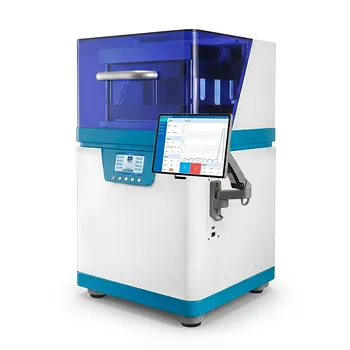
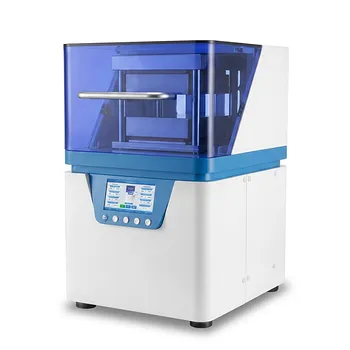
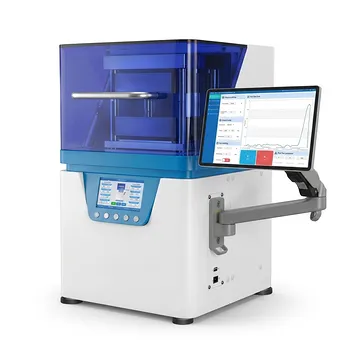
The process of creating a sample pellet involves mixing your sample with a binding agent, such as potassium bromide (KBr), and grinding it into a fine powder. This mixture is then loaded into a pellet die and compressed under several tonnes of load using a hydraulic press to form a solid disc for analysis.
Success in spectroscopy preparation relies on achieving a consistent, homogeneous mixture; the sample must be ground finely enough to prevent light scattering and pressed firmly enough to remain stable during examination.
The Step-by-Step Preparation Workflow
To ensure high-quality spectral data, you must follow a precise sequence of physical preparation steps.
1. Preparation and Grinding
The first step is to reduce the particle size of your material. You must mix the sample with a binder, typically potassium bromide (KBr), and grind the combination into a very fine powder.
The primary tool for this is a pestle and mortar. Thorough grinding is essential to ensure the sample is evenly distributed throughout the binder.
2. Establishing the Ratio
While grinding, pay close attention to the proportion of sample to binder. A typical ratio involves using approximately 1-2% sample by weight relative to the KBr.
This low concentration ensures that the final pellet is sufficiently transparent for the spectrometer to read the signal without oversaturation.
3. Loading the Die
Once the powder is fully mixed and ground, transfer it into a pellet die. This is a durable metal container specifically designed to withstand immense force.
The die assembly includes an internal plunger that rests on top of the powder, acting as the piston that will compress the material.
4. Applying Pressure
Place the loaded die assembly into a hydraulic press. You must apply a load of several tonnes to the plunger.
For specific applications like XRF, pressures may range between 15 and 40 tons. This pressure forces the powder particles to fuse together, solidifying the mixture into a compact disc.
5. Extraction and Analysis
After the pressure is released, carefully remove the solidified disc from the die.
The resulting pellet is then placed into a sample holder and inserted into the spectrometer for examination.
Common Pitfalls to Avoid
Creating a usable pellet requires balancing physical forces and material properties.
Inconsistent Grinding
If the sample is not ground to a uniform fineness, the pellet will scatter light. This results in poor baseline quality and noisy data in your spectrum.
Incorrect Moisture Control
KBr is hygroscopic (absorbs water). If the powder absorbs moisture from the air during mixing or pressing, water bands will appear in your spectrum, potentially obscuring important data.
Pressure Variations
Applying too little pressure results in a fragile pellet that crumbles. However, consistency is the most critical factor; variable pressure between different samples can lead to non-reproducible quantitative results.
Making the Right Choice for Your Goal
The specific parameters of your pellet press will depend on the type of analysis you are performing.
- If your primary focus is FTIR Analysis: Prioritize the 1-2% sample ratio with KBr to ensure the pellet is transparent enough for infrared light to pass through.
- If your primary focus is XRF Analysis: Use a binder suitable for X-rays and apply higher pressures (up to 40 tons) to ensure a dense, smooth surface for reflection.
By mastering the mechanical preparation of your pellet, you ensure the chemical data you capture is accurate and reproducible.
Summary Table:
| Step | Process Stage | Key Action / Requirement |
|---|---|---|
| 1 | Grinding | Mix sample with KBr binder; grind to fine powder |
| 2 | Ratio | Maintain 1-2% sample by weight for transparency |
| 3 | Loading | Transfer mixture to a durable pellet die assembly |
| 4 | Pressing | Apply 15-40 tonnes of load using a hydraulic press |
| 5 | Analysis | Extract solid disc and place in sample holder |
Precision Pellets for Superior Spectroscopy Results
High-quality spectral data starts with the perfect pellet. Whether you are conducting FTIR or XRF analysis, KINTEK specializes in comprehensive laboratory pressing solutions designed for consistency and durability. Our range includes:
- Manual & Automatic Presses: Ideal for varying workloads and precision control.
- Heated & Multifunctional Models: For specialized material research.
- Isostatic & Glovebox-Compatible Presses: Specialized solutions for battery research and sensitive environments.
Ensure your laboratory achieves reproducible, high-density samples every time. Contact KINTEK today to find the perfect pressing solution for your research!
Related Products
- Automatic Hydraulic Hot Press with Large Plate and Precision Temperature Control for Advanced Material Sample Preparation and Industrial Research
- Automatic Hydraulic Heat Press Machine with Multi Stage Programmable Control and Integrated Water Cooling Plate Size 180x180mm
- Automatic High Temperature Heated Hydraulic Press Machine with Heated Plates for Lab
- Automatic Heated Hydraulic Lab Press with Programmable Touch Screen Controls and Precision Temperature Regulation
- Manual Heated Hydraulic Lab Press with Integrated Hot Plates Hydraulic Press Machine
People Also Ask
- What are the specific features and applications of hydraulic hot press machines? Precision Solutions for Modern Labs
- How does an automatic hydraulic press operate? Achieve Precision and Consistency in Lab Pelleting
- What are the advantages and common applications of an automatic hydraulic press? Elevate Your Lab's Precision
- What is the technical significance of setting a precise dwell time? Achieve Peak Material Density and Stability
- When is an automatic hydraulic press more suitable than a manual press? Scale Your Lab with Precision & Speed