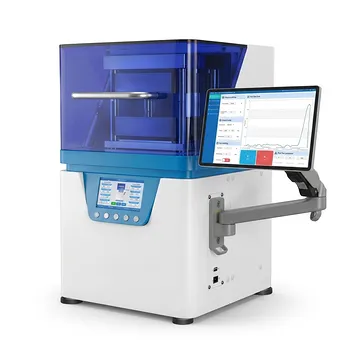
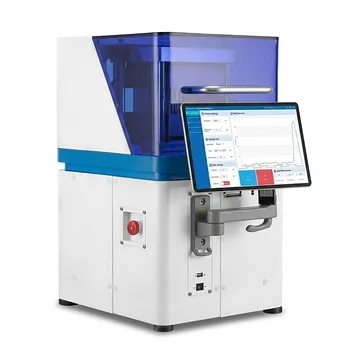
Selecting the right laboratory hydraulic press requires a strategic balance between your specific application metrics and the physical limitations of your workspace and personnel. To ensure accurate results, you must evaluate the maximum force required, specific clamping force targets, dwelling time, temperature capabilities, available laboratory space, and the physical energy required to operate the equipment.
Core Insight While maximum tonnage is often the first specification checked, the long-term success of a press depends on the operator experience. Neglecting the physical strength required for manual operation or the specific "dwelling time" needed for material consolidation will lead to inconsistent data and operator fatigue.
Analyzing Force and Application Requirements
Maximum Force and Clamping Pressure
The most critical specification is the load capacity. You must determine if the press can generate the maximum force required to deform or consolidate your specific material, whether it is soft or hard.
Dwelling Time and Ramping
Consolidation often requires holding pressure for a specific duration (dwelling time). You should determine if your application requires precise control over how long the clamp force is maintained to ensure uniformity.
Additionally, consider if you need to control the rate of ramping pressure up or down to prevent sample shock or cracking.
Temperature Capabilities
If your workflow involves a laboratory hot press, evaluate the required temperature range and heating consistency. You must also account for specific heating and cooling rates to match your material's thermal properties.
Physical Dimensions and Logistics
Platen Size and Daylight Opening
The press must accommodate your largest mold or sample. "Daylight opening" refers to the vertical space available when the press is open; ensure this clearance is sufficient for easy sample insertion and removal.
Laboratory Space and Footprint
Assess the physical space available in your facility. High-volume applications may require large floor models, while space-constrained labs may need compact benchtop units.
Portability and Mobility
Consider whether the unit will remain stationary or needs to be moved between workstations. Some projects may require mobile units, which introduces weight and power connection constraints.
Understanding the Trade-offs: Manual vs. Automatic
The "Physical Strength" Factor
The primary reference explicitly warns about the energy required to operate the press. Manual presses are cost-effective but demand significant physical effort from the operator to pump the unit to the necessary load.
Repeatability Risks
Manual operation introduces human error. It is challenging to apply the exact same load profile every time, which can lead to slight variances in results across different operators.
Automation for Consistency
Automatic or programmable presses remove the physical burden and ensure consistent ramping and dwelling times. However, this comes at a higher financial cost and may require more complex electrical setups.
Making the Right Choice for Your Goal
To select the definitive press for your laboratory, match your primary constraint to the recommendations below:
- If your primary focus is budget and infrequent use: Select a manual press, but be aware that operator fatigue may limit daily throughput.
- If your primary focus is data consistency and high volume: Invest in an automatic or programmable press to eliminate operator variability and ensure precise dwelling times.
- If your primary focus is complex material preparation: Prioritize a press with advanced control over heating rates, cooling rates, and potentially vacuum environments to prevent oxidation.
The ideal press is one that fits your sample's physics as comfortably as it fits your laboratory's workflow.
Summary Table:
| Selection Factor | Key Considerations | Impact on Lab Results |
|---|---|---|
| Force Capacity | Maximum tonnage & clamping pressure | Ensures material deformation and consolidation |
| Control Type | Manual vs. Automatic/Programmable | Influences repeatability, data consistency, and labor intensity |
| Temperature | Heating/cooling rates and ranges | Critical for material thermal properties and sample stability |
| Dwelling Time | Duration of pressure maintenance | Affects sample uniformity and material density |
| Physical Specs | Platen size, daylight opening, and footprint | Determines sample size compatibility and lab space efficiency |
Elevate Your Research with KINTEK Pressing Solutions
Precision and reliability are the cornerstones of successful material science. KINTEK specializes in comprehensive laboratory pressing solutions designed to meet the rigorous demands of modern research. Whether you are conducting cutting-edge battery research or material testing, we offer a versatile range of equipment including:
- Manual & Automatic Models: Choose between cost-effective simplicity or high-throughput automation.
- Heated & Multifunctional Units: For applications requiring precise thermal control and versatility.
- Advanced Isostatic Presses: Specialized cold and warm isostatic models for uniform material density.
- Specialized Environments: Glovebox-compatible designs for sensitive materials.
Don't let operator fatigue or inconsistent pressure compromise your data. Contact KINTEK today to find the perfect hydraulic press tailored to your laboratory's unique workflow and technical requirements!
Related Products
- Laboratory Hydraulic Press Lab Pellet Press Machine for Glove Box
- Laboratory Hydraulic Press 2T Lab Pellet Press for KBR FTIR
- 24T 30T 60T Heated Hydraulic Lab Press Machine with Hot Plates for Laboratory
- Laboratory Hydraulic Press Lab Pellet Press Button Battery Press
- Laboratory Hydraulic Pellet Press for XRF KBR FTIR Lab Press
People Also Ask
- How does a laboratory hydraulic press contribute to the preparation of Li3-3xScxSb samples? Optimize Ionic Conductivity
- What is the function of a laboratory hydraulic press in FT-IR of curcumin-coated MWCNTs? Achieve Optical Clarity.
- Why is a laboratory hydraulic press required for compression molding boron-siloxane? Solve High-Loading Density Challenges
- What role does a laboratory hydraulic press play in the preparation of piezoelectric ceramic discs for DC-PG? | KINTEK
- What role does a laboratory hydraulic press play in reaction pellets? Optimizing Lunar Soil and Metal Fuel Density