
To properly maintain a lab press, you must implement a routine of regular inspections, cleaning, lubrication, and hydraulic system management. This involves visually checking for leaks and cracks, keeping platens and exteriors free of debris, lubricating all moving parts according to the manufacturer's schedule, and periodically replacing the hydraulic fluid with the correct type to ensure consistent performance.
Maintenance is not merely a series of repair tasks; it is a proactive strategy. The goal is to shift from fixing what is broken to ensuring your equipment never fails unexpectedly, thereby guaranteeing its accuracy, longevity, and the safety of its operators.
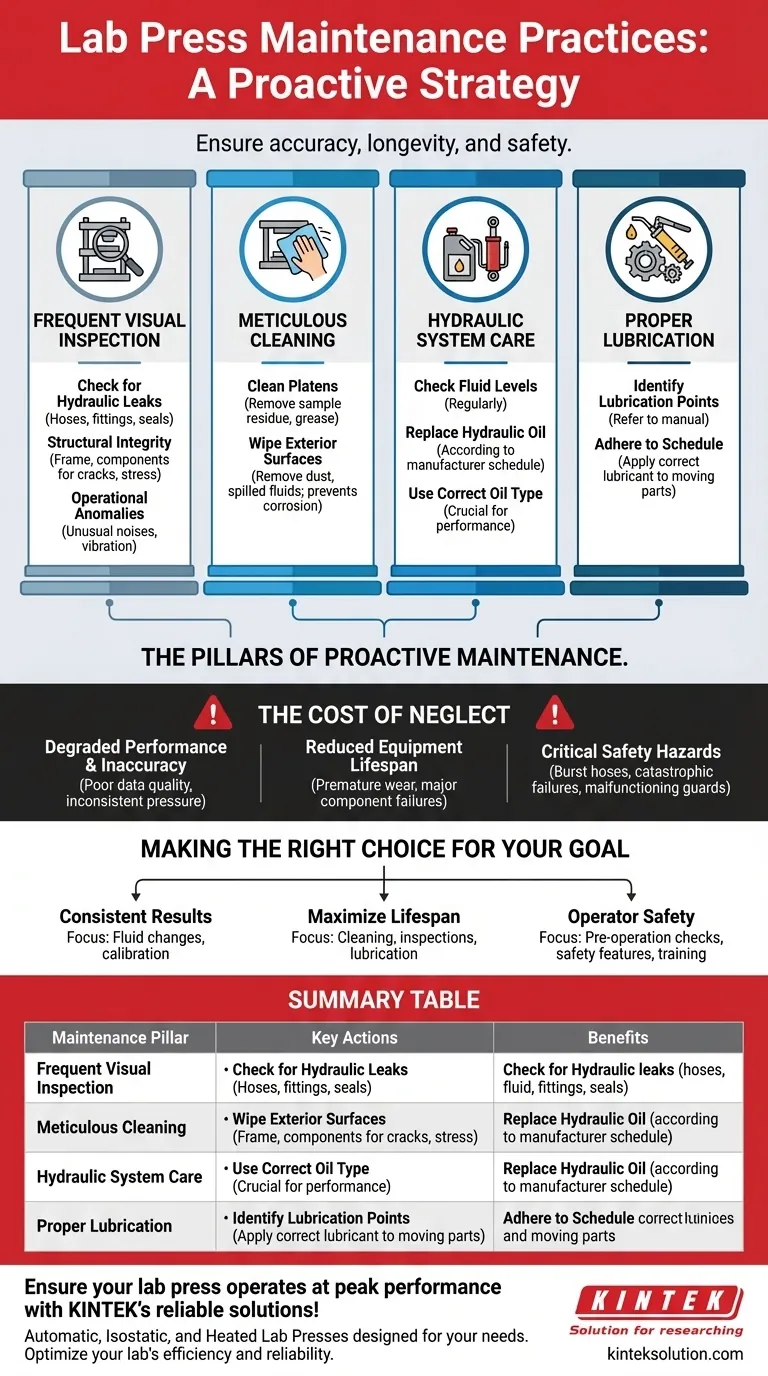
The Pillars of Proactive Press Maintenance
A well-maintained lab press delivers consistent, reliable results. Neglecting it introduces variables that can compromise your work and create safety hazards. The core of an effective maintenance program rests on four key activities.
Pillar 1: Frequent Visual Inspection
This is your first line of defense against catastrophic failure. A quick but thorough visual check before and after use can identify problems before they escalate.
What to Look For:
- Hydraulic Leaks: Check all hoses, fittings, and seals for any signs of weeping or dripping oil. A fluid leak signifies a loss of pressure and a potential system failure.
- Structural Integrity: Examine the press frame and components for any signs of stress, fatigue, or cracking.
- Operational Anomalies: During operation, listen for unusual noises and feel for excessive vibration. These are often early indicators of internal wear or misalignment.
Pillar 2: Meticulous Cleaning
Contaminants can degrade performance and damage components. A clean press is a more reliable press.
Key Cleaning Areas:
- Platens: Keep heating and pressing surfaces completely free of sample residue, grease, and other debris. Buildup can cause uneven heat distribution and pressure application.
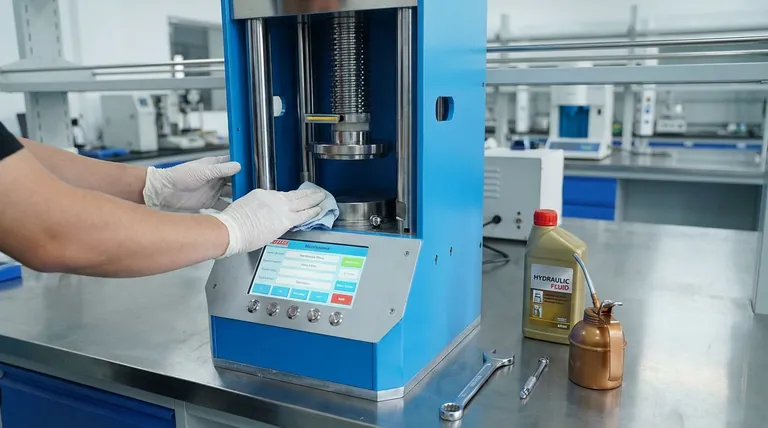
- Exterior Surfaces: Regularly wipe down the body of the press to remove dust and spilled fluids. This prevents corrosion and makes it easier to spot new leaks.
Pillar 3: Hydraulic System Care
The hydraulic system is the heart of the press, responsible for generating force. Its health is paramount.
Fluid Management:
- Check Fluid Levels: Regularly ensure the hydraulic reservoir is at the appropriate level.
- Replace Hydraulic Oil: Over time, hydraulic oil degrades and becomes contaminated, leading to inconsistent pressure and wear on the pump. Follow the manufacturer's recommended schedule for fluid replacement.
- Use the Correct Oil: Always use the specific type of hydraulic fluid recommended by the press manufacturer to ensure compatibility and optimal performance.
Pillar 4: Proper Lubrication
All moving parts require lubrication to minimize friction, which is a primary cause of wear and tear.
Following the Schedule:
- Identify Lubrication Points: Refer to your user manual to identify all points that require grease or oil.
- Adhere to the Schedule: Apply the correct lubricant at the intervals specified by the manufacturer. This simple step dramatically extends the life of mechanical components.
Understanding the Trade-offs: The Cost of Neglect
Skipping maintenance might save time in the short term, but it incurs significant costs and risks down the line.
Degraded Performance and Inaccuracy
Dirty platens lead to uneven pressure. Old, contaminated hydraulic fluid results in fluctuating force application. Uncalibrated gauges give false readings. The result is poor data quality and a lack of experimental repeatability.
Reduced Equipment Lifespan
Friction from poor lubrication wears down moving parts prematurely. Contaminated oil damages expensive hydraulic pumps and seals. Ignoring small leaks or cracks can lead to major component failure, turning a minor repair into a complete equipment replacement.
Critical Safety Hazards
A leaking hose can burst under pressure, spraying hot oil. A cracked frame can fail catastrophically, releasing stored energy. Malfunctioning safety guards or emergency stops remove the last line of defense against serious operator injury. These are not theoretical risks; they are the direct consequences of deferred maintenance.
Making the Right Choice for Your Goal
Your maintenance priorities can be tailored to your most critical objectives.
- If your primary focus is consistent, accurate results: Prioritize regular hydraulic fluid changes and periodic calibration of the force gauge.
- If your primary focus is maximizing equipment lifespan: Emphasize a strict schedule for cleaning, visual inspections, and lubrication of all moving parts.
- If your primary focus is operator safety: Mandate pre-operation checks of all safety features, such as E-stops and guards, and reinforce safe operating procedures with robust training.
Consistent maintenance is a direct investment in the reliability of your data and the safety of your lab.
Summary Table:
| Maintenance Pillar | Key Actions | Benefits |
|---|---|---|
| Frequent Visual Inspection | Check for leaks, cracks, and anomalies | Early problem detection, prevents catastrophic failure |
| Meticulous Cleaning | Clean platens and exteriors | Ensures even pressure and heat, prevents corrosion |
| Hydraulic System Care | Replace fluid, check levels | Maintains consistent pressure, extends pump life |
| Proper Lubrication | Lubricate moving parts per schedule | Reduces wear, extends equipment lifespan |
Ensure your lab press operates at peak performance with KINTEK's reliable solutions! We specialize in automatic lab presses, isostatic presses, heated lab presses, and more, designed to meet all your laboratory needs. Our expert maintenance support and high-quality equipment help you achieve consistent results, extend machine life, and enhance operator safety. Don't let downtime affect your research—contact us today to learn how we can optimize your lab's efficiency and reliability!
Visual Guide
Related Products
- Laboratory Hydraulic Press 2T Lab Pellet Press for KBR FTIR
- 24T 30T 60T Heated Hydraulic Lab Press Machine with Hot Plates for Laboratory
- Manual Heated Hydraulic Lab Press with Integrated Hot Plates Hydraulic Press Machine
- Laboratory Hydraulic Press Lab Pellet Press Button Battery Press
- Laboratory Hydraulic Pellet Press for XRF KBR FTIR Lab Press
People Also Ask
- What is the role of a laboratory pressure machine and KBr in FTIR? Master Sample Preparation for Flame Retardants
- What is the role of a laboratory hydraulic press in high-loading NCM811 cathode prep for solid-state batteries?
- Why is a laboratory hydraulic press necessary for sample preparation? Precise Pelleting for Spiro Heterocyclic Analysis
- What role does a laboratory hydraulic press play in reaction pellets? Optimizing Lunar Soil and Metal Fuel Density
- What are some examples of technical parameter options available for laboratory hydraulic presses? Customizing Your Lab



















