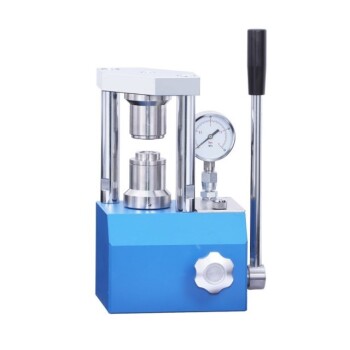
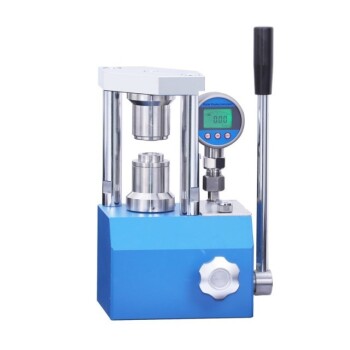
Laboratory presses and sealing machines are the structural backbone of solid-state coin-cell supercapacitor assembly, serving as the critical mechanism that transforms separate chemical components into a functional electronic device. These tools apply high-precision, uniform pressure to ensure robust physical continuity between the electrode plates, separators, and housing.
Core Takeaway: The performance of a solid-state supercapacitor is defined not just by chemistry, but by physical proximity. Precision pressure equipment is the only reliable way to minimize internal resistance and ensure the device creates a sealed, chemically stable environment capable of enduring long-term testing.
The Critical Role in Component Integration
To understand the necessity of this equipment, one must look beyond simple assembly. The deep need here is managing the interface between materials.
Minimizing Internal Contact Resistance
The primary function of high-precision presses during the packaging process is to eliminate gaps between layers. By applying constant pressure, the equipment forces the electrode plates and the separator (containing the gel electrolyte) into tight physical contact. This proximity is decisive for lowering internal contact resistance, which directly influences the device's power density and efficiency.
Ensuring Structural Integrity
During long-term cycling tests, supercapacitors undergo repeated physical and chemical stress. The uniform pressure applied during sealing creates a rigid, unified structure. This prevents the internal components from shifting or detaching, which is essential for maintaining consistent performance data over thousands of charge-discharge cycles.
Environmental Isolation and Leak Prevention
For solid-state devices using gel electrolytes, containment is vital. A hydraulic sealing machine or coin cell crimper bonds the battery case to the sealing gasket. This mechanical bond prevents the leakage of electrolytes and isolates sensitive internal chemistry from external air and moisture, which could otherwise degrade the device.
The Role in High-Performance Electrode Preparation
Before the cell is even assembled, laboratory presses play a distinct role in fabricating the electrodes themselves.
Mechanical Interlocking of Active Materials
A manual hydraulic press is often used to compress mixtures of active porous carbon, conductive agents, and binders onto current collectors (such as nickel foam). Applying specific pressure (typically around 5 MPa) creates "mechanical interlocking." This ensures the active material adheres strictly to the collector, preventing detachment during high-current operations.
Regulating Porosity and Density
Precision pressing allows you to control the compaction density of the electrode. By regulating the pressure, you determine how dense the material is. This optimization is critical because it balances the need for high conductivity (tighter packing) with the need for ion diffusion paths (porosity), both of which define the specific capacitance.
Understanding the Trade-offs
While pressure is essential, it is a variable that requires careful calibration.
The Risk of Over-Compression
Applying excessive pressure during electrode preparation or sealing can crush the porous structure of the active material or damage the delicate separator. This restricts ion movement, effectively "choking" the supercapacitor and reducing its energy storage capability.
The Risk of Under-Compression
Conversely, insufficient pressure results in weak interfacial bonding. This leads to high Equivalent Series Resistance (ESR) and poor cycle life, as the active materials may delaminate from the current collector or lose contact with the electrolyte over time.
Making the Right Choice for Your Goal
To maximize the utility of your assembly equipment, align your process with your specific prototyping objectives.
- If your primary focus is reducing internal resistance: Prioritize high-precision crimpers that ensure uniform, high-pressure contact between the current collectors and the external housing.
- If your primary focus is long-term cycle life: Focus on the sealing quality of your crimper to ensure total isolation from moisture and air, which are the primary causes of degradation over time.
- If your primary focus is optimizing specific capacitance: Concentrate on the manual hydraulic press settings during electrode fabrication to balance compaction density with necessary porosity.
Ultimately, the precision of your mechanical assembly sets the ceiling for your device's electrochemical potential.
Summary Table:
| Process Phase | Equipment Used | Primary Role | Key Impact on Performance |
|---|---|---|---|
| Electrode Prep | Manual/Hydraulic Press | Mechanical interlocking of materials | Regulates density & improves adhesion |
| Component Integration | Precision Lab Press | Minimizing interface gaps | Lowers internal contact resistance (ESR) |
| Final Assembly | Coin Cell Crimper/Sealer | Hermetic sealing & bonding | Prevents electrolyte leakage & air ingress |
| Testing Readiness | Automatic Press | Ensuring structural uniformity | Maintains data consistency during cycling |
Maximize Your Research Potential with KINTEK
Precision assembly is the foundation of high-performance battery and supercapacitor research. KINTEK specializes in comprehensive laboratory pressing solutions, offering manual, automatic, heated, multifunctional, and glovebox-compatible models, as well as cold and warm isostatic presses designed for elite material science.
Whether you are optimizing compaction density or ensuring a perfect hermetic seal, our equipment provides the consistency required for repeatable scientific breakthroughs. Don't let mechanical variability compromise your electrochemical data.
Contact KINTEK Today to Find Your Ideal Pressing Solution
References
- T. Kedara Shivasharma, Babasaheb R. Sankapal. Device grade solid-state pouch and coin cell supercapacitors dual assembly using consumed battery waste to best utilization. DOI: 10.1038/s41598-025-96426-4
This article is also based on technical information from Kintek Solution Knowledge Base .
Related Products
- Automatic Lab Cold Isostatic Pressing CIP Machine
- Button Battery Sealing Press Machine for Lab
- Manual Cold Isostatic Pressing CIP Machine Pellet Press
- Automatic Laboratory Hydraulic Press for XRF and KBR Pellet Pressing
- Manual Laboratory Hydraulic Press Lab Pellet Press
People Also Ask
- What are the key features of automated laboratory Cold Isostatic Press (CIP) systems? Achieve Precise, High-Pressure Powder Consolidation
- Why is an Isostatic Press (CIP) Necessary After Uniaxial Pressing? Achieve Transparency in Nd:Y2O3 Ceramics
- What is the primary function of a Cold Isostatic Press (CIP) in NASICON preparation? Achieve 96% Theoretical Density
- How does a Cold Isostatic Press (CIP) facilitate the preparation of CaO-doped silicon carbide (SiC) green bodies?
- How does a Cold Isostatic Press (CIP) increase Bi-2223/Ag current density? Boost Superconductivity with Uniform Pressure