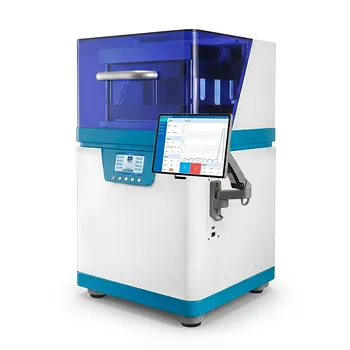
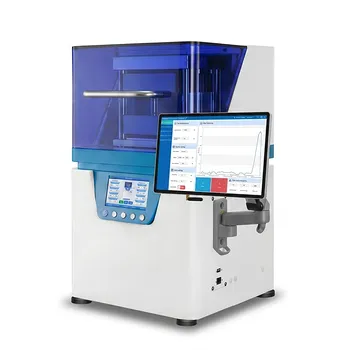
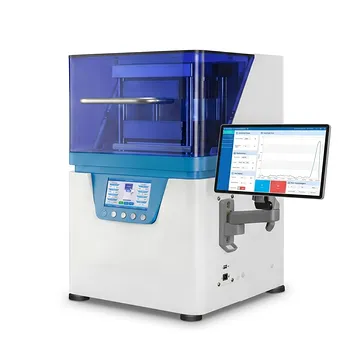
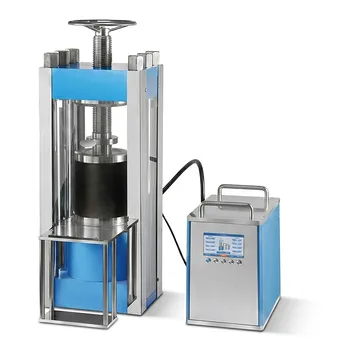
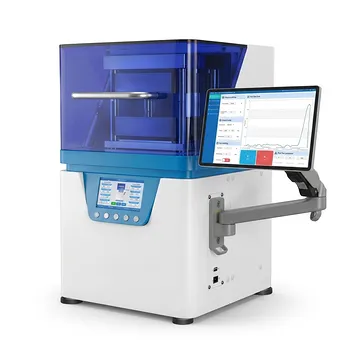
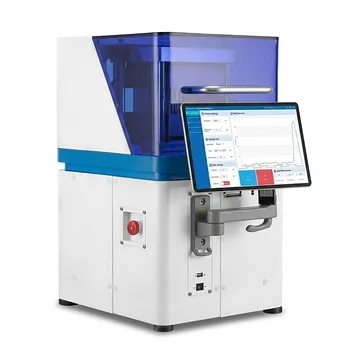
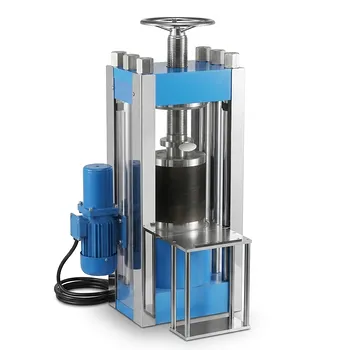
A heated laboratory press is the critical driver of vulcanization and structural consolidation for NBR nanocomposites. It converts raw rubber compounds into high-performance elastomers by applying simultaneous thermal energy and mechanical pressure. This dual-action process triggers chemical cross-linking while ensuring the material achieves its final density, shape, and desired mechanical properties.
The heated laboratory press serves as the definitive tool for transitioning NBR nanocomposites from a raw plastic state to a cross-linked elastomer. By precisely controlling the thermal and mechanical environment, it ensures complete vulcanization, eliminates internal defects, and locks the nanoparticle network into a stable, high-performance matrix.
Facilitating the Chemical Transformation (Vulcanization)
Triggering the Cross-linking Reaction
The press provides the stable high temperatures, often around 160°C, necessary to activate cross-linking agents like dicumyl peroxide (DCP). This thermal energy facilitates the chemical reaction between rubber chains, transforming the material from a viscous compound into a durable elastomer.
Building the Three-Dimensional Network
Continuous mechanical pressure during heating drives the formation of a three-dimensional molecular network. This structural change is responsible for the final material's mechanical strength, thermal stability, and specialized properties like flame retardancy.
Achieving Structural Integrity and Density
Eliminating Internal Voids and Defects
Application of high pressure—typically ranging from 3 MPa to 30 bar—is essential to remove air pockets and internal voids. This consolidation process ensures the production of high-density standardized test specimens that are free from structural weaknesses.
Locking the Nanoparticle Network
In nanocomposites, the press ensures that the nanoparticle fillers are successfully "locked" within the polymer matrix. By melting and consolidating granules under pressure, the press creates a uniform nanoparticle distribution that is fundamental for consistent material performance.
Surface and Interfacial Engineering
Promoting Adhesion with Reinforcements
When NBR is used in conjunction with substrates like polyester fabric, the press ensures intimate contact between the rubber and the fibers. This promotes physical and chemical bonding, which substantially increases the interfacial peel strength of the composite.
Standardizing Specimen Dimensions
Precise control over the move of the heating plates allow researchers to maintain exact specimen thickness (e.g., 2 mm). This repeatability is non-negotiable for meeting international standards for mechanical and friction characteristic testing.
Precision Morphology and Phase Control
Managing Crystallization and Phase Separation
By adjusting the cooling rate and temperature distribution, the press allows for the fine-tuning of the material's microscopic morphology. This capability is essential for researchers studying how processing conditions impact the phase transition kinetics of the polymer.
Simulating Industrial Processing
The laboratory press serves as a scaled-down version of industrial hot-pressing systems. It allows for the study of polymer rheological behavior under controlled conditions, providing a foundation for scaling up production to factory levels.
Understanding the Trade-offs
The Risk of Thermal Degradation
While heat is required for vulcanization, excessive temperature or prolonged dwell time can lead to "over-curing." This can degrade the polymer chains, resulting in a brittle material with reduced elasticity and poor long-term durability.
Pressure Distribution Inconsistencies
If the heating plates are not perfectly parallel or if the material is distributed unevenly in the mold, pressure gradients can occur. This leads to variations in density and thickness across a single specimen, which can invalidate mechanical testing results.
Balancing Cure Time and Morphology
Rapid heating may achieve the optimal vulcanization time (s90) more quickly, but it may also negatively impact the microscopic arrangement of nanoparticles. Finding the balance between efficient production and ideal phase separation structure requires rigorous calibration.
Applying This to Your Project
Recommendations for Material Development
- If your primary focus is maximizing mechanical strength: Prioritize precise pressure control (30 bar+) to eliminate all internal voids and ensure a dense, defect-free cross-linked network.
- If your primary focus is interfacial bonding: Focus on the dwell time and temperature specifically at the interface to allow for maximum penetration into fabric or fiber substrates.
- If your primary focus is research and characterization: Utilize the press's ability to control cooling rates to study how different microscopic morphologies affect the final performance of the NBR nanocomposite.
By mastering the variables of temperature, pressure, and time, you can transform raw NBR compounds into highly engineered nanocomposites tailored for specialized industrial applications.
Summary Table:
| Key Role | Primary Mechanism | Impact on NBR Nanocomposites |
|---|---|---|
| Vulcanization | Controlled Thermal Energy (~160°C) | Triggers chemical cross-linking; transforms raw rubber into durable elastomer. |
| Structural Integrity | High Mechanical Pressure (3-30 bar) | Eliminates internal voids/air pockets to produce high-density standardized specimens. |
| Network Stability | Simultaneous Heat & Pressure | Locks nanoparticle fillers into a stable, uniform 3D polymer matrix. |
| Interfacial Bonding | Thermal Contact & Dwell Time | Enhances adhesion between NBR and substrates like polyester fabric for peel strength. |
| Morphology Control | Precision Cooling & Heating | Fine-tunes phase transition kinetics and microscopic material morphology. |
Elevate Your Material Research with KINTEK
Unlock the full potential of your NBR nanocomposites with KINTEK’s industry-leading laboratory presses. KINTEK specializes in comprehensive laboratory pressing solutions, offering a diverse range of manual, automatic, heated, multifunctional, and glovebox-compatible models, as well as cold and warm isostatic presses.
Whether you are advancing battery research or developing high-performance industrial elastomers, our equipment provides the sub-degree temperature precision and consistent pressure required to eliminate defects and ensure optimal vulcanization.
Ready to enhance your lab's efficiency and specimen repeatability? Contact us today to find the perfect pressing solution for your project!
References
- G. Janowska, Przemysław Rybiński. Thermal stability, flammability and fire hazard of butadiene-acrylonitrile rubber nanocomposites. DOI: 10.1007/s10973-010-1282-y
This article is also based on technical information from Kintek Solution Knowledge Base .
Related Products
- Automatic Hydraulic Hot Press with Large Plate and Precision Temperature Control for Advanced Material Sample Preparation and Industrial Research
- Cylindrical Lab Electric Heating Press Mold for Laboratory Use
- Lab Heat Press Special Mold
- Automatic Heated Hydraulic Lab Press 120x120mm Plate Fully Automated Material Research Press
- 24T 30T 60T Heated Hydraulic Lab Press Machine with Hot Plates for Laboratory
People Also Ask
- What are the specific features and applications of hydraulic hot press machines? Precision Solutions for Modern Labs
- How does an automatic hydraulic press operate? Achieve Precision and Consistency in Lab Pelleting
- What are the advantages and common applications of an automatic hydraulic press? Elevate Your Lab's Precision
- What is the technical significance of setting a precise dwell time? Achieve Peak Material Density and Stability
- When is an automatic hydraulic press more suitable than a manual press? Scale Your Lab with Precision & Speed