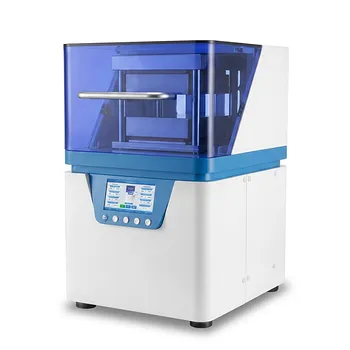
Hydraulic hot press machines are specialized industrial systems that combine high-pressure hydraulic force with precise thermal regulation to mold, bond, or test materials. Specific features include rapid heating capabilities, automated temperature distribution, and high-stability hydraulic balance devices, making them essential for processing thermoplastics, composites, and laboratory samples.
Core Insight: The distinguishing value of a hydraulic hot press is not just the application of force, but the synchronization of pressure and heat. This allows for the manipulation of material properties at the molecular level, ensuring consistent density and structural integrity in ways that cold pressing cannot achieve.
Engineering Features for Precision Control
Advanced Thermal Management
The primary advantage of these machines is precise temperature control. Systems often utilize pulse heating technology, which allows for rapid heating with sampling frequencies as fast as 0.1 seconds.
This technology ensures consistent temperature distribution across the heating plate. It also enables multi-stage temperature rise control, allowing operators to create specific heating profiles for complex materials.
Structural Stability and Pressure
To ensure uniform thickness and density in the final product, these machines employ a hydraulic balance device. This mechanism maintains stability during the pressing cycle, preventing uneven pressure that could warp the workpiece.
Many units feature a four-column and three-plate structure. This design offers high rigidity and precision, which is critical when molding materials that require high-tonnage force without mechanical deflection.
Automation and Monitoring
Modern hydraulic hot presses are designed for operational efficiency through automated control panels. Operators can monitor the process via real-time temperature curve displays to ensure the cycle adheres to strict specifications.
For high-precision tasks, some machines include a CCD vision system for accurate alignment. Additionally, the working modes are diversified, offering options like single, rotating, or left-right moving platforms to fit different production workflows.
Operational Safety
Safety is integral to the design of high-pressure thermal equipment. Standard features typically include two-hand start buttons and emergency stop switches to prevent accidental actuation.
Advanced models also incorporate safety hand gratings and three-sided sealed safety doors. These physical barriers protect the operator from high heat and moving mechanical parts during the cycle.
Critical Industrial and Laboratory Applications
Thermoplastic and Composite Molding
The most common application for these machines is the molding of thermoplastics and composites. The combination of high pressure and controlled heat allows these materials to flow into molds and cure effectively.
The rapid heating and cooling cycles make them ideal for creating intricate shapes that require high structural strength and a high-quality surface finish.
Laboratory Sample Preparation
In research settings, laboratory hydraulic presses are standard for preparing samples for spectroscopic analysis. They are used to compress powders into thin, flat sheets or pellets for IR (Infrared) and XRF (X-ray Fluorescence) studies.
Smaller "mini presses" are specifically designed for this niche. Despite weighing as little as 4 kilograms, they can apply up to 2 tons of pressure. This is sufficient for creating 7mm pellets, ensuring repeatability in pharmaceutical and academic testing.
Material Science and Testing
Researchers use hydraulic heat presses to investigate the stress-strain behavior of materials. By subjecting substances to specific high-pressure and high-temperature conditions, scientists can evaluate durability, deformation, and mechanical strength.
This testing is vital for characterizing new materials before they are approved for mass production or structural use.
Understanding the Trade-offs
Portability vs. Capacity
There is a distinct trade-off between the physical footprint of the machine and its pressure capacity. Mini presses offer portability and low cost, making them excellent for glove boxes or small labs. However, they are limited to smaller sample sizes (e.g., pellets) and lower total tonnage compared to full-scale industrial C-frame or four-column presses.
Complexity of Maintenance
While features like pulse heating and CCD alignment offer superior precision, they introduce complexity. Machines with advanced electronic controls and hydraulic balance systems require more rigorous calibration and maintenance than simple manual presses to ensure the data remains reliable over time.
Making the Right Choice for Your Goal
Selecting the correct hydraulic hot press depends entirely on the scale of your operation and the material properties you are investigating.
- If your primary focus is Mass Production: Prioritize machines with automated control panels, diversified working platforms, and rapid heating cycles to maximize throughput and repeatability.
- If your primary focus is Laboratory Analysis (Spectroscopy): Look for a mini press with a built-in pressure gauge; portability and the ability to reproduce specific load conditions for pellet creation are your most critical metrics.
- If your primary focus is Material Characterization (R&D): Choose a unit with multi-stage temperature control and real-time curve displays, as the ability to document the exact thermal history of the sample is essential for valid data.
The most effective equipment choice balances the need for maximum tonnage with the requirement for thermal precision.
Summary Table:
| Feature Type | Key Component | Benefit | Typical Application |
|---|---|---|---|
| Thermal Control | Pulse Heating Technology | Rapid heating & 0.1s sampling | Multi-stage temperature profiles |
| Stability | Hydraulic Balance Device | Prevents warping & uneven density | Precision composite molding |
| Safety | Safety Gratings & 3-Sided Doors | Operator protection from heat/force | High-tonnage industrial cycles |
| Precision | CCD Vision System | Accurate alignment for intricate parts | Electronic & specialized components |
| Lab Scale | Mini/Portable Press | Compact footprint & cost-effective | IR/XRF pellet preparation |
Elevate Your Material Research with KINTEK
As a leader in comprehensive laboratory pressing solutions, KINTEK empowers your research with cutting-edge technology. Whether you require manual, automatic, heated, or multifunctional models, our equipment is engineered for precision.
Our extensive range includes glovebox-compatible presses and advanced cold and warm isostatic presses specifically designed for high-performance battery research and material science.
Ready to optimize your lab's efficiency and sample quality? Contact KINTEK today to find your ideal pressing solution!
Related Products
- Automatic Hydraulic Hot Press with Large Plate and Precision Temperature Control for Advanced Material Sample Preparation and Industrial Research
- Automatic Hydraulic Heat Press Machine with Multi Stage Programmable Control and Integrated Water Cooling Plate Size 180x180mm
- Heated Hydraulic Press Machine with Heated Plates for Vacuum Box Laboratory Hot Press
- Automatic High Temperature Heated Hydraulic Press Machine with Heated Plates for Lab
- 24T 30T 60T Heated Hydraulic Lab Press Machine with Hot Plates for Laboratory
People Also Ask
- How does an automatic hydraulic press operate? Achieve Precision and Consistency in Lab Pelleting
- What are the advantages and common applications of an automatic hydraulic press? Elevate Your Lab's Precision
- What is the technical significance of setting a precise dwell time? Achieve Peak Material Density and Stability
- When is an automatic hydraulic press more suitable than a manual press? Scale Your Lab with Precision & Speed
- How does a laboratory hydraulic heat press facilitate the molding of cellulose composite specimens? Precision Molding