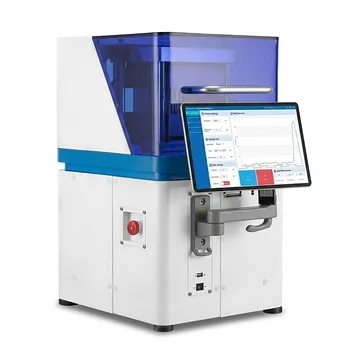
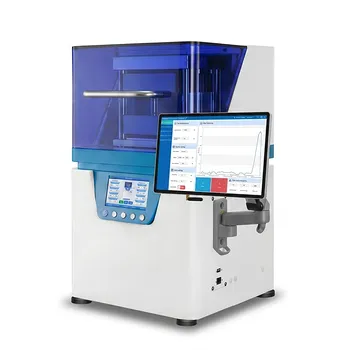
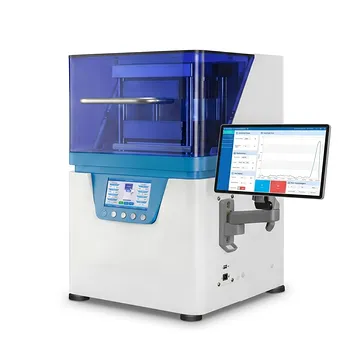
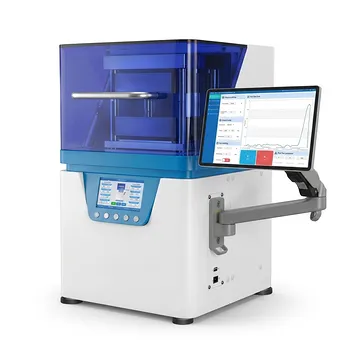
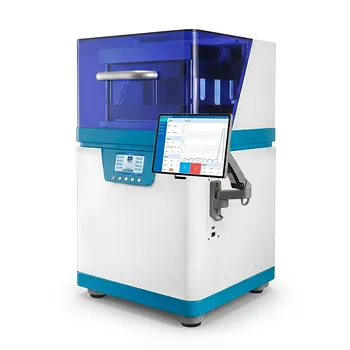
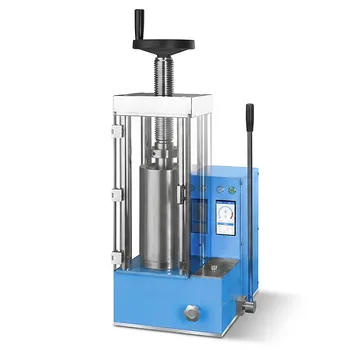
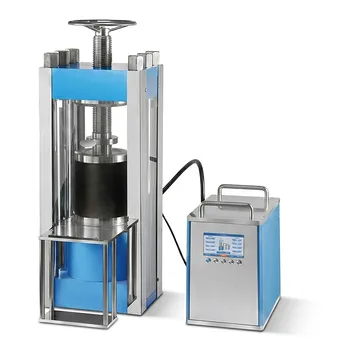
The electrically heated laboratory plate vulcanizing press acts as the primary engine for the chemical and physical transformation of NR/EPDM nanocomposites. By applying precise thermal energy (typically ranging from 150°C to 165°C) and high mechanical pressure (often exceeding 150 kgf or 30 bar), the press triggers the chemical cross-linking reaction. This process converts the raw, plasticized rubber compound into a finished elastomer sheet characterized by a stable three-dimensional molecular network, uniform density, and high elasticity.
Core Takeaway: The laboratory plate press is essential for transitioning NR/EPDM nanocomposites from a raw mixture to a structurally sound material. Its role is to provide the simultaneous heat and pressure required to drive cross-linking while ensuring the final specimen meets strict standards for density and geometric precision.
Facilitating the Chemical Architecture
Driving Molecular Cross-linking
The primary role of the press is to provide the energy required to overcome the activation barrier of the vulcanization reaction. In the presence of stable high temperatures, the sulfur or peroxide curing agents react with the NR/EPDM molecular chains.
This reaction transforms linear macromolecules into a robust three-dimensional spatial network. This network is what grants the nanocomposite its final mechanical strength, thermal stability, and recovery properties after deformation.
Controlling the Cure Environment
Precise temperature control is vital for maintaining a stable thermal field within the steel mold. Fluctuations in heat can lead to incomplete vulcanization or localized over-curing, which compromises the material’s structural integrity.
Laboratory-grade presses ensure that the entire specimen reaches the ideal vulcanization time simultaneously. This uniformity is critical for determining the definitive performance characteristics of the nanocomposite during R&D.
Defining Physical Geometry and Standardization
Molding and Thickness Precision
The press forces the NR/EPDM compound into a steel mold, defining the material's geometric and physical properties. This is essential for creating standardized test specimens, such as sheets with a precise 2 mm thickness.
Maintaining dimensional accuracy is not just for appearance; it is a requirement for meeting international testing standards. Consistent thickness ensures that subsequent tensile or tear tests yield scientifically reliable and comparable data.
Enhancing Surface Quality
Through the application of continuous mechanical pressure, the press ensures the material has low surface roughness. This high-precision contact between the mold and the rubber is necessary for specialized applications.
For example, when creating rubber-fabric composites, the pressure forces the rubber to penetrate the fabric fibers. This promotes physical and chemical interactions that significantly increase the interfacial peel strength.
Eliminating Internal Structural Defects
Removing Air Bubbles and Voids
One of the most critical deep-level functions of the plate press is the elimination of internal air bubbles. The high-pressure environment (e.g., 150KN) forces entrapped gases out of the compound before the cross-linking is finalized.
Without this pressure, the resulting nanocomposite would suffer from porosity. Internal voids act as stress concentrators, which prematurely degrade the material's mechanical performance and durability.
Reducing Density Gradients
The press ensures a uniform internal density across the entire specimen by maintaining constant pressure during the cooling cycle. This reduces internal residual stresses that might otherwise cause the material to warp or crack.
A high-density structure is particularly important for nanocomposites intended for flame retardancy. A dense, uniform physical structure improves the material's efficiency in resisting high-temperature environments.
Understanding the Trade-offs
Balancing Temperature and Time
Higher temperatures can accelerate production, but they risk thermal degradation of the rubber chains if not managed correctly. If the temperature is too high, the surface may over-cure before the core of the specimen reaches the required cross-link density.
Pressure Management Risks
While high pressure is necessary to eliminate voids, excessive pressure can lead to mold flash or damage to the nanocomposite’s internal filler distribution. Conversely, inadequate pressure results in a lack of intimate contact with the mold, leading to thickness variations and lowered structural density.
Making the Right Choice for Your Goal
To achieve the best results with an electrically heated laboratory press, you must calibrate its operation based on your specific research or production objectives.
- If your primary focus is mechanical strength: Prioritize precise temperature stability (e.g., +/- 1°C) to ensure a high and uniform cross-link density throughout the specimen.
- If your primary focus is defect-free samples: Focus on the pressure application and "bumping" (degassing) cycles to ensure all entrapped air is removed early in the curing process.
- If your primary focus is standardization for testing: Use high-precision steel molds and monitor the cooling cycle to maintain exact thickness and eliminate residual internal stresses.
The electrically heated laboratory press is ultimately the bridge between a chemical formulation and a high-performance engineering material.
Summary Table:
| Function | Impact on NR/EPDM Nanocomposite | Key Process Parameters |
|---|---|---|
| Molecular Cross-linking | Creates 3D network for strength & elasticity | 150°C to 165°C Thermal Energy |
| Pressure Application | Eliminates air bubbles and internal voids | >150 kgf or 30 bar Pressure |
| Geometric Molding | Ensures precise thickness (e.g., 2mm) | High-Precision Steel Molds |
| Surface Engineering | Reduces roughness & improves interface bonding | Continuous Mechanical Pressure |
| Thermal Stability | Prevents over-curing and localized degradation | Stable Thermal Field (+/- 1°C) |
Elevate Your Material Research with KINTEK Precision
Transition from raw compounds to high-performance elastomers with confidence. KINTEK specializes in comprehensive laboratory pressing solutions tailored for advanced material science and battery research. Whether you require manual, automatic, heated, or multifunctional models, our equipment ensures the precise thermal and mechanical control necessary for defect-free nanocomposites.
Why choose KINTEK?
- Versatility: Solutions ranging from heated plate presses to cold and warm isostatic presses.
- Precision: Maintain strict density and geometric standards for international testing.
- Reliability: Built for the rigorous demands of battery and polymer R&D.
Ready to optimize your curing process? Contact our laboratory experts today to find the perfect press for your specific application!
References
- Jeefferie Abd Razak, Noraiham Mohamad. NR/EPDM elastomeric rubber blend miscibility evaluation by two-level fractional factorial design of experiment. DOI: 10.1063/1.4895176
This article is also based on technical information from Kintek Solution Knowledge Base .
Related Products
- Automatic High Temperature Heated Hydraulic Press Machine with Heated Plates for Lab
- Cylindrical Lab Electric Heating Press Mold for Laboratory Use
- 24T 30T 60T Heated Hydraulic Lab Press Machine with Hot Plates for Laboratory
- Automatic Heated Hydraulic Lab Press Machine 200x200 Plate Size for Battery Research and Materials Science
- Automatic Heated Hydraulic Press Machine with Heated Plates for Laboratory
People Also Ask
- Function of a Laboratory Hydraulic Press with Heated Platens in SSE? Enhance Battery Density & Conductivity
- What are the requirements for electrode pressing with high-viscosity ionic liquids like EMIM TFSI? Optimize Performance
- How does a laboratory heated hydraulic press facilitate PBN sample prep for WAXS? Achieve Precise X-Ray Scattering
- What are the industrial applications of heated hydraulic presses? Master Heat & Force for Precision Manufacturing
- Why is a laboratory hydraulic press with heating plates required for PLA/TEC films? Achieve Precise Sample Integrity