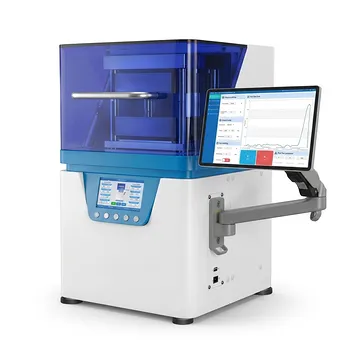
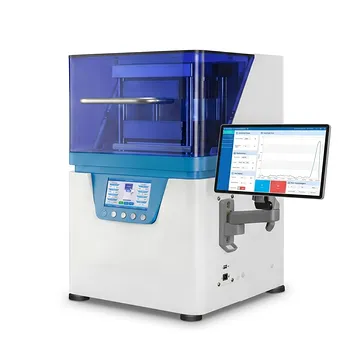
Hot pressing is primarily used to fabricate hard, brittle materials that require high density, as well as layered composite structures. While its most critical engineering application is consolidating technical ceramics and diamond-metal composites, it is also extensively used in the wood industry for man-made boards and in the production of specialized polymers.
Core Takeaway: Hot pressing is a densification process that combines heat and pressure to produce materials with superior mechanical and thermal properties. It is essential for materials that are difficult to bind or shape using standard methods, ranging from industrial ceramics to commercial plywood.
Engineering High-Performance Materials
The most technically demanding application of hot pressing involves materials that must withstand extreme stress or heat.
Hard and Brittle Consolidations
The process is critical for fabricating hard and brittle materials. This includes technical ceramics, which require high pressure to achieve the necessary density and structural integrity that other methods cannot provide.
Metal and Diamond Composites
Hot pressing is the standard for creating diamond-metal composite cutting tools. By consolidating diamond particles with metal binders under heat, manufacturers create tools capable of cutting the hardest substances known.
Advanced Metallurgy
Beyond ceramics, the technique is utilized in metallurgy. It produces high-density, high-strength metallic components used in demanding industrial environments.
Wood, Laminates, and Construction
While often associated with high-tech engineering, hot pressing is equally fundamental to the timber and furniture industries.
Man-Made Boards
The process is essential for manufacturing standard construction boards. This includes plywood, joinery board, and particle board, where layers or chips are bonded permanently under pressure.
Decorative Surfaces and Veneers
Hot pressing is used for surface pressing and pasting decorative materials. It allows for the drying and leveling of veneers, as well as the shaping of colorful decorative wood pieces for aesthetic applications.
Fabric and Decor
The technology extends to soft laminates. It is used to press and paste various fabrics and decorative materials onto rigid backings.
Polymers and Soft Goods
Hot pressing is adaptable enough to handle softer materials, provided the processing parameters are adjusted.
Polymer Processing
Various types of polymers are fabricated using hot pressing. However, these materials typically require significantly lower temperatures and pressures compared to ceramics or metals to avoid degradation.
Consumer Soft Goods
The method is suitable for producing flexible consumer items. Common examples include mouse pads, yoga mats, and insulation foam, where density and uniform thickness are key quality metrics.
Operational Distinctions and Trade-offs
While versatile, hot pressing is not a "one-size-fits-all" solution. The specific material dictates the operational approach.
Temperature and Pressure Sensitivity
There is a massive disparity in processing requirements. Hard materials (ceramics/metals) demand high heat and extreme force to achieve density. Conversely, polymers generally require reduced settings; applying ceramic-level parameters to polymers would likely destroy the material.
Material Application Specificity
The equipment configuration changes based on the output. A machine designed for leveling veneers or drying wood operates differently than one designed for consolidating metal composites. Users must match the specific press capabilities to the material's thermal and mechanical limits.
Making the Right Choice for Your Goal
Hot pressing is a broad category covering distinct manufacturing needs. Ensure your application aligns with the specific capabilities of the process.
- If your primary focus is Industrial Durability: Leverage hot pressing for technical ceramics and diamond composites to achieve maximum hardness and density.
- If your primary focus is Construction or Furniture: Use hot pressing for creating plywood, particle boards, and leveling veneers to ensure structural stability.
- If your primary focus is Consumer Products: Apply the process at lower settings to manufacture flexible goods like yoga mats, mouse pads, and insulation foams.
Summary: Whether for creating the hardest cutting tools or standard building materials, hot pressing is the definitive method for achieving high density and superior bonding in composite manufacturing.
Summary Table:
| Material Category | Specific Applications | Primary Benefit |
|---|---|---|
| Technical Ceramics | Industrial components, hard/brittle solids | High structural integrity & density |
| Composites | Diamond-metal cutting tools, metal alloys | Extreme hardness & durability |
| Wood & Timber | Plywood, particle board, veneers | Permanent bonding & leveling |
| Polymers & Soft Goods | Yoga mats, mouse pads, insulation foam | Uniform thickness & flexible density |
Elevate Your Material Fabrication with KINTEK
Are you looking to achieve superior density in ceramics or perfect bonding in advanced composites? KINTEK specializes in comprehensive laboratory pressing solutions tailored to your specific research and production needs.
Our extensive range includes:
- Manual & Automatic Presses for versatile lab work.
- Heated & Multifunctional Models for precise thermal control.
- Glovebox-Compatible & Isostatic Presses (CIP/WIP) for sensitive battery research and advanced metallurgy.
Don't settle for less than peak performance. Our experts are ready to help you select the ideal equipment for your application. Contact KINTEK Today to discover how our precision engineering can drive your innovation forward!
Related Products
- Automatic Hydraulic Hot Press with Large Plate and Precision Temperature Control for Advanced Material Sample Preparation and Industrial Research
- Heated Hydraulic Press Machine with Heated Plates for Vacuum Box Laboratory Hot Press
- Automatic High Temperature Heated Hydraulic Press Machine with Heated Plates for Lab
- Automatic Heated Hydraulic Press Machine with Hot Plates for Laboratory
- Automatic Hydraulic Heat Press Machine with Multi Stage Programmable Control and Integrated Water Cooling Plate Size 180x180mm
People Also Ask
- What are the specific features and applications of hydraulic hot press machines? Precision Solutions for Modern Labs
- How does an automatic hydraulic press operate? Achieve Precision and Consistency in Lab Pelleting
- What are the advantages and common applications of an automatic hydraulic press? Elevate Your Lab's Precision
- What is the technical significance of setting a precise dwell time? Achieve Peak Material Density and Stability
- When is an automatic hydraulic press more suitable than a manual press? Scale Your Lab with Precision & Speed