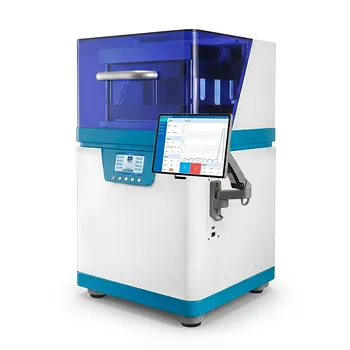
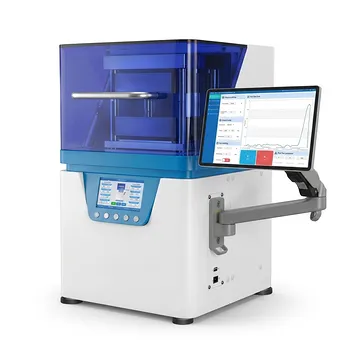
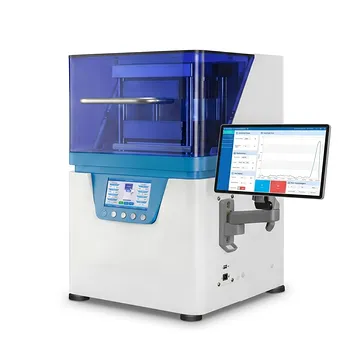
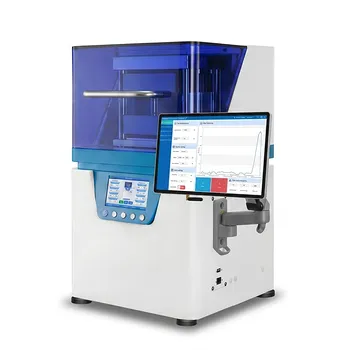
Electric heating presses and steel molds are the primary tools used to trigger the chemical transformation of silicone rubber into a high-performance material. This equipment provides the precise thermal energy—typically around 160 °C—and mechanical pressure required to activate crosslinking agents, such as organic peroxides. This process converts raw, plastic silicone into a stable, three-dimensional elastic network while ensuring the final composite meets exact geometric specifications for testing and industrial use.
The synergy between controlled heat and high pressure ensures a uniform crosslinking density and the removal of internal defects. This results in silicone rubber composites with optimized structural integrity, thermal stability, and mechanical strength.
The Critical Role of Thermal Energy
The electric heating press serves as the primary source of kinetic energy required for chemical synthesis within the rubber matrix.
Activating the Crosslinking Reaction
Silicone rubber composites rely on latent curing agents, often organic peroxides, that remain inactive at room temperature. The press maintains a stable thermal field, usually at 160 °C, to provide the energy necessary to break chemical bonds and initiate the formation of a 3D molecular network.
Achieving Uniform Crosslink Density
Consistency in temperature across the heating plates is vital for material uniformity. A stable thermal environment ensures that the entire sample reaches the same level of vulcanization, which determines the final product’s thermal stability and resistance to degradation.
Mechanical Pressure and Structural Integrity
Beyond heat, the application of high pressure (often reaching 1500 psi) is a fundamental requirement for high-quality molding.
Elimination of Internal Defects
Pressure is applied to compress the rubber mixture, effectively expelling air bubbles and volatiles trapped within the compound. Removing these voids is critical to preventing structural weak points that could lead to mechanical failure or inaccurate results during micro-combustion testing.
Facilitating Material Flow
High-pressure environments ensure the silicone rubber compound fully fills every cavity of the mold. This "flow" is necessary to achieve high dimensional stability and to ensure that fillers are distributed evenly throughout the vulcanized sheet.
Precision Shaping with Steel Molds
Steel molds are more than just containers; they are precision instruments that define the physical characteristics of the composite.
Standardizing Geometric Dimensions
To conduct accurate scientific analysis, such as Oxygen Index (LOI) tests, samples must have exact dimensions (e.g., 50 x 10 x 4 mm). Steel molds provide the geometric integrity required to produce standardized specimens that yield reproducible data.
Thermal Conductivity and Durability
Steel is utilized for its excellent thermal conductivity, allowing heat from the press to transfer efficiently and evenly to the rubber. Its rigidity ensures the mold does not deform under the high pressures required to transform the rubber from a plastic state to an elastic state.
Understanding the Trade-offs
While electric presses and steel molds are essential, the process requires careful calibration to avoid material failure.
The Risk of Thermal Gradients
If the heating plates are not perfectly calibrated, thermal gradients can occur, leading to "over-curing" on the surface while the core remains "under-cured." This imbalance results in poor tensile strength and inconsistent mechanical properties across the sample.
Pressure Management vs. Flash
Excessive pressure can cause "flash," where material escapes the mold seal, leading to dimensional inaccuracies. Conversely, insufficient pressure fails to exclude oxygen, which can inhibit the peroxide reaction and result in a tacky, poorly crosslinked surface.
Making the Right Choice for Your Goal
When utilizing these tools, your primary objective will dictate your specific operational parameters.
- If your primary focus is mechanical durability: Prioritize higher pressure and longer soak times to ensure a dense, void-free crosslinked network.
- If your primary focus is thermal stability and fire testing: Ensure the press maintains a highly precise, constant temperature (±1 °C) to produce consistent crosslinking density for oxygen index accuracy.
- If your primary focus is rapid prototyping: Use highly conductive steel alloys for molds to reduce the time needed for the internal temperature of the rubber to reach the activation threshold.
By mastering the balance of heat, pressure, and containment, you ensure the successful transition of silicone rubber from a raw compound to a high-performance engineering material.
Summary Table:
| Component | Key Function | Benefit for Silicone Rubber |
|---|---|---|
| Heating Press | Controlled Thermal Energy | Activates crosslinking agents (~160°C) for stable 3D networks. |
| High Pressure | Mechanical Compression | Eliminates air bubbles (1500 psi) & ensures defect-free integrity. |
| Steel Molds | Precision Containment | Standardizes geometric dimensions for accurate scientific testing. |
| Conductivity | Efficient Heat Transfer | Ensures uniform vulcanization density throughout the material. |
Elevate Your Material Research with KINTEK
Achieve maximum precision in your material synthesis with KINTEK’s advanced laboratory pressing solutions. We specialize in providing the reliability needed for high-performance battery research and composite molding, offering a comprehensive range of equipment including:
- Manual & Automatic Presses for versatile lab workflows.
- Heated & Multifunctional Models for precise thermal vulcanization.
- Glovebox-Compatible & Isostatic Presses (Cold/Warm) for specialized environments.
Ready to optimize your lab’s vulcanization process and ensure superior structural integrity in your composites? Contact our experts today to find your perfect solution!
References
- Przemysław Rybiński, Dariusz Bradło. Influence of cenosphere particles on thermal properties composites of silicon rubber. DOI: 10.1007/s10973-015-4829-0
This article is also based on technical information from Kintek Solution Knowledge Base .
Related Products
- Cylindrical Lab Electric Heating Press Mold for Laboratory Use
- Automatic Heated Hydraulic Press Machine with Heated Plates for Laboratory
- Lab Heat Press Special Mold
- Automatic Heated Hydraulic Press Machine with Hot Plates for Laboratory
- Automatic Hydraulic Hot Press with Large Plate and Precision Temperature Control for Advanced Material Sample Preparation and Industrial Research
People Also Ask
- What critical process conditions does a laboratory heated lab press provide? Optimize AEM Electrolyzer Assembly
- Why is a high-precision laboratory heated press required for self-healing polyurethane? Optimize Molecular Repair
- What is the key role of a laboratory heated press in the fabrication of plastic crystal polymer infiltrated separators? Achieve Uniform, High-Performance Battery Separators
- How does a laboratory electric heated press ensure sample quality? Optimize SiR-EPDM vulcanization and molding.
- What is the significance of pressure and temperature control in a laboratory heated press for ZIF-8/NF coatings?