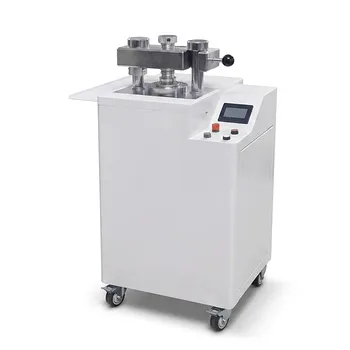
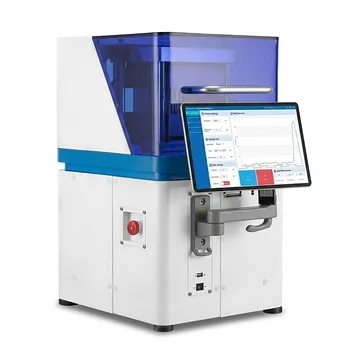
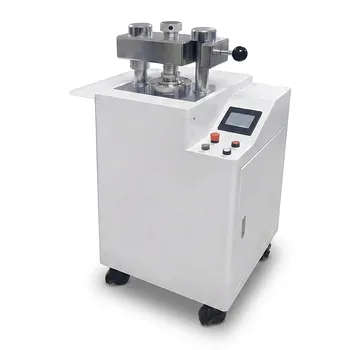
Manual hydraulic presses represent the intersection of affordability and essential utility. They achieve cost-effectiveness by eliminating complex automation systems, resulting in a significantly lower purchase price compared to automatic counterparts. For laboratories that do not require continuous, high-volume throughput, these presses offer the ability to produce high-quality samples without necessitating a large capital investment.
While automatic presses are designed for speed and autonomy, manual hydraulic presses are the superior economic choice for low-frequency use. They deliver uncompromised sample quality and high customization potential, maximizing value for budget-conscious facilities.
The Economics of Manual Operation
Lower Initial Investment
The most immediate benefit of a manual hydraulic press is the reduced upfront cost. Automatic presses contain expensive components such as motorized pumps, programmable logic controllers, and advanced sensor arrays.
By relying on mechanical leverage and operator effort rather than expensive electronics, manual presses strip away these costs. This makes them accessible to smaller operations or startups with tighter capital restrictions.
Suitability for Low-Volume Workflows
Cost-effectiveness is not just about the price tag; it is about paying only for the capacity you need. If your laboratory only prepares samples occasionally, a high-speed automatic press represents wasted potential and idle capital.
Manual presses are ideal for "infrequent use" scenarios. They allow labs to maintain in-house testing capabilities without the overhead of machinery designed for industrial-scale production.
Performance Capabilities
Uncompromised Sample Quality
It is a common misconception that lower cost equates to lower quality results. However, manual hydraulic presses are fully capable of producing professional-grade samples suitable for rigorous testing.
The fundamental mechanism of applying pressure remains effective, ensuring that the integrity of your research or testing is not negatively impacted by the lack of automation.
Space Efficiency and Versatility
Manual models often offer a distinct advantage in terms of physical footprint. Available in both full-size and handheld configurations, they are excellent solutions for facilities where bench space is a premium commodity.
Despite their simpler design, these presses often offer a high level of customization. This allows technicians to adapt the equipment to specific experimental needs just as effectively as they could with larger, more expensive units.
Understanding the Trade-offs
Physical Effort and Efficiency
The primary trade-off for the lower cost is the requirement for physical labor. Unlike automatic systems that allow technicians to multitask while the cycle runs, manual presses require the operator's full attention and physical effort to generate pressure.
Consistency and Repeatability
While capable of high quality, manual presses are susceptible to human error. Automated presses remove the operator from the equation, guaranteeing identical pressure loads every time.
With a manual press, the pressure applied can vary slightly depending on the operator. This may lead to minor inconsistencies between samples, which is a critical factor to consider if your protocols require extreme levels of repeatability.
Making the Right Choice for Your Lab
To determine if the cost savings of a manual press justify the operational trade-offs, evaluate your specific goals:
- If your primary focus is Budget and Flexibility: A manual press is the optimal choice, allowing you to perform high-quality testing with minimal financial risk and a smaller physical footprint.
- If your primary focus is Throughput and Consistency: An automatic press is likely a better long-term investment, as the higher cost pays for itself through time savings and the elimination of operator variability.
Ultimately, a manual hydraulic press is the smart, pragmatic choice for operators who value precision results but do not require the scale of industrial automation.
Summary Table:
| Feature | Manual Hydraulic Press | Automatic Hydraulic Press |
|---|---|---|
| Initial Investment | Significantly Lower | High Capital Cost |
| Power Source | Operator Effort (Mechanical) | Motorized Pump |
| Ideal Workflow | Low-Volume / Infrequent | High-Throughput / Continuous |
| Footprint | Compact & Portable Options | Larger & Bench-Dominant |
| Repeatability | Operator Dependent | Programmable & Consistent |
| Maintenance | Simple & Low-Cost | Requires Technical Support |
Maximize Your Lab Budget with KINTEK Pressing Solutions
Are you looking to balance performance with affordability? KINTEK specializes in comprehensive laboratory pressing solutions tailored to your specific research needs. Whether you require manual, automatic, heated, or multifunctional models, our equipment delivers the precision your samples demand.
From glovebox-compatible presses for sensitive battery research to cold and warm isostatic presses for advanced materials, KINTEK provides the technical expertise and high-quality hardware to advance your projects.
Ready to find the perfect press for your workflow? Contact us today to receive a personalized quote and expert consultation.
Related Products
- Manual Heated Hydraulic Lab Press with Integrated Hot Plates Hydraulic Press Machine
- Laboratory Manual Heated Hydraulic Press Machine with Hot Plates
- Manual Laboratory Hydraulic Press Lab Pellet Press
- Manual Laboratory Hydraulic Pellet Press Lab Hydraulic Press
- Laboratory Split Manual Heated Hydraulic Press Machine with Hot Plates
People Also Ask
- Why is a laboratory hydraulic press with heating plates required for PLA/TEC films? Achieve Precise Sample Integrity
- Why is a manual hydraulic heated lab press essential for compleximer materials? Unlock Advanced Material Synthesis
- Function of a Laboratory Hydraulic Press with Heated Platens in SSE? Enhance Battery Density & Conductivity
- What role does a lab manual hydraulic press play in Li9B19S33 ionic conductivity? Optimize Pellet Characterization
- What are the main benefits of performing proper maintenance on a heated lab press? Ensure Accuracy & Safety