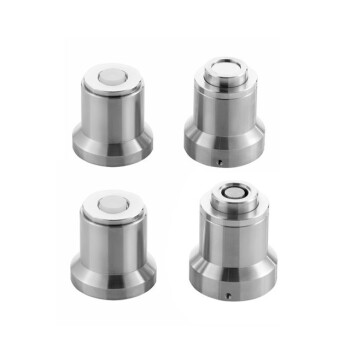
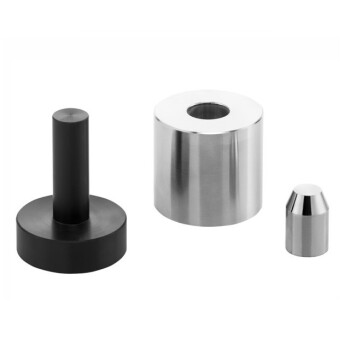
Specialized mold-type battery frames are essential for validating solid-state battery performance because they integrate precise pressure regulation with inert atmosphere protection. These devices allow researchers to measure ionic conductivity and cycling stability under controlled stack pressure, simulating the actual mechanical environment of a working battery to ensure reproducible and practically valuable results.
The Core Insight: In solid-state battery research, mechanical stability is inseparable from electrochemical performance. Specialized molds solve the critical problem of interfacial contact loss caused by volume changes, ensuring that gathered data reflects true material chemistry rather than mechanical failure.
Solving the Chemo-Mechanical Challenge
Managing Volume Changes
Solid-state batteries, particularly those using sulfide electrolytes, experience significant chemo-mechanical volume changes during charging and discharging. Without external constraints, this expansion and contraction leads to particle shrinkage and the loss of interfacial contact.
Preventing Interfacial Failure
Specialized molds use torque control or dynamic sensors to apply constant external stack pressure. This mechanism compensates for electrode volume fluctuations, maintaining tight physical contact between the lithium metal anode, electrolyte, and cathode. This prevents interface cracking and peeling, which are common causes of premature battery failure.
Ensuring Data Accuracy
By stabilizing the physical interface, these molds ensure that the impedance spectra and cycle life data collected represent the true behavior of the materials. This allows researchers to distinguish between chemical instability and mechanical contact issues.
Material Engineering for Signal Integrity
The Role of PEEK (Polyether Ether Ketone)
These molds typically utilize PEEK for the frame body due to its unique combination of high mechanical strength and electrical insulation. PEEK is chemically inert, meaning it will not react with reactive sulfide electrolytes, and it can withstand repeated high-pressure pressing without deforming.
Direct Electrochemical Testing
The superior insulation of PEEK is critical for in-situ testing. It allows the electrochemical cycling to occur directly within the mold frame, ensuring that measured signals originate solely from the internal processes of the battery and are not distorted by external shorts or noise.
Titanium Alloy Current Collectors
High-precision titanium alloy plungers are often paired with PEEK molds. These serve a dual purpose: they act as robust pistons to transmit stable stack pressure and function as current collectors for electrical signal transmission.
From Assembly to Testing
Achieving High Densification
Before testing even begins, these molds play a crucial role in assembly. Used with laboratory hydraulic presses, they facilitate high cold-pressing pressures (up to 375 MPa).
Eliminating Voids
This high-pressure environment eliminates voids between powder particles. It achieves the high densification of electrolyte and electrode layers necessary to establish the continuous ionic and electronic transmission networks required for high-performance operation.
Understanding the Constraints
The Necessity of Specialized Hardware
Unlike liquid electrolyte batteries, which can often be tested in simple coin cells, solid-state research requires this specialized hardware. Standard testing rigs generally lack the ability to apply the uniform, high-magnitude pressure required to prevent contact resistance from dominating the results.
Material Compatibility Limits
While PEEK and Titanium are excellent for many solid-state chemistries, researchers must always verify chemical compatibility. The "inert" nature of these materials is relative to specific electrolytes (like sulfides); new experimental chemistries must be cross-checked to ensure the mold itself does not influence the electrochemical reaction.
Making the Right Choice for Your Goal
To maximize the value of your solid-state battery research, apply these specialized frames based on your specific objective:
- If your primary focus is Assembly Quality: Utilize the mold's high-pressure tolerance (375 MPa) to maximize densification and eliminate particle voids.
- If your primary focus is Long-Term Cycling: Rely on the pressure regulation mechanism to maintain constant stack pressure, mitigating the risks of volume expansion and interfacial peeling.
- If your primary focus is Signal Purity: Leverage the insulating properties of PEEK to isolate the electrochemical reaction and prevent short circuits during direct testing.
The use of specialized mold-type frames is not merely a procedural step; it is the fundamental enabler for distinguishing between a material's theoretical potential and its practical viability.
Summary Table:
| Feature | Benefit for Solid-State Battery Research |
|---|---|
| PEEK Insulation | High mechanical strength; prevents electrical shorts and chemical reactions. |
| Titanium Plungers | Robust pressure transmission and stable current collection for signal integrity. |
| Pressure Regulation | Maintains constant stack pressure (up to 375 MPa) to combat volume changes. |
| In-situ Testing | Facilitates direct electrochemical measurements without removing the sample. |
| High Densification | Eliminates voids between powder particles to optimize ionic conductivity. |
Elevate Your Solid-State Battery Research with KINTEK
Precise mechanical control is the key to unlocking true electrochemical performance. At KINTEK, we specialize in comprehensive laboratory pressing solutions designed specifically for the rigorous demands of battery innovation.
Our range includes:
- Manual & Automatic Presses for consistent sample preparation.
- Specialized Mold-Type Frames featuring PEEK insulation and titanium collectors.
- Heated & Multifunctional Models for advanced material characterization.
- Isostatic Presses (CIP/WIP) for uniform high-density battery components.
Whether you are working on sulfide electrolytes or advanced lithium anodes, our glovebox-compatible systems ensure your research is reproducible and precise.
Contact KINTEK today to find the perfect pressing solution for your lab!
References
- Victor Landgraf, Theodosios Famprikis. Disorder-Mediated Ionic Conductivity in Irreducible Solid Electrolytes. DOI: 10.1021/jacs.5c02784
This article is also based on technical information from Kintek Solution Knowledge Base .
Related Products
- Lab Button Battery Disassembly and Sealing Mold
- Lab Button Battery Tablet Press Sealing Mold
- Lab Cylindrical Press Mold for Laboratory Use
- Carbide Lab Press Mold for Laboratory Sample Preparation
- Lab Infrared Press Mold for Laboratory Applications
People Also Ask
- How does a sealed battery mold facilitate the assembly and testing of asymmetric supercapacitors using VO2?
- What is the function of specialized battery molds and sealing consumables? Optimize Your In-situ XRD Testing Today
- How does the geometry of laboratory molds influence mycelium-based composites? Optimize Density and Strength
- Why are specialized battery test molds used? Ensure Peak Performance for All-Solid-State Sodium Batteries (ASSIBs)
- What role do battery testing molds play in electrolyte performance? Exploring Pressure vs. Viscoelasticity