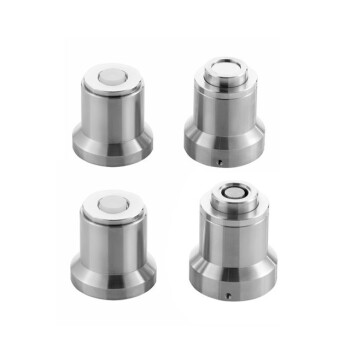
Zirconia grinding jars and balls, particularly those made of yttria-stabilized zirconia (YSZ), are preferred primarily for their exceptional hardness, toughness, and superior wear resistance. These physical properties are critical during high-intensity ball milling, as they prevent the grinding media from degrading and contaminating the halide solid-state electrolyte powder with unwanted debris.
Core Insight: The success of halide electrolyte synthesis relies on preventing material cross-contamination. Zirconia’s resistance to wear ensures that the extreme physical forces required for milling do not compromise the chemical purity essential for the electrolyte's electrochemical stability.
The Physical Demands of Halide Synthesis
Exceptional Hardness and Toughness
The preparation of halide solid-state electrolytes requires high-energy processes. Yttria-stabilized zirconia (YSZ) is selected because it offers a unique combination of hardness and fracture toughness.
This allows the media to deliver significant impact and shear forces without cracking or shattering under stress.
Withstanding Prolonged Processing
The synthesis process often involves mechanochemical reactions that can exceed 10 hours of continuous milling.
Standard materials would degrade quickly under this sustained duration. Zirconia maintains its structural integrity throughout these extended cycles, ensuring consistent energy transfer to the powder.
The Criticality of Purity
Eliminating Wear Debris
The primary danger in ball milling is the introduction of "wear debris"—microscopic particles from the jar or balls that mix into the product.
Because zirconia has superior wear resistance, it exhibits a very low wear rate even during high-intensity milling. This effectively blocks the introduction of foreign contaminants into the halide powder.
Preserving Electrochemical Stability
Halide solid-state electrolytes are highly sensitive to impurities. The presence of foreign debris can trigger unwanted side reactions.
By maintaining high purity, zirconia media protects the chemical composition of the electrolyte. This is essential for ensuring the material achieves its intended ionic conductivity and electrochemical performance.
Common Pitfalls and Considerations
The Risk of Insufficient Impact Energy
To facilitate the necessary alloying or chemical reactions, the grinding media must provide sufficient impact energy.
If a material is hard but too light, it may not generate the force required for the reaction. Zirconia provides the necessary mass and hardness to drive these mechanochemical changes effectively.
Chemical Inertness is Non-Negotiable
Beyond physical wear, the media must not chemically react with the powder.
Zirconia offers excellent chemical inertness. This prevents the media from acting as a reactant, ensuring that the synthesized fluoride or halide ion conductors remain chemically pure.
Making the Right Choice for Your Goal
When designing your synthesis protocol for solid-state electrolytes, align your equipment choice with your specific stability targets.
- If your primary focus is Electrochemical Stability: Prioritize yttria-stabilized zirconia to eliminate impurities that cause side reactions and degrade performance.
- If your primary focus is Process Durability: Select zirconia media to withstand milling durations exceeding 10 hours without introducing wear debris.
Ultimately, zirconia is not just a grinding tool but a containment strategy that safeguards the chemical integrity of your final electrolyte material.
Summary Table:
| Feature | Advantage for Halide Synthesis |
|---|---|
| Material | Yttria-Stabilized Zirconia (YSZ) |
| Hardness/Toughness | High fracture toughness prevents media shattering during high-energy milling |
| Wear Resistance | Extremely low wear rates minimize debris and cross-contamination |
| Chemical Inertness | Prevents side reactions with sensitive halide ion conductors |
| Process Capability | Ideal for continuous milling durations exceeding 10 hours |
Elevate Your Battery Research with KINTEK
Maximize the purity and performance of your solid-state electrolytes with KINTEK’s premium grinding solutions. KINTEK specializes in comprehensive laboratory pressing and preparation solutions, offering a versatile range of manual, automatic, heated, and multifunctional models, as well as cold and warm isostatic presses tailored for advanced battery research.
Our Yttria-Stabilized Zirconia media and glovebox-compatible equipment are designed to meet the rigorous demands of halide synthesis, ensuring zero contamination and superior electrochemical stability.
Ready to optimize your lab's efficiency? Contact us today to find the perfect milling and pressing setup!
References
- Priya Ganesan, Axel Groß. In‐Depth Analysis of the Origin of Enhanced Ionic Conductivity of Halide‐Based Solid‐State Electrolyte by Anion Site Substitution. DOI: 10.1002/batt.202500378
This article is also based on technical information from Kintek Solution Knowledge Base .
Related Products
- Lab Cylindrical Press Mold for Laboratory Use
- Manual Laboratory Hydraulic Press Lab Pellet Press
- Laboratory Hydraulic Pellet Press for XRF KBR FTIR Lab Press
- Lab Ball Press Mold
- Automatic Laboratory Hydraulic Press for XRF and KBR Pellet Pressing
People Also Ask
- What is the purpose of incorporating cartridge heaters into a lab press mold for MLCC block compression? Optimize Results
- Why is precise cooling management of the lab press mold necessary? Protect Core Integrity in Thermoforming
- What is the function of a pressing tool in thermoplastic panels? Master Precision Shaping & Fusion Bonding
- Why is a high-performance laboratory molding press critical for in-situ electrolyte formation? Unlock Battery Success
- How does the geometry of laboratory molds influence mycelium-based composites? Optimize Density and Strength