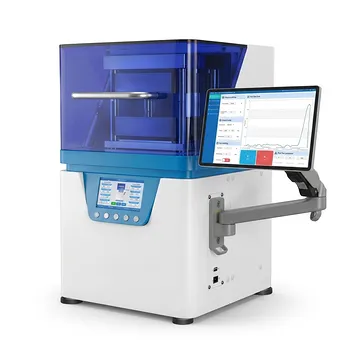
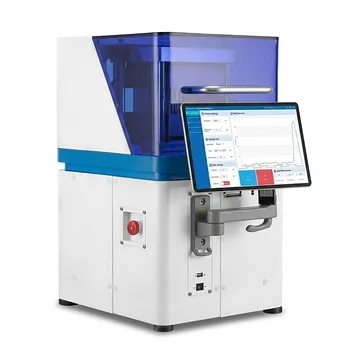
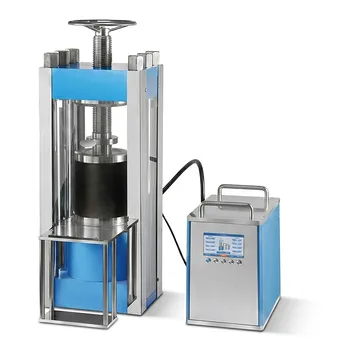
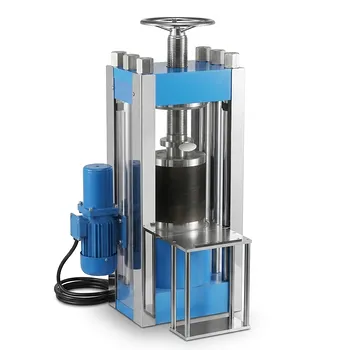
The precision of a laboratory hot press is the bridge between raw material and a functional bio-composite. A laboratory hot press is necessary because it provides the simultaneous application of high temperature (specifically 420 K for HDPE) and high pressure (10–15 MPa) required to melt the polyethylene matrix completely. This ensures the polymer flows into the organic filler, such as fish scale powder, to eliminate air bubbles and create a dense, uniform sample for accurate testing.
Core Takeaway: Precise temperature and pressure control are mandatory to reach the polymer's optimal flow window, allowing for complete interfacial fusion between the matrix and reinforcements. Without this control, the resulting bio-composites suffer from internal voids and non-uniform density, rendering mechanical and electrical test results unreliable.
The Role of Temperature in Matrix Liquefaction
Achieving the Optimal Melting State
For high-density polyethylene (HDPE) bio-composites, maintaining a precise temperature of 420 K (approximately 147°C) is critical. This specific heat level ensures the thermoplastic matrix transitions from a solid to a fully molten state without reaching temperatures that might degrade the organic bio-fillers.
Managing Viscosity for Effective Infiltration
Precise temperature control directly influences the viscosity of the polyethylene melt. By keeping the polymer within its optimal flow window, the press drives the molten plastic into the porous network of the bio-based reinforcements, ensuring a transition from a porous mixture to a dense surface structure.
Pressure as a Catalyst for Structural Integrity
Elimination of Internal Air Bubbles and Voids
The application of constant pressure, typically between 10–15 MPa, is vital for forced degassing. This pressure squeezes out residual air trapped during the initial mixing phase, preventing the formation of internal pores that would otherwise act as stress concentrators or electrical insulators.
Enhancing Interfacial Bonding Strength
Simultaneous heat and pressure facilitate interfacial fusion, where the matrix and the reinforcing phase bond at a molecular level. This tight interface is essential for optimizing contact impedance and ensuring that mechanical loads are efficiently transferred from the polyethylene matrix to the bio-composite fillers.
Ensuring Consistency for Analytical Accuracy
Dimensional Precision and Uniform Thickness
Laboratory presses allow for the production of films with standardized thickness, such as 350 ± 25 µm. This dimensional accuracy is non-negotiable when calculating properties like tensile modulus or electrical conductivity, where specimen geometry directly impacts the final data.
Standardizing Specimen Density for Reliable Testing
By providing a stable processing environment, the hot press ensures that every sample produced has a uniform material density. This repeatability allows researchers to compare different bio-composite formulations with the confidence that observed variations are due to material composition rather than fabrication defects.
Understanding the Trade-offs and Pitfalls
Thermal Degradation vs. Incomplete Fusion
Setting the temperature too low results in high viscosity and poor bonding, while setting it too high can cause thermal degradation of the polyethylene or the bio-fillers. Finding the "flow window" is a delicate balance that requires high-precision heating elements.
The Risk of Pressure-Induced Internal Stress
While high pressure (up to 20 MPa in some composites) ensures density, excessive or uneven pressure can introduce residual internal stresses or cause the matrix to "squeeze out" of the mold. Progressive pressurization—gradually increasing the load—is often required to maintain the structural integrity of the bio-composite sheet.
How to Apply This to Your Project
When fabricating polyethylene-based bio-composites, your choice of processing parameters should be dictated by your specific analytical goals.
- If your primary focus is Electrical Conductivity: Prioritize precise temperature control to ensure the matrix fully infiltrates nanoparticle or bio-powder networks to optimize interface contact impedance.
- If your primary focus is Mechanical Durability: Focus on progressive pressurization (e.g., 50 bar to 150 bar) to eliminate all internal voids and maximize the bonding strength between the matrix and fibers.
- If your primary focus is Standardized Testing: Utilize high-precision molds and spacers within the press to ensure a uniform thickness across all specimens for accurate tensile and flexural measurements.
Mastering the synergy between thermal flow and mechanical compression is the only way to transform raw polyethylene and bio-fillers into a high-performance, defect-free composite material.
Summary Table:
| Processing Parameter | Optimal Value/Range | Key Benefit for Bio-Composites |
|---|---|---|
| Temperature | 420 K (147°C) | Ensures matrix liquefaction and optimal viscosity for filler infiltration. |
| Pressure | 10 – 15 MPa | Drives forced degassing to eliminate internal voids and air bubbles. |
| Interfacial Fusion | Simultaneous Heat/Pressure | Maximizes bonding strength between the polymer matrix and organic fillers. |
| Dimensional Accuracy | 350 ± 25 µm | Provides standardized thickness for reliable tensile and electrical testing. |
Elevate Your Material Research with KINTEK Precision Pressing
Don't let internal voids or inconsistent density compromise your research findings. KINTEK specializes in comprehensive laboratory pressing solutions, offering manual, automatic, heated, multifunctional, and glovebox-compatible models, as well as cold and warm isostatic presses.
Whether you are pioneering battery research or developing advanced bio-composites, our technology ensures the perfect synergy of thermal flow and mechanical compression. Contact us today to find the ideal pressing solution for your laboratory!
References
- Gojayev EM, V. V. Salimova. Dielectric properties of bionano-composites modified by fish scales. DOI: 10.30574/gjeta.2021.9.2.0113
This article is also based on technical information from Kintek Solution Knowledge Base .
Related Products
- 24T 30T 60T Heated Hydraulic Lab Press Machine with Hot Plates for Laboratory
- Laboratory Split Manual Heated Hydraulic Press Machine with Hot Plates
- Heated Hydraulic Press Machine with Heated Plates for Vacuum Box Laboratory Hot Press
- Automatic Heated Hydraulic Press Machine with Hot Plates for Laboratory
- Automatic Large Format Laboratory Heated Hydraulic Press 400x400mm Plate Capacity
People Also Ask
- What is the critical role of a laboratory heated hydraulic press? Mastering PVC Sample Prep for Testing
- Why is a heated laboratory hydraulic press recommended for composite cathodes? Optimize Solid-State Battery Interfaces
- Why Use a Laboratory Heated Hydraulic Press for SSAB CCM? Optimize Solid-State Battery Interfacial Bonding
- Why is a laboratory heated hydraulic press essential for PHB films? Achieve Flawless Material Characterization
- What role does a laboratory heated hydraulic press play in LTCC? Essential for High-Density Ceramic Lamination