Electrode sheets must be processed in a vacuum drying oven to eliminate residual polar solvents and trace moisture that are fatal to battery performance. While standard heat can evaporate surface liquids, only the combination of vacuum pressure and elevated temperature can extract contaminants trapped deep within the electrode’s micropores without thermally degrading the active materials.
Core Takeaway
Lithium-ion chemistry is hypersensitive to water. The primary function of vacuum drying is to prevent moisture from reacting with the electrolyte (specifically LiPF6) to form hydrofluoric acid (HF). This acid corrodes the cathode structure and drastically shortens the battery's cycle life.
The Critical Chemistry: Why Drying is Non-Negotiable
Preventing Electrolyte Hydrolysis
The most urgent reason for vacuum drying is the removal of trace moisture. If water remains in the electrode, it reacts with electrolyte salts like LiPF6 upon assembly.
This reaction produces hydrofluoric acid (HF), a highly corrosive compound. HF attacks the internal components of the battery, leading to severe degradation of the cathode material and potential safety hazards.
Removing Residual Solvents
During electrode fabrication, organic solvents such as N-Methyl-2-pyrrolidone (NMP) are used to create the slurry. These must be completely removed before assembly.
Vacuum drying ensures these solvents are evaporated fully. Residual solvents can cause parasitic side reactions during cycling and weaken the adhesion between the active material and the current collector.
The Physics of the Vacuum: Advantages Over Standard Heating
Deep Pore Penetration
Electrode sheets are porous structures. Standard convection ovens often fail to remove solvents trapped inside microscopic pores.
The vacuum environment lowers the pressure, forcing trapped volatiles out of the micropores. This ensures a uniform distribution of mechanical stress and prevents coating cracks that can occur if pockets of solvent remain.
Lowering Boiling Points for Thermal Protection
High temperatures can degrade certain active materials, damage binders, or alter crystal structures.
By reducing the environmental pressure, a vacuum oven lowers the boiling point of solvents and water. This allows for rapid evaporation at lower, safer temperatures, preserving the functional groups and morphology of the electrode materials.
Preventing Oxidation
Standard drying exposes materials to hot air, which can oxidize the metal current collectors (copper or aluminum) or the active materials themselves.
Vacuum drying removes oxygen from the chamber. This inert environment protects the electrode components from oxidation, maintaining their electrical conductivity and electrochemical stability.
Operational Considerations and Trade-offs
The Risk of Re-absorption
Dried electrode sheets are highly hygroscopic; they act like sponges for moisture.
The benefits of vacuum drying are instantly negated if the transfer from the oven to the assembly environment (like a glovebox) is not managed strictly. Exposure to ambient air for even a few seconds can reintroduce enough moisture to ruin the cell.
Equipment Limits and Maintenance
While effective, vacuum drying puts stress on laboratory equipment. Evaporated corrosive solvents can damage vacuum pumps if cold traps are not used or maintained.
Furthermore, drying speed must be balanced. Reducing pressure too quickly can cause "bumping," where solvents boil violently, potentially damaging the uniformity of the electrode coating.
Ensuring Process Integrity for Your Application
To maximize the reliability of your test batteries, align your drying parameters with your specific material constraints.
- If your primary focus is Cycle Life: Prioritize extended drying times (e.g., 12-24 hours) to ensure moisture is removed below trace levels, preventing HF formation.
- If your primary focus is Material Structure: Use a higher vacuum level to lower the required temperature, protecting sensitive functional groups or crystal lattices from thermal degradation.
- If your primary focus is Coating Adhesion: Ensure the vacuum ramp-rate is controlled to prevent solvent bumping, which ensures the mechanical integrity of the active material layer.
A meticulously dried electrode is the baseline requirement for obtaining valid, reproducible electrochemical data.
Summary Table:
| Feature | Vacuum Drying Benefit | Impact on Battery Performance |
|---|---|---|
| Moisture Removal | Prevents LiPF6 hydrolysis and HF acid formation | Extends cycle life and prevents cathode corrosion |
| Solvent Extraction | Deep-pore removal of residual NMP solvents | Prevents parasitic side reactions and improves adhesion |
| Thermal Protection | Lowers boiling points of volatile contaminants | Preserves material morphology and binder integrity |
| Oxidation Control | Oxygen-free environment during heating | Maintains conductivity of copper and aluminum collectors |
| Structural Integrity | Controlled evaporation avoids coating cracks | Ensures uniform mechanical stress and stable cycling |
Maximize Your Battery Research Precision with KINTEK
Don't let trace moisture compromise your electrochemical data. KINTEK specializes in comprehensive laboratory pressing and drying solutions, offering manual, automatic, heated, and glovebox-compatible models designed specifically for sensitive battery materials. Whether you need cold isostatic presses for electrode density or advanced vacuum ovens for moisture-free processing, we provide the tools necessary for superior cell assembly.
Ready to elevate your lab's efficiency? Contact us today to find the perfect drying solution!
References
- Antunes Staffolani, Francesco Nobili. Tailoring the Electrochemical Performance of SnO<sub>2</sub>‐Based Anodes for Li‐Ion Batteries: Effect of Morphology and Composite Matrix. DOI: 10.1002/admt.202402058
This article is also based on technical information from Kintek Solution Knowledge Base .
Related Products
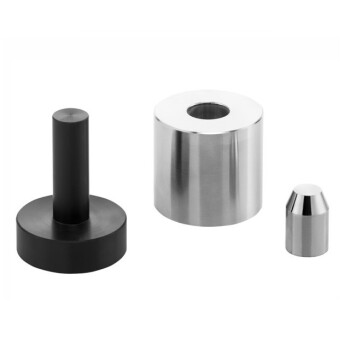
- Lab Cylindrical Press Mold for Laboratory Use
- Lab Double Plate Heating Mold for Laboratory Use
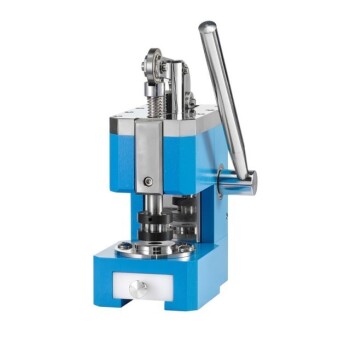
- Lab Button Battery Disassembly and Sealing Mold
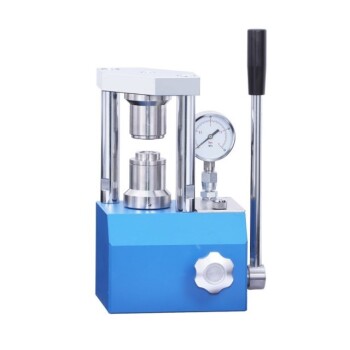
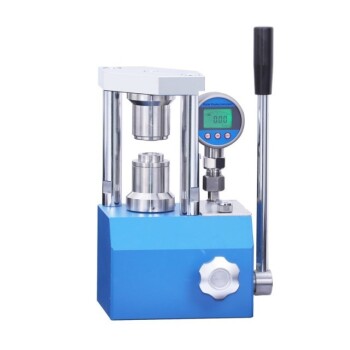
- Lab Button Battery Tablet Press Sealing Mold
- Laboratory Hydraulic Split Electric Lab Pellet Press
People Also Ask
- What is the purpose of incorporating cartridge heaters into a lab press mold for MLCC block compression? Optimize Results
- What is the function of a pressing tool in thermoplastic panels? Master Precision Shaping & Fusion Bonding
- Why is precise cooling management of the lab press mold necessary? Protect Core Integrity in Thermoforming
- Why is a high-performance laboratory molding press critical for in-situ electrolyte formation? Unlock Battery Success
- How does the geometry of laboratory molds influence mycelium-based composites? Optimize Density and Strength