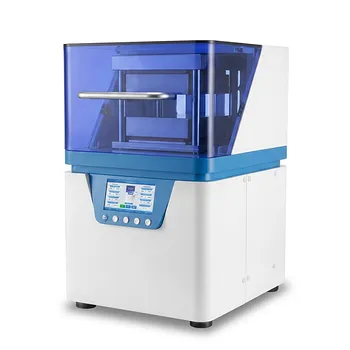
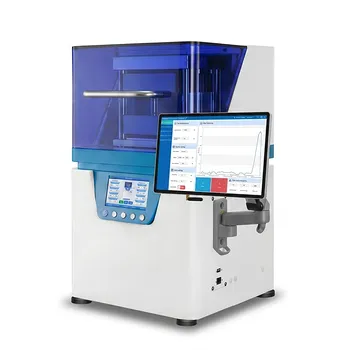
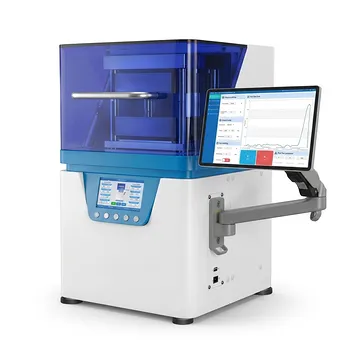
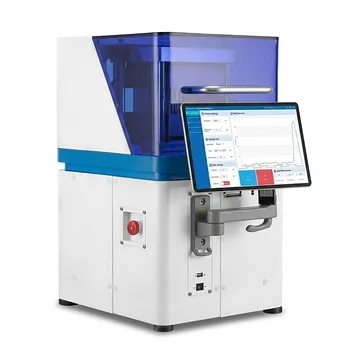
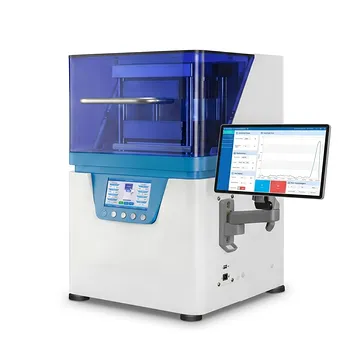
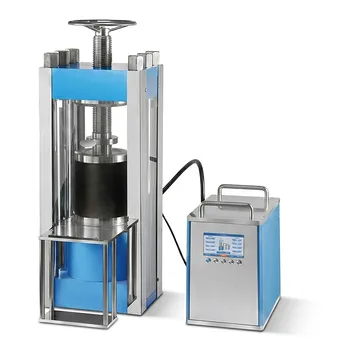
Vacuum Hot Pressing (VHP) is an advanced manufacturing process that combines a vacuum or controlled atmosphere with simultaneous hot press forming and high-temperature sintering. This technique is designed specifically to shape and consolidate materials that are difficult to process, ensuring they achieve maximum density and structural integrity.
The core advantage of VHP lies in its ability to eliminate oxidation and trapped gases during the forming process. By integrating heat, pressure, and a vacuum environment, it enables the creation of high-purity, dense components from materials like functional ceramics and metal powders.
The Core Mechanics of VHP
Integrating Heat and Pressure
VHP is not a single-step action but a convergence of forces. It merges hot press forming—which shapes the material using physical force—with high-temperature sintering, which bonds particles together thermally.
By applying mechanical pressure while the material is heated, VHP accelerates the densification process. This allows the material to reach near-net shape with superior mechanical properties compared to pressureless sintering.
The Critical Role of the Vacuum
The defining feature of this technique is the environment in which it occurs. The process takes place inside a vacuum or controlled atmosphere.
This environment is essential for preventing chemical reactions, such as oxidation, that typically occur at high temperatures. It also aids in removing volatile impurities and trapped gases from the material matrix, resulting in a purer final product.
Primary Applications
Advancing Powder Metallurgy
The main purpose of VHP is the thermoforming of advanced materials. In the field of powder metallurgy, it is used to consolidate metal powders into solid, high-strength parts.
This is particularly valuable for metals that have high melting points or are reactive to oxygen. The vacuum ensures that the metal particles bond cleanly without forming brittle oxide layers.
Production of Functional Ceramics
VHP is critical in the manufacturing of functional ceramics. These are materials engineered for specific electrical, magnetic, or optical properties.
Because ceramics are often brittle and hard to machine, VHP allows manufacturers to form them into precise shapes while achieving the high density required for optimal performance.
Understanding the Trade-offs
Process Complexity
While VHP offers superior material quality, it introduces significant complexity compared to standard sintering. The equipment must maintain high vacuum levels, precise thermal control, and immense mechanical pressure simultaneously.
Production Efficiency
This is generally a batch process rather than a continuous one. Consequently, VHP is typically reserved for high-value, critical components rather than low-cost, mass-produced commodity items.
Making the Right Choice for Your Project
If you are evaluating manufacturing methods for your material application, consider the following specific goals:
- If your primary focus is material purity and density: VHP is the optimal choice for eliminating porosity and preventing oxidation in reactive metals or high-performance ceramics.
- If your primary focus is complex shaping of hard materials: VHP allows you to achieve near-net shapes in materials that are otherwise difficult to machine or form.
Ultimately, Vacuum Hot Pressing is the definitive solution when material integrity and performance cannot be compromised by environmental contamination.
Summary Table:
| Feature | Vacuum Hot Pressing (VHP) Advantage |
|---|---|
| Core Process | Simultaneous heat, pressure, and vacuum sintering |
| Material Purity | Eliminates oxidation and removes trapped gases |
| Density | Achieves near-theoretical maximum density |
| Key Applications | Powder metallurgy, functional ceramics, high-melting-point metals |
| Primary Goal | Thermoforming and consolidation of difficult-to-process materials |
Maximize Material Density with KINTEK Solutions
Elevate your research and production standards with KINTEK’s advanced laboratory pressing technology. Whether you are developing next-generation battery components or high-performance functional ceramics, our comprehensive range of manual, automatic, heated, and multifunctional models—including specialized cold and warm isostatic presses—provides the precision and reliability your project demands.
Don't let oxidation or porosity compromise your results. Contact KINTEK today to discover how our tailored pressing solutions can help you achieve superior material integrity and performance.
Related Products
- Heated Hydraulic Press Machine with Heated Plates for Vacuum Box Laboratory Hot Press
- Heated Hydraulic Press Machine With Heated Plates For Vacuum Box Laboratory Hot Press
- Automatic Hydraulic Hot Press with Large Plate and Precision Temperature Control for Advanced Material Sample Preparation and Industrial Research
- Automatic Hydraulic Heat Press Machine with Multi Stage Programmable Control and Integrated Water Cooling Plate Size 180x180mm
- Automatic High Temperature Heated Hydraulic Press Machine with Heated Plates for Lab
People Also Ask
- How does a laboratory heated hydraulic press facilitate PBN sample prep for WAXS? Achieve Precise X-Ray Scattering
- What are the requirements for electrode pressing with high-viscosity ionic liquids like EMIM TFSI? Optimize Performance
- What are the industrial applications of heated hydraulic presses? Master Heat & Force for Precision Manufacturing
- Function of a Laboratory Hydraulic Press with Heated Platens in SSE? Enhance Battery Density & Conductivity
- How are heated hydraulic presses utilized in the preparation of thin films? Key Mechanisms and Applications