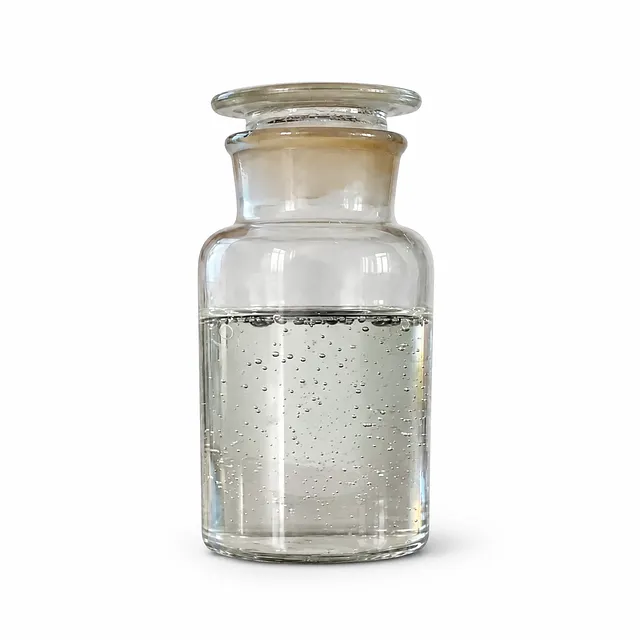
Battery supporting materials
High Performance Lithium Battery Anode Material Binder Styrene Butadiene Rubber SBR Latex
Item Number : FZ32
Price varies based on specs and customizations
- Total Solids Content
- 48.0 ~ 53.0 wt% (Nominal 49.51 wt%)
- Brookfield Viscosity
- 80 ~ 300 mPa·s (Nominal 231 mPa·s)
- Surface Tension
- 41.0 ~ 47.0 mN/m (Nominal 42.0 mN/m)

Shipping:
Contact us to get shipping details Enjoy On-time Dispatch Guarantee.
Why Choose Us
Easy ordering process, quality products, and dedicated support for your business success.
Product Overview
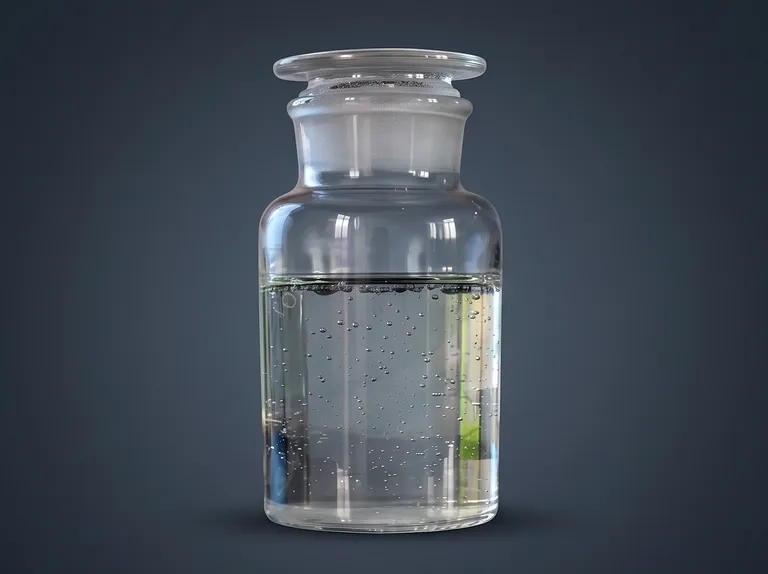
This high-purity aqueous styrene-butadiene rubber (SBR) emulsion is an advanced negative electrode binder engineered specifically for next-generation lithium-ion battery research, pilot-scale formulation, and high-volume cell manufacturing. As an aqueous polymeric dispersion, this binder system provides an environmentally responsible, high-performance alternative to traditional solvent-based fluoropolymer binders. It is formulated to achieve superior adhesive cohesion between active material particles and metallic current collectors while maintaining stable electrochemical kinetics across extended cycle lifetimes.
Designed for modern anode architectures, the emulsion exhibits universal compatibility with natural graphite, synthetic graphite, silicon-carbon composites, and hard carbon active materials. By eliminating the need for N-methyl-2-pyrrolidone (NMP) solvent handling and recovery infrastructure, the aqueous formulation streamlines slurry preparation workflows, reduces operational hazards, and lowers cell processing costs. The material integrates seamlessly with standard water-soluble thickeners, such as carboxymethyl cellulose (CMC), to form a robust, dual-component composite binder network tailored for demanding energy storage applications.
Rigorous chemical engineering ensures dependable batch-to-batch consistency, chemical stability, and robust mechanical resilience under extreme operational conditions. The polymeric elastomer maintains its structural network through aggressive roll pressing and high-rate electrochemical cycling, effectively accommodating the cyclic volume expansion and contraction typical of advanced anode chemistries. This ensures dependable electrode integrity, minimized internal resistance, and outstanding capacity retention across extensive operational temperature regimes.
Key Features
- Eco-Friendly Aqueous Processing: The water-dispersed latex chemistry completely eliminates toxic organic solvents such as NMP, substantially lowering VOC emissions, simplifying regulatory compliance, and cutting capital expenditure on solvent recovery systems.
- Superior Elastomeric Flexibility: Featuring a low glass transition temperature polymer backbone, this binder delivers outstanding mechanical elongation and flexibility, preventing micro-cracking and delamination of the electrode film during high-pressure calendering and automated slitting.
- Optimized Interfacial Adhesion at Low Loading: High binding efficiency ensures exceptionally strong adhesion between active material particles and copper current collectors at significantly reduced binder fractions, directly enabling higher active mass loading and increased volumetric energy density.
- Controlled Surface Tension for Uniform Wetting: Engineered with a tight surface tension range of 41–47 mN/m, the emulsion facilitates rapid, defect-free substrate wetting, prevents pinholing during slot-die or doctor-blade coating, and yields smooth, uniform electrode coatings.
- Balanced Rheology and Dispersion Stability: A Brookfield viscosity calibrated between 80 and 300 mPa·s ensures stable dispersion of conductive additives and active powders, suppressing agglomeration and maintaining consistent slurry viscosity throughout high-speed mixing and transfer.
- High Electrochemical and Cathodic Stability: The polymer matrix exhibits remarkable chemical inertness and electrochemical stability within typical anode operating potentials (0.005 V to 1.5 V vs. Li/Li⁺), mitigating side reactions and suppressing early-stage capacity fade.
- Narrow Solids Content Tolerance: Formulated with a tightly controlled total solids content of 48% to 53% (49.51% nominal), the emulsion guarantees predictable dry-film mass calculation and exact reproducibility across analytical trials and pilot production runs.
- Robust Volume Expansion Accommodation: The crosslinked elastomeric network effectively buffers the severe mechanical strain and volumetric breathing inherent to silicon-containing and alloy-type anodes, preventing structural pulverization during repeated lithiation and delithiation cycles.
Applications
| Application | Description | Key Benefit |
|---|---|---|
| Synthetic & Natural Graphite Anodes | Standard negative electrode slurry formulation for consumer electronics, power tools, and high-energy EV cells. | Delivers robust peel strength with minimal binder consumption, maximizing active material content and gravimetric energy density. |
| Silicon-Carbon (Si/C) Composite Electrodes | Advanced high-capacity anode systems subject to massive cyclic volumetric expansion during lithiation. | Elastic polymer matrix absorbs continuous mechanical breathing, preserving electronic percolation pathways and prolonging cycle life. |
| High-Rate Cylindrical & Prismatic Cells | High-power cell designs requiring uniform conductive networks and ultra-low internal charge-transfer resistance. | Low binder impedance and uniform additive dispersion enable superior C-rate discharge capability and reduced heat generation. |
| Energy Storage System (ESS) Battery Packs | Large-format grid-scale battery systems demanding multi-thousand-cycle durability and minimal degradation. | Outstanding chemical stability prevents binder dissolution into carbonate electrolytes, ensuring decade-scale capacity retention. |
| Aqueous Slurry R&D & Pilot Line Trials | Academic, institutional, and industrial laboratory formulation of water-based anode coatings and binder screening. | Excellent shelf stability and ready miscibility with CMC and conductive carbon slurries allow reproducible, fast prototyping. |
| Solid-State & Hybrid Electrolyte Anode Interfaces | Flexible, thin-film negative electrode pre-treatment for solid-state and polymer electrolyte battery architectures. | High mechanical compliance ensures sustained interfacial contact with solid electrolytes without interfacial void formation. |
Technical Specifications
| Parameter Item | Specification Standard | Verified Performance | Test Conditions / Reference |
|---|---|---|---|
| Item Identifier | FZ32 | FZ32 | Standard Factory Assignment |
| Physical Appearance | Milky white liquid emulsion | Milky white liquid emulsion | Visual Inspection at 25°C |
| Total Solids Content (wt%) | 48.0 ~ 53.0 | 49.51 | Gravimetric Drying Method |
| pH Value | 6.0 ~ 7.0 | 6.90 | Digital pH Meter at 25°C |
| Brookfield Viscosity (mPa·s) | 80 ~ 300 | 231 | Brookfield Viscometer at 25°C |
| Surface Tension (mN/m) | 41.0 ~ 47.0 | 42.0 | Wilhelmy Plate / Du Noüy Ring Method |
| Primary Application Target | Lithium-ion battery anode binder | Lithium-ion battery anode binder | Aqueous Negative Electrode Slurries |
| Standard Packaging | 500 g / bottle | 500 g / bottle | Sealed Chemical-Resistant Container |
Why Choose This Product
- Precision Process Control and Purity: Every production batch undergoes strict quality assurance to guarantee strict adherence to pH, solids fraction, and viscosity limits, eliminating variation in electrode coating thickness and slurry rheology.
- Optimized for High-Throughput Manufacturing: The emulsion disperses readily in aqueous media without extensive high-shear pre-treatment, shortening mixing cycles, extending slurry pot life, and reducing production bottlenecks.
- Validated Mechanical and Electrochemical Robustness: Built to withstand the intense pressures of precision roll pressing and isostatic calendering, the resulting electrode films resist dusting, cracking, and current collector peel-off throughout continuous processing.
- Full-Workflow Integration Support: Backed by comprehensive technical expertise across the complete battery fabrication chain—from planetary mixing and slot-die coating to cell assembly and electrochemical testing—our technical team helps optimize your slurry formulation for peak performance.
For technical inquiries, bulk packaging options, or specific formulation guidance, contact our battery materials engineering team today to request a quote or order sample materials.
Trusted by Industry Leaders
REQUEST A QUOTE
Our professional team will reply to you within one business day. Please feel free to contact us!
Related Products
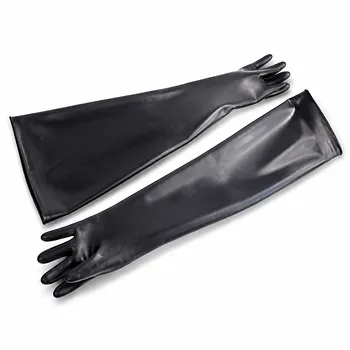
High Performance Butyl Rubber Glovebox Gloves for Controlled Atmosphere Enclosures
Engineered for demanding controlled atmospheres, these high performance butyl rubber glovebox gloves deliver exceptional impermeability against gases, liquids, and polar hydrocarbons. Certified to rigorous EN standards, they ensure maximum operator dexterity, durability, and reliable environmental isolation for advanced industrial research.
Lithium Ion Battery Anode Material Carboxymethyl Cellulose CMC Powder
High purity carboxymethyl cellulose CMC powder engineered for lithium ion battery anode slurry preparation. This premium water soluble binder provides superior rheological control, strong adhesion, and stable cycling performance for advanced laboratory cell fabrication and energy storage research workflows.

Lab Round Bidirectional Press Mold
Precision Round Bidirectional Press Mold for lab use, high-density compaction, Cr12MoV alloy steel. Ideal for powder metallurgy & ceramics.