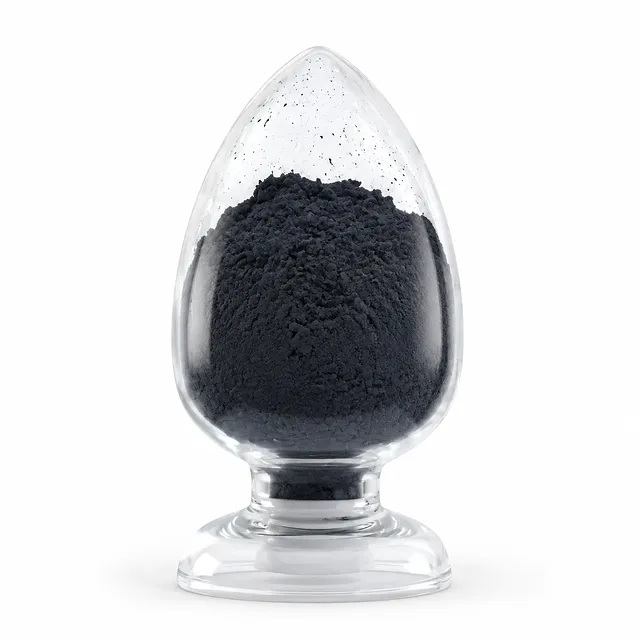
Battery powder materials
Lithium Ion Battery Cathode Material Lithium Manganese Oxide LMO LiMn2O4 Powder
Item Number : CL17
Price varies based on specs and customizations
- 0.1C Discharge Specific Capacity
- > 117 mAh/g (Typical: 121 mAh/g)
- Particle Size Distribution (D50)
- 13.0 – 18.0 µm (Typical: 14.305 µm)
- Tap Density
- 1.8 – 2.3 g/cm³ (Typical: 2.0 g/cm³)

Shipping:
Contact us to get shipping details Enjoy On-time Dispatch Guarantee.
Why Choose Us
Easy ordering process, quality products, and dedicated support for your business success.
Product Overview
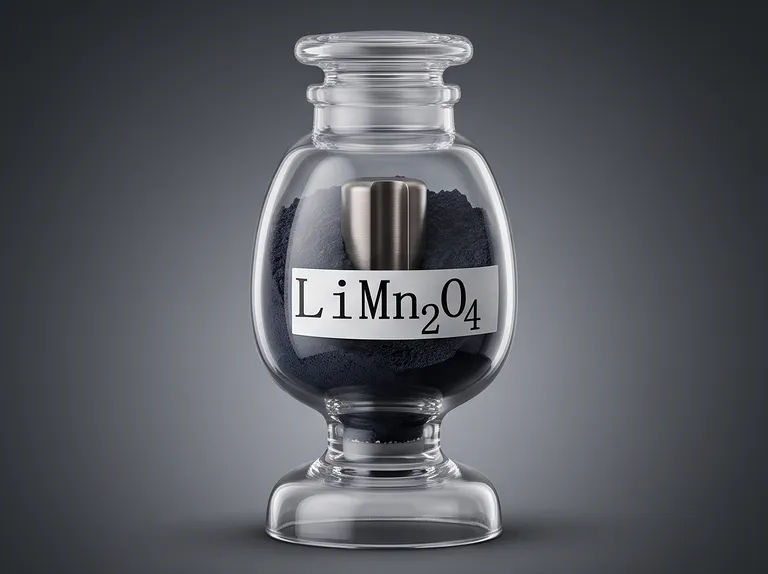
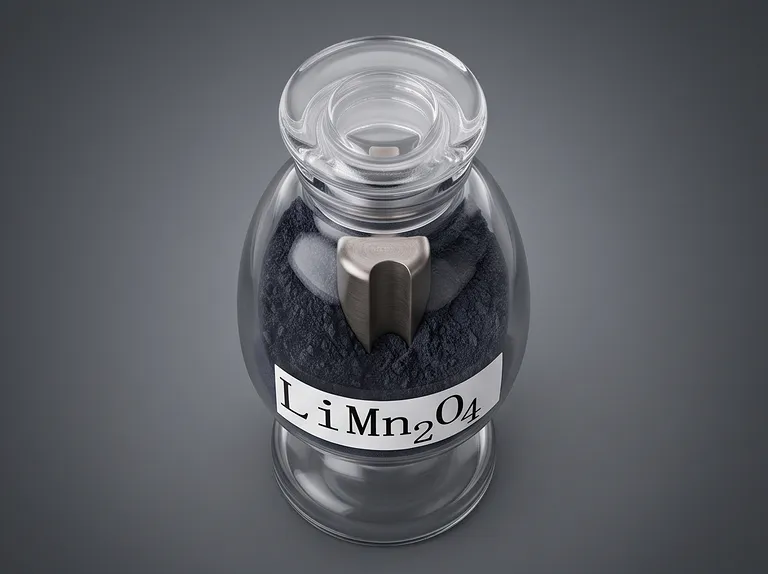
This high-purity lithium manganese oxide powder represents a benchmark spinel cathode material engineered specifically for advanced lithium-ion battery research, cell prototyping, and commercial electrochemical manufacturing. Synthesized with a well-ordered three-dimensional spinel crystal structure, the material provides rapid lithium-ion insertion and extraction channels that deliver exceptional rate capability, elevated working voltage, and superior structural stability. Its optimized chemical stoichiometry and tight control over transition metal purity ensure dependable electrochemical performance across demanding laboratory and pilot-scale battery production workflows.
Designed to meet the stringent requirements of battery research laboratories, academic institutions, and industrial energy storage manufacturers, this cathode material serves as an optimal active component for coin cells, pouch cells, and cylindrical battery formats. The powder exhibits balanced particle morphology and narrow size distribution, facilitating high slurry dispersion uniformity, smooth doctor-blade coating, and robust electrode adhesion. It is widely deployed in high-power applications, hybrid electric energy storage systems, and comparative material benchmarking where thermal resilience and inherent chemical safety are paramount.
Engineered under stringent quality assurance protocols, the material exhibits minimal magnetic impurity content, low residual moisture, and strictly regulated trace element profiles. This precision manufacturing guarantees consistent batch-to-batch reproducibility, preventing micro-shorting risks and premature electrolyte degradation. Researchers and cell engineers can confidently conduct cycle life assessments, thermal abuse evaluations, and high-rate discharge experiments under extreme operating conditions, relying on the powder's robust structural integrity and predictable electrochemical profile.
Key Features
- High Specific Discharge Capacity: Delivers a typical 0.1C initial discharge capacity of 121 mAh/g (>117 mAh/g specified) within a 3.0 V to 4.3 V operating window, maximizing active energy yield during baseline cell characterization.
- Controlled Particle Size Distribution: Features a tight, monomodal particle gradation with a typical D50 of 14.305 µm, D10 of 4.897 µm, and D90 of 28.891 µm, facilitating uniform slurry rheology, high packing efficiency, and defect-free electrode cast surfaces.
- Optimized Tap Density and Compacted Density: Boasts a standard tap density of 2.0 g/cm³ (1.8–2.3 g/cm³) and achieves design electrode compacted densities of 2.70 g/cm³ (up to 2.80–2.90 g/cm³ limit), ensuring robust volumetric energy density without particle fracturing.
- Ultra-Low Trace and Magnetic Impurities: Rigorous quality control maintains magnetic contaminants below 5.4 ppm (<8 ppm specified) and iron below 20 ppm (<100 ppm specified), drastically suppressing cell self-discharge and internal micro-shorting.
- Low Residual Moisture Content: Moisture levels are maintained at a typical 400 ppm (<1000 ppm threshold), preventing hydrofluoric acid generation in non-aqueous electrolytes and preserving long-term SEI layer stability.
- Superior Thermal and Cycling Resilience: Maintains >75% full-cell capacity retention over 300 cycles at 0.5C under room temperature, leveraging three-dimensional spinel framework stability to resist mechanical degradation and manganese dissolution.
- Exceptional Electrochemical Slurry Compatibility: Optimized specific surface area of 0.76 m²/g (0.4–1.0 m²/g) and an alkaline-buffered pH of 8.9 minimize binder consumption while preventing premature gelation in standard NMP/PVDF formulation matrices.
- Multi-Scale Packaging Configurations: Available in sealed, moisture-barrier packaging formats of 100 g, 500 g, and 1000 g per container to accommodate both micro-scale coin cell formulation and continuous pilot slurry mixing lines.
Applications
| Application | Description | Key Benefit |
|---|---|---|
| High-Power Lithium-Ion Battery Prototyping | Fabrication of cylindrical (18650/21700) and pouch cells targeting power tools, uninterruptible power supplies (UPS), and engine starting systems. | Minimizes area-specific impedance (ASI) and limits operational heat generation during rapid charge and discharge pulses. |
| Electrochemical R&D and Coin Cell Testing | Material benchmarking in CR2032/CR2016 half-cell and full-cell formats for academic research and industrial electrolyte formulation studies. | Delivers highly reproducible voltage plateaus (~4.0 V vs. Li/Li⁺) and consistent discharge capacities for baseline data comparison. |
| LMO-LTO High-Safety Energy Storage Systems | Pairing with lithium titanate (Li4Ti5O12) anodes to create heavy-duty, ultra-long-life cells for grid frequency regulation and electric drives. | Drastically reduces thermal runaway risks, eliminates active battery cooling requirements, and achieves 97–98% high-power energy efficiency. |
| Cathode Blending and Composition Optimization | Blending with high-nickel ternary oxides (NMC/NCA) or lithium iron phosphate (LFP) to tune thermal stability, cost efficiency, and voltage profiles. | Enhances overall pack safety margins, suppresses high-temperature oxygen release, and reduces raw material costs without compromising voltage. |
| Electrode Slurry Coating and Calendering Process Validation | Optimization of continuous roll-to-roll doctor-blade coating, slot-die extrusion, and precision calendering parameters on commercial aluminum foils. | Consistent particle sphericity and mechanical strength prevent foil wrinkling and particle crushing during high-pressure electrode densification. |
| Elevated Temperature Cycle Life Analysis | Studying structural phase transformations, Jahn-Teller distortion phenomena, and manganese ion dissolution mitigation strategies at 45°C to 55°C. | Predictable spinel crystal lattice parameters enable precise evaluation of surface coatings, atomic doping, and functional electrolyte additives. |
Technical Specifications
| Classification | Parameter / Test Item | Technical Specification | Typical Value | Unit | Test Method / Conditions |
|---|---|---|---|---|---|
| Model Identification | Product Model Number | CL17 | CL17 | — | Manufacturer Standard |
| Packaging | Standard Net Weight | 100, 500, 1000 | 100, 500, 1000 | g/bag | Sealed Moisture-Barrier Foil Bag |
| Chemical Composition | Lithium (Li) Content | 4.0 ± 0.5 | 4.0 | % | ICP-OES / Potentiometric Titration |
| Chemical Composition | Manganese (Mn) Content | 59.5 ± 0.5 | 59.6 | % | ICP-OES / Potentiometric Titration |
| Trace Impurities | Iron (Fe) | < 100 | 20 | ppm | Inductively Coupled Plasma (ICP) |
| Trace Impurities | Potassium (K) | < 200 | 85 | ppm | Inductively Coupled Plasma (ICP) |
| Trace Impurities | Sodium (Na) | < 4000 | 2350 | ppm | Inductively Coupled Plasma (ICP) |
| Trace Impurities | Calcium (Ca) | < 250 | 145 | ppm | Inductively Coupled Plasma (ICP) |
| Trace Impurities | Copper (Cu) | < 50 | 1 | ppm | Inductively Coupled Plasma (ICP) |
| Trace Impurities | Magnetic Impurities | < 8 | 5.4 | ppm | ICP-OES (Without Ultrasonication) |
| Physical Properties | Appearance | Uniform black powder, no agglomeration, no foreign inclusions | Conforms | — | Visual Inspection |
| Physical Properties | pH Value | 8.0 – 10.0 | 8.9 | — | pH Meter (5g powder in 50ml 25°C pure water, stirred 1 min) |
| Physical Properties | Water / Moisture Content | < 1000 | 400 | ppm | Karl Fischer Coulometric Titration |
| Physical Properties | Tap Density | 1.8 – 2.3 | 2.0 | g/cm³ | Automated Tap Density Analyzer |
| Particle Size Distribution | D10 | > 3.5 | 4.897 | µm | Laser Particle Size Analyzer (MasterSizer 2000) |
| Particle Size Distribution | D50 | 13.0 – 18.0 | 14.305 | µm | Laser Particle Size Analyzer (MasterSizer 2000) |
| Particle Size Distribution | D90 | < 40.0 | 28.891 | µm | Laser Particle Size Analyzer (MasterSizer 2000) |
| Specific Surface Area | BET Surface Area | 0.4 – 1.0 | 0.76 | m²/g | BET Nitrogen Adsorption Surface Area Analyzer |
| Electrochemical Metrics | 0.1C Discharge Specific Capacity | > 117 | 121 | mAh/g | Coin Cell: 0.1C CC/CV charge to 4.3V (0.02C cutoff), 0.1C discharge to 3.0V |
| Slurry Formulation Reference | Cathode Mass Ratio | 93 : 3.5 : 3.5 | 93 : 3.5 : 3.5 | wt% | Active Material (CL17) : Super P (SP) : PVDF |
| Cell Fabrication Reference | Cathode Areal Density | 39 – 41 | 40 | mg/cm² | Double-sided or single-sided coating baseline |
| Cell Fabrication Reference | Current Collector Thickness | 16 | 16 | µm | Battery-Grade Aluminum Foil |
| Cell Fabrication Reference | Anode Chemistry & N/P Ratio | Artificial Graphite / 1.07 – 1.10 | Conforms | — | Balanced against active cathode loading |
| Cell Fabrication Reference | Electrolyte Filling Ratio | 3.85 | 3.85 | g/Ah | Standard LiPF6 organic carbonate formulation |
| Full Cell Performance | Operating Voltage & Current | 3.0 – 4.2 | 3.0 – 4.2 | V | Constant Current Charge/Discharge: 0.5C Rate |
| Full Cell Performance | 0.5C Discharge Capacity | 107 – 109 | 108 | mAh/g | Full-cell testing configuration |
| Electrode Compacting | Ultimate Compacted Density | 2.80 – 2.90 | 2.85 | g/cm³ | Optical bend inspection (fold test method)* |
| Electrode Compacting | Design Mid-Limit Density | 2.70 | 2.70 | g/cm³ | Target production calendering density |
| Cycle Durability | Capacity Retention @ RT | > 75 | > 78 | % | 300 cycles @ 0.5C charge/discharge at room temperature |
| Storage Conditions | Shelf Life & Environment | 2 Years (≤45°C, ≤90% RH) | Conforms | — | Sealed inert atmosphere / dry storage |
Note on Compacted Density Test Method: The calendered electrode strip is folded back-and-forth twice and observed against a light source; the first fold must show zero light transmission, and the second fold allows only minor pinhole light transmission.
Why Choose This Product
- Proven Batch Uniformity and Structural Integrity: Manufactured through tightly regulated solid-state and calcination processing routes, ensuring well-developed octahedral crystal facets that resist unit cell contraction and transition metal dissolution during cycling.
- Comprehensive Processability for Cell Lines: The optimized particle morphology, low moisture level, and stable pH profile eliminate slurry gelling, minimize solvent requirements, and support high calendering pressures without electrode flaking or delamination.
- Stringent Quality Assurance and Impurity Control: Every production batch undergoes comprehensive ICP-OES elemental analysis, laser diffraction sizing, and electrochemical coin cell verification, guaranteeing strict compliance with industrial purity benchmarks.
- Complete Battery Fabrication Synergy: Perfectly matched with laboratory-scale and pilot-scale slurry mixers, doctor-blade film coaters, roll presses, and cell assembly systems, enabling seamless integration across entire research workflows.
- Dedicated Technical Support and Flexible Packaging: Backed by experienced electrochemical application engineers who provide in-depth formulation guidance, mixing protocols, and rapid order fulfillment across research and industrial batch quantities.
Contact our technical sales team today to request a quotation, obtain full batch certificates of analysis, or discuss tailored cathode formulations for your battery development requirements.
Trusted by Industry Leaders

REQUEST A QUOTE
Our professional team will reply to you within one business day. Please feel free to contact us!
Related Products
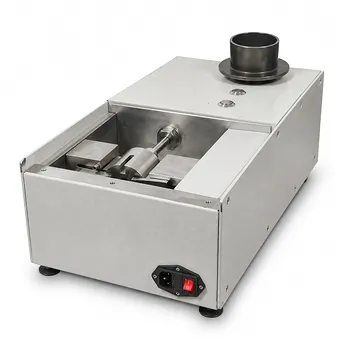
Lithium Battery Powder Resistivity and Compacted Density Measurement System
Optimize cathode and anode slurry formulations with this automated lithium battery powder resistivity and compacted density measurement system featuring closed-loop servo pressure execution high-resolution displacement monitoring synchronous environmental logging and automated analytical software for precision electrode quality control workflows
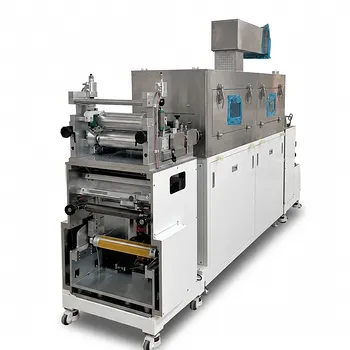
400mm Continuous and Intermittent Gap Coating Machine
400mm continuous and intermittent gap coating machine for precise lithium ion battery electrode coating with electric drying, controlled web handling, and configurable extrusion coating for cathode and anode production.
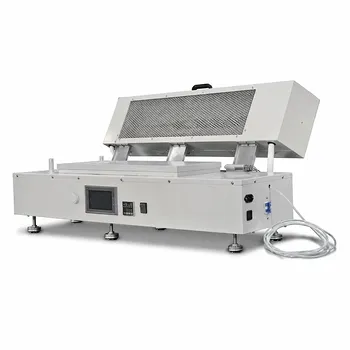
Automatic Coating Film Drying Machine Lithium Battery Laboratory Coating Machine
Automatic coating film drying machine and lithium battery laboratory coating machine with 130°C heating, adjustable coating speed, vacuum plate, precision scraper, programmable drying timer for 18650 electrode research smooth reproducible coatings across varied substrates compact bench scale development applications
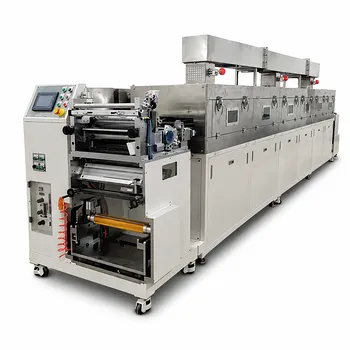
Precision Transfer Coating Machine for Lithium Ion Battery Electrodes
Precision transfer coating machine for lithium ion battery electrodes delivers controlled continuous or intermittent slurry coating, drying, and rewinding for aluminium and copper foil substrates in research, pilot production, and advanced materials development with repeatable process control and production-ready handling.
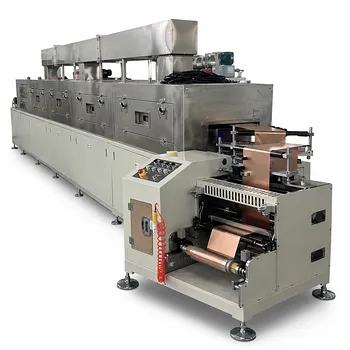
Precision Laboratory Transfer Coating Machine for Lithium Ion Battery Electrodes
Precision laboratory transfer coating machine for lithium ion battery electrodes delivers controlled continuous and intermittent coating, uniform film application, integrated drying, and reliable winding for demanding cathode and anode pilot production with compatibility for aluminum and copper foil substrates.
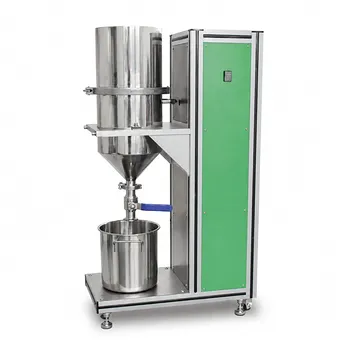
5L Laboratory Slurry Iron Removal Filtration System for Lithium Battery Electrode Production
5L laboratory slurry iron removal filtration system combines vacuum filtration and 8000–10000 gauss magnetic separation for consistent lithium battery electrode coatings before coating with cleanable stainless construction flexible filter mesh selection reliable pilot scale processing and routine maintenance

Lab Cylindrical Press Mold for Laboratory Use
Precision cylindrical press molds for lab sample prep. Durable, high-performance, and customizable for XRF, battery research, and material testing. Get yours today!
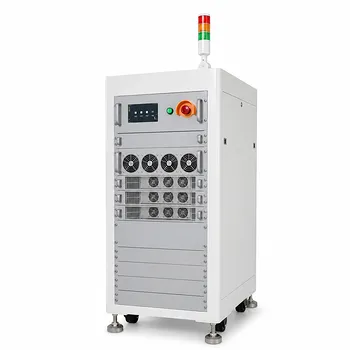
50V 500A Lithium Battery Tester
50V 500A lithium battery tester provides 25kW charge discharge control precision measurement pulse profiles DCIR analysis and networked data management for demanding battery development validation and production workflows with robust protection and configurable auxiliary monitoring options included.