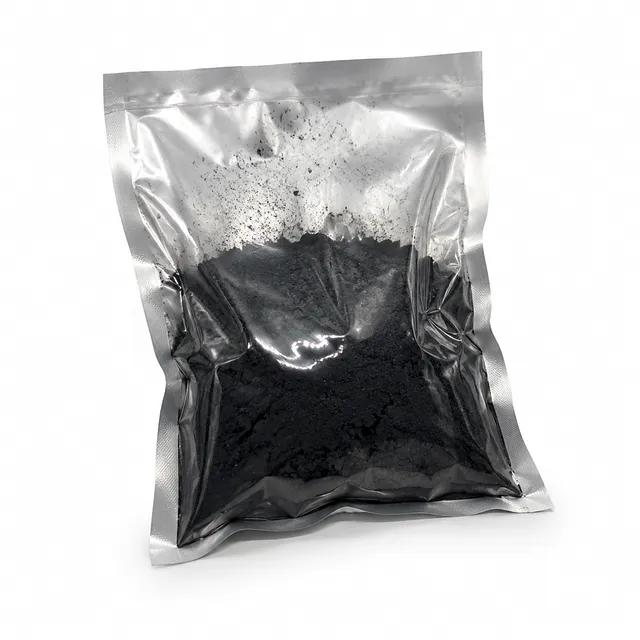
Battery powder materials
Lithium Ion Secondary Battery Cathode Material NCM532 NMC Ternary Powder
Item Number : CL02
Price varies based on specs and customizations
- 0.5C Specific Capacity (2.75V–4.3V vs. Li)
- 160.1 mAh/g (Standard ≥158 mAh/g)
- Particle Size Distribution (D50)
- 8.0–12.0 μm (Ref: 10.6 μm)
- Tap Density
- ≥2.0 g/cm³ (Ref: 2.20 g/cm³)

Shipping:
Contact us to get shipping details Enjoy On-time Dispatch Guarantee.
Why Choose Us
Easy ordering process, quality products, and dedicated support for your business success.
Product Overview
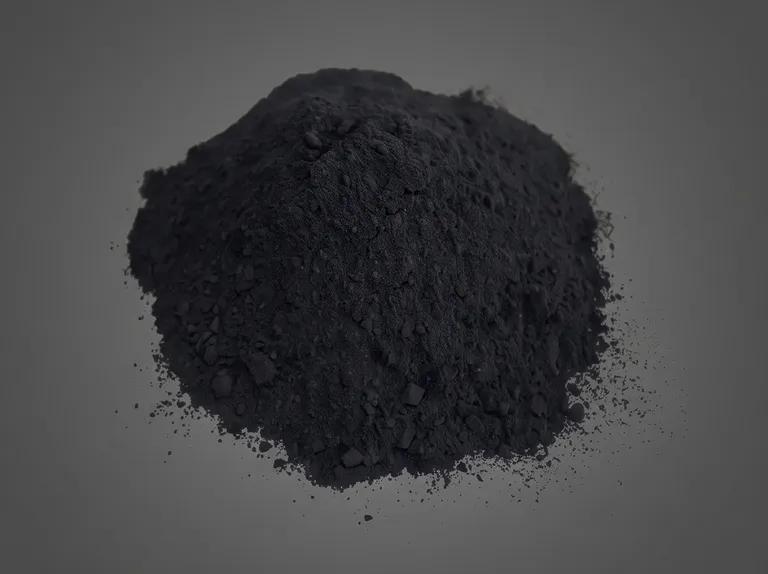
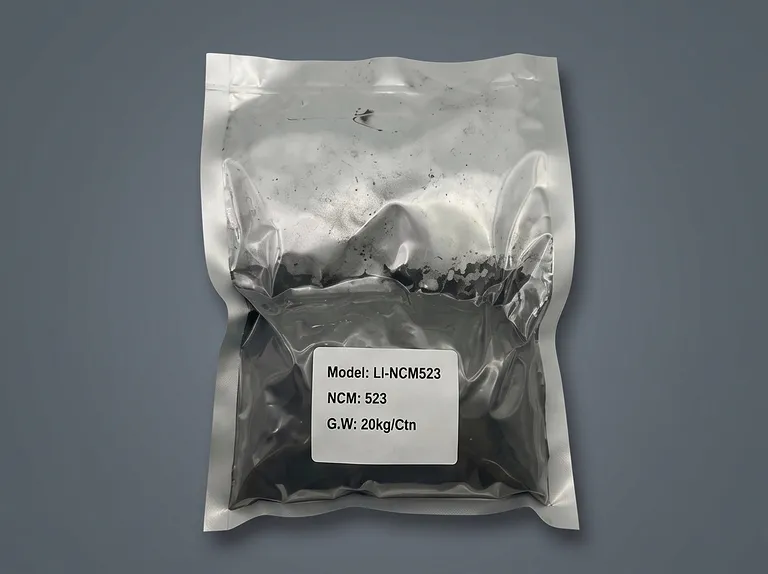
This high-purity lithium nickel cobalt manganese oxide (LiNi0.5Co0.2Mn0.3O2) cathode powder is engineered specifically for premium lithium-ion secondary battery manufacturing and advanced electrochemical research. Offering an optimal stoichiometric balance of nickel, cobalt, and manganese, this ternary active material delivers high specific capacity, balanced thermal stability, and robust structural integrity across extensive charge-discharge cycles. Supplied as a uniform, agglomeration-free gray-black powder, the material ensures consistent slurry rheology, uniform electrode coating, and dependable electrochemical kinetics.
Designed to meet the stringent demands of modern energy storage R&D and commercial pilot lines, this cathode material excels in high-energy-density cylindrical, pouch, and prismatic cell configurations. It is extensively utilized across automotive electrification programs, portable electronics prototyping, grid-scale energy storage system (ESS) validation, and academic electrochemical laboratories. The material's consistent particle size distribution and optimized surface chemistry facilitate seamless integration into standard battery electrode fabrication lines.
Manufactured under rigorous quality control standards with precise ICP elemental verification and BET surface area monitoring, this cathode material ensures exceptional batch-to-batch reproducibility. Its low moisture content, optimized pH profile, and controlled trace impurity thresholds prevent electrolyte degradation and minimize side reactions. Researchers and battery engineers can rely on this material to achieve predictable coin-cell and pouch-cell benchmark performance, high first-cycle coulombic efficiency, and extended service life under aggressive C-rate testing conditions.
Key Features
- Balanced Electrochemical Composition: Features a precise chemical formulation of LiNi0.5Co0.2Mn0.3O2 with a 59.2% total transition metal content (Ni+Co+Mn) and 7.1% lithium content, delivering an optimal compromise between high specific capacity, high operating voltage, and superior thermal safety.
- High Tap Density and Compactability: Delivers a minimum tap density of 2.0 g/cm³ (typical value 2.20 g/cm³ measured at 3000 taps with a 3mm amplitude), facilitating high volumetric energy density, superior electrode compaction, and high active mass loading during calender pressing.
- Controlled Particle Size Distribution: Carefully classified grain distribution with D10 ≥ 5.0 μm (typical 6.4 μm), D50 between 8.0 and 12.0 μm (typical 10.6 μm), and D90 ≤ 25.0 μm (typical 17.5 μm) enables uniform packing, tight slurry coating tolerances, and reduced risk of current collector tearing.
- Optimized Specific Surface Area: Maintained within 0.20 to 0.60 m²/g (typical 0.27 m²/g via BET measurement), reducing parasitic surface-electrolyte side reactions while providing sufficient active reaction interfaces for rapid lithium-ion diffusion.
- Ultra-Low Trace Impurities: Controlled via high-precision inductively coupled plasma (ICP) testing to ensure minimal magnetic and metallic contaminants (Fe ≤ 0.0010%, Cu ≤ 0.0050%, Ca ≤ 0.0200%, Na ≤ 0.0300%), significantly lowering cell self-discharge rates and eliminating internal short-circuit risks.
- Low Residual Moisture and Controlled Alkalinity: Stringently dried to achieve ≤ 0.10% moisture content (typical 0.07%) and a stable pH ≤ 11.6 (typical 11.35), preventing slurry gelation during NMP/PVDF mixing and preserving long-term binder network integrity.
- Outstanding Specific Discharge Capacity: Delivers a typical discharge capacity of 160.1 mAh/g at 0.5C and 155.2 mAh/g at 1C within a 2.75V to 4.3V operating window against Li metal, ensuring reliable rate performance.
- High Initial Coulombic Efficiency: Achieves a typical initial efficiency of 84.5% (standard ≥ 83%) during 0.5C coin cell cycling (2.75V–4.3V vs. Li), maximizing available energy output and minimizing irreversible lithium consumption in initial formation cycles.
Applications
| Application | Description | Key Benefit |
|---|---|---|
| Electric Vehicle (EV) Traction Cells | Active material for prototyping and manufacturing high-capacity pouch, cylindrical (18650/21700), and prismatic traction battery cells. | Balances high specific energy density with robust thermal safety and extended cycle life under dynamic driving profiles. |
| Stationary Energy Storage Systems (ESS) | Formulation into long-duration energy storage cells for residential, industrial, and microgrid applications. | High structural integrity and minimal capacity fade rate reduce levelized cost of storage (LCOS) over multi-year deployments. |
| Consumer Electronics & Power Tools | Cathode production for compact, high-drain batteries used in mobile devices, robotics, drones, and cordless power tools. | Delivers high 1C rate capability (155.2 mAh/g) and compact volumetric density to maximize runtime in constrained dimensions. |
| Academic & Industrial Battery R&D | Standardized benchmark material for evaluating novel solid-state electrolytes, functional liquid electrolyte additives, and advanced binders. | Highly reproducible baseline parameters and tight compositional control ensure accurate, publishable, and commercially translatable experimental data. |
| Electrode Calendering & Slurry Process Optimization | Pilot-scale optimization of slurry mixing viscosity, roll-to-roll slot-die coating speeds, and electrode calendering densities. | Controlled D50 particle sizing (10.6 μm) and low moisture (0.07%) prevent slurry gelling and yield ultra-smooth, uniform electrode foils. |
| Hybrid & Solid-State Battery Research | Integration into composite cathode architectures with inorganic solid electrolytes (sulfides, oxides) or polymer electrolyte matrices. | Low specific surface area (0.27 m²/g) and low surface residual base levels mitigate interfacial impedance growth at solid-solid contact boundaries. |
Technical Specifications
| Parameter Category | Metric / Property | Unit | Specification Standard | Typical Reference Value | Test Method / Conditions |
|---|---|---|---|---|---|
| Product Identification | Product Code / Item Number | - | CL02 | CL02 | Reference Standard |
| Product Identification | Chemical Formula | - | LiNi0.5Co0.2Mn0.3O2 | LiNi0.5Co0.2Mn0.3O2 | Stoichiometric Composition |
| Product Identification | Physical Appearance | - | Gray-black powder, agglomerate-free | Conforms | Visual Inspection |
| Product Identification | Standard Packaging | - | 500 g / bag | 500 g / bag | Sealed Moisture-Barrier Bag |
| Physical Properties | Particle Size D10 | μm | ≥ 5.0 | 6.4 | MS2000 Particle Size Analyzer |
| Physical Properties | Particle Size D50 | μm | 8.0 – 12.0 | 10.6 | MS2000 Particle Size Analyzer |
| Physical Properties | Particle Size D90 | μm | ≤ 25.0 | 17.5 | MS2000 Particle Size Analyzer |
| Physical Properties | Moisture Content | % | ≤ 0.10 | 0.07 | Sartorius Moisture Analyzer |
| Physical Properties | pH Value | - | ≤ 11.6 | 11.35 | Mettler Toledo pH Meter |
| Physical Properties | Specific Surface Area (BET) | m²/g | 0.20 – 0.60 | 0.27 | BET Surface Area Analyzer |
| Physical Properties | Tap Density | g/cm³ | ≥ 2.0 | 2.20 | ZS-203 Tap Density Tester (3000 taps / 3 mm amplitude) |
| Chemical Composition | Lithium (Li) Content | % | 7.0 – 8.0 | 7.1 | ICP-OES |
| Chemical Composition | Total Transition Metals (Ni+Co+Mn) | % | 57.0 – 62.0 | 59.2 | ICP-OES |
| Chemical Composition | Calcium (Ca) Impurity | % | ≤ 0.0200 | 0.0035 | ICP-OES |
| Chemical Composition | Copper (Cu) Impurity | % | ≤ 0.0050 | 0.0002 | ICP-OES |
| Chemical Composition | Iron (Fe) Impurity | % | ≤ 0.0010 | 0.0003 | ICP-OES |
| Chemical Composition | Sodium (Na) Impurity | % | ≤ 0.0300 | 0.0188 | ICP-OES |
| Electrochemical Properties | 0.5C Coin Cell Specific Capacity | mAh/g | ≥ 158 | 160.1 | vs. Li, 0.5C, 2.75V – 4.3V |
| Electrochemical Properties | 1.0C Coin Cell Specific Capacity | mAh/g | ≥ 153 | 155.2 | vs. Li, 1.0C, 2.75V – 4.3V |
| Electrochemical Properties | Initial Coulombic Efficiency (ICE) | % | ≥ 83 | 84.5 | vs. Li, 0.5C, 2.75V – 4.3V |
Why Choose This Product
- Exceptional Batch Consistency and Purity: Fabricated under stringently controlled synthesis conditions to ensure homogeneous particle morphology, precise crystal stoichiometry, and ultra-low parts-per-million metallic impurity concentrations, eliminating cell performance variance across experimental runs.
- Superior Processing Characteristics: Optimized spherical particle distribution and stable surface chemistry prevent slurry phase separation and viscosity spikes during continuous mixing, enabling defect-free doctor-blade and slot-die coating operations.
- Robust Electrochemical Stability: Provides high reversible specific capacity combined with high initial coulombic efficiency (84.5%), significantly mitigating lithium consumption during early formation cycles and maintaining structural stability under prolonged cycling.
- Direct Compatibility with Advanced Cell Fabrication Equipment: Engineered to integrate smoothly with standard laboratory and industrial cell fabrication equipment, including planetary vacuum mixers, heated rolling calenders, precision pouch-cell stackers, and automated battery cyclers.
- Comprehensive Technical and Application Support: Backed by dedicated technical specialists who provide end-to-end guidance on slurry formulation, binder compatibility, electrode calendering parameters, and electrochemical protocol validation.
Contact our technical sales team today to request a quote, order standard 500g evaluation packages, or discuss customized bulk packaging and technical integration for your battery manufacturing program.
Trusted by Industry Leaders

REQUEST A QUOTE
Our professional team will reply to you within one business day. Please feel free to contact us!
Related Products
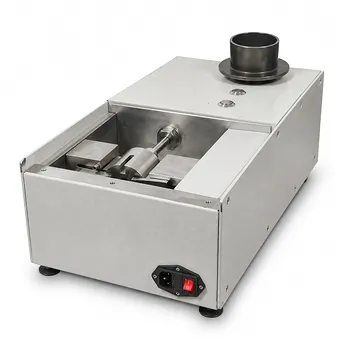
Lithium Battery Powder Resistivity and Compacted Density Measurement System
Optimize cathode and anode slurry formulations with this automated lithium battery powder resistivity and compacted density measurement system featuring closed-loop servo pressure execution high-resolution displacement monitoring synchronous environmental logging and automated analytical software for precision electrode quality control workflows
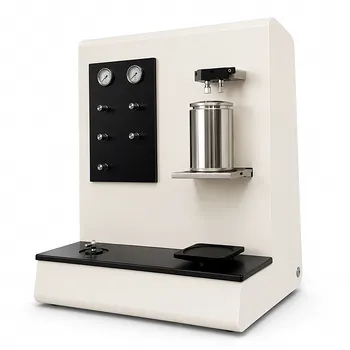
Dynamic BET Specific Surface Area Analyzer for Powders and Porous Materials
High-precision dynamic BET specific surface area analyzer designed for rapid, accurate characterization of battery materials, catalysts, and porous powders. Features advanced thermal conductivity detection, ultra-low surface area sensitivity down to 0.0005 m2/g, and fast three-minute throughput.

Lab Round Bidirectional Press Mold
Precision Round Bidirectional Press Mold for lab use, high-density compaction, Cr12MoV alloy steel. Ideal for powder metallurgy & ceramics.

Lab Cylindrical Press Mold for Laboratory Use
Precision cylindrical press molds for lab sample prep. Durable, high-performance, and customizable for XRF, battery research, and material testing. Get yours today!
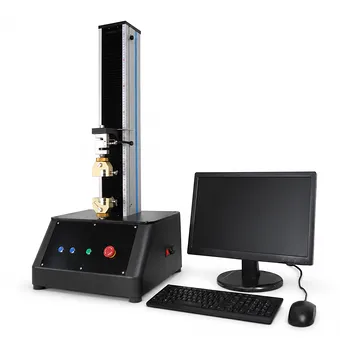
Computerized Battery Electrode Tab Welding Tensile Tester and Separator Performance Testing Machine
Evaluate battery electrode tab welding strength and separator mechanical performance with this computerized tensile testing machine featuring high precision load cells versatile test modes real time data acquisition and multi unit switching for advanced battery materials research and production
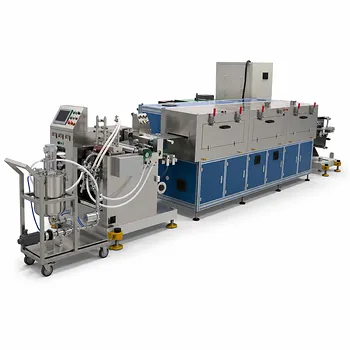
Single Sided Battery Electrode Extrusion Coating Machine
Single-sided battery electrode coating machine delivers precise intermittent and continuous slurry application, stable web tension, controlled electric drying, and consistent coatings for lithium-ion battery research, pilot production, and advanced materials development across demanding laboratory and development workflows every day.