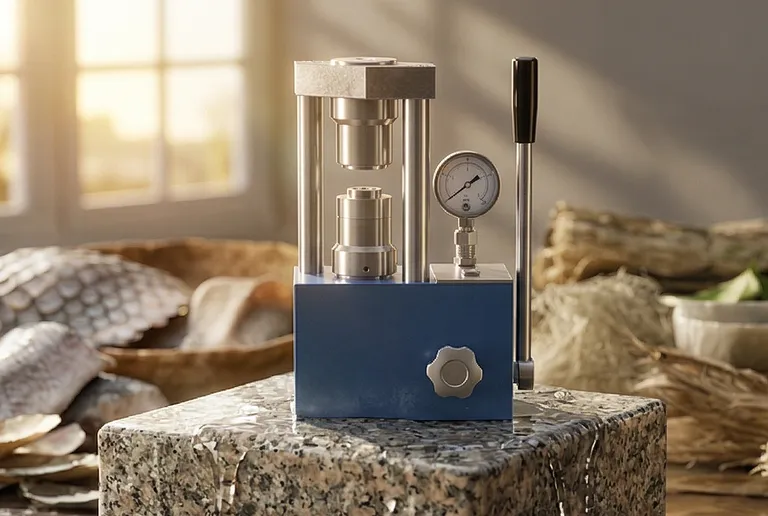
In the laboratory, the difference between a breakthrough and a statistical outlier is rarely found in the recipe. It is found in the environment.
When fabricating polyethylene-based bio-composites—like those utilizing fish scale powder or organic fibers—we are not just mixing materials. We are forcing a marriage between two worlds: a synthetic thermoplastic matrix and a complex organic filler.
Without the precise application of physics, this marriage fails. The result is a material plagued by "invisible enemies"—microscopic voids, uneven density, and weak interfacial bonding.
The Thermal Window: Controlling the Flow
For High-Density Polyethylene (HDPE), the magic happens at 420 K (approximately 147°C). This is not a suggestion; it is a thermodynamic boundary.
- The Liquefaction Threshold: At this precise temperature, the polymer transitions into a molten state with the ideal viscosity to "wet" the organic filler.
- The Degradation Risk: Go too high, and you risk thermal degradation of the bio-fillers. Go too low, and the polymer remains too viscous to infiltrate the filler's porous network.
- The Result: Precision heating ensures the polymer flows into every crevice, transforming a porous mixture into a dense, uniform solid.
Pressure as a Catalyst for Integrity
If temperature provides the opportunity for fusion, pressure provides the enforcement. In the fabrication of bio-composites, a constant pressure of 10–15 MPa acts as a mechanical architect.
Forced Degassing
During the initial mixing, air is an inevitable interloper. Pressure squeezes these residual bubbles out of the matrix. Without this "forced degassing," internal pores remain, acting as stress concentrators that cause the material to fail prematurely under mechanical load.
Interfacial Fusion
True strength comes from the bond between the matrix and the reinforcement. Simultaneous heat and pressure facilitate interfacial fusion—bonding the materials at a molecular level. This minimizes contact impedance and ensures that mechanical stress is transferred efficiently across the composite.
The Requirement for Analytical Accuracy
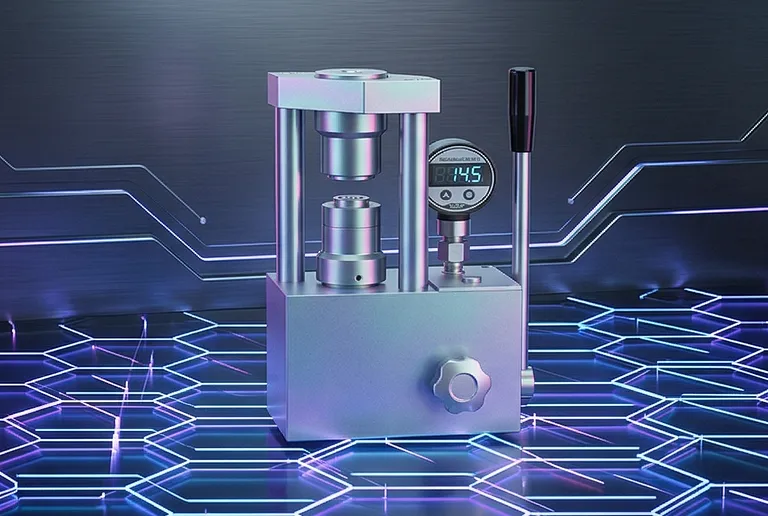
Research data is only as good as the specimen it is derived from. Inconsistent samples lead to noisy data, which leads to incorrect conclusions.
- Dimensional Precision: A high-quality laboratory press allows for standardized thickness (e.g., 350 ± 25 µm). This is critical for calculating tensile modulus or electrical conductivity.
- Uniform Density: Repeatability is the soul of science. By stabilizing the processing environment, you ensure that every sample produced is a twin of the last, allowing you to attribute changes in performance to the material composition, not the fabrication flaws.
The Engineering Balance: A Summary of Parameters
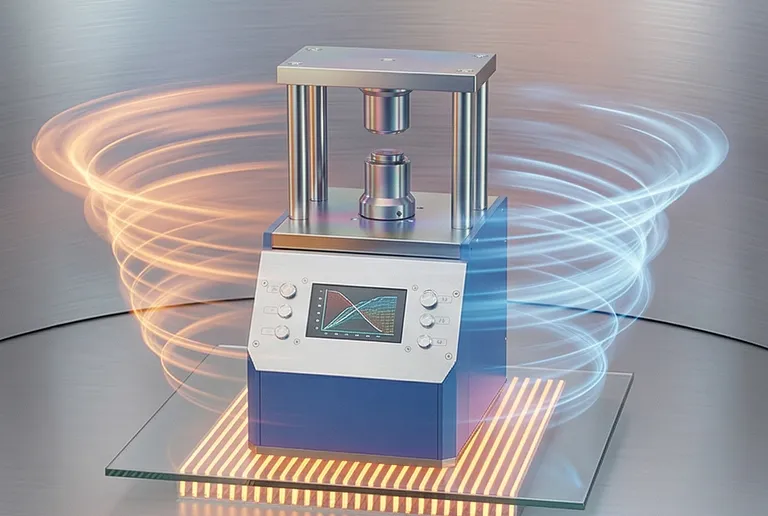
| Processing Parameter | Optimal Value/Range | Key Benefit for Bio-Composites |
|---|---|---|
| Temperature | 420 K (147°C) | Ensures optimal viscosity for deep filler infiltration. |
| Pressure | 10 – 15 MPa | Eliminates internal voids through forced degassing. |
| Interfacial Fusion | Simultaneous Heat/Pressure | Maximizes bonding strength at the molecular level. |
| Dimensional Accuracy | 350 ± 25 µm | Provides standardized geometry for reliable testing. |
Mastering the Synergy
To create a high-performance bio-composite, one must balance thermal flow with mechanical compression. It is a delicate dance. Setting the temperature is easy; holding it with ±1°C precision while maintaining 150 bar of pressure is where the engineering challenge lies.
Whether your focus is electrical conductivity, mechanical durability, or standardized material characterization, the press is the bridge between your raw ingredients and a functional material.
Elevate Your Research with KINTEK Precision
Don't let internal voids or inconsistent density compromise your findings. KINTEK specializes in comprehensive laboratory pressing solutions designed for the rigors of material science. From manual and automatic heated presses to glovebox-compatible and isostatic systems, we provide the tools required for the perfect fusion of matrix and filler.
Related Products
- Automatic High Temperature Heated Hydraulic Press Machine with Heated Plates for Lab
- Heated Hydraulic Press Machine with Heated Plates for Vacuum Box Laboratory Hot Press
- Automatic Heated Hydraulic Press Machine with Hot Plates for Laboratory
- Heated Hydraulic Press Machine With Heated Plates For Vacuum Box Laboratory Hot Press
- Laboratory Split Manual Heated Hydraulic Press Machine with Hot Plates
Related Articles
- The Architecture of Slow: Why Physical Precision Dictates Chemical Destiny
- The Architecture of Certainty: Why the Laboratory Press is the Anchor of Material Science
- The Vanishing Boundary: The Hidden Thermodynamics of LTCC Lamination
- The Alchemy of 160°C: Why Precision Pressing is the Silent Backbone of Rubber Science
- The Invisible Forge: Why the Laboratory Press is the Soul of Nano-Composites



















