In the world of advanced ceramic lamination, pressure is both the architect and the wrecking ball.
Engineers pursuing the "perfect bond" often turn to isostatic pressing. It is a method defined by its elegance—using fluid to exert uniform force across every square millimeter of a component. But for Low Temperature Co-fired Ceramic (LTCC) structures containing open cavities, this elegance becomes a liability.
The very physics that ensure a flawless, high-density substrate are the same forces that can turn a sophisticated microfluidic channel into a crushed ribbon of green tape.
Pascal’s Uncompromising Hand
The fundamental challenge of isostatic pressing is rooted in Pascal’s Principle. In a fluid medium, pressure is transmitted undiminished in every direction.
When a ceramic laminate with an internal void is submerged in a Cold Isostatic Press (CIP) or Warm Isostatic Press (WIP), the medium does not distinguish between the outer surface and the internal architecture.
The Mechanics of Structural Failure
- Omnidirectional Stress: Unlike a mechanical die that applies force vertically, a fluid medium "wraps" around the part.
- Zero Counter-Pressure: Because the internal cavity is empty (filled only with air or vacuum), there is no internal resistance to counteract the external 18–25 MPa of force.
- Buckling: The flexible green tapes, unsupported from within, inevitably buckle. The result is not just a slight deformation, but often a total structural collapse.
The Rheology of Surrender
At the molecular level, ceramic green tapes under high pressure do not behave like solids. They exhibit rheological flow.
When subjected to the heat and pressure of a WIP cycle, the organic binders in the tape soften. The material begins to behave like a high-viscosity fluid, seeking the path of least resistance.
In a solid laminate, there is nowhere for the material to go. In an LTCC device with microchannels, the "path of least resistance" is the void itself. The material literally flows into the cavity, leading to sagging or total occlusion.
The Density Trap: Isostatic vs. Uniaxial
The decision to use an isostatic press is usually a pursuit of density. By eliminating interlaminar micropores, you achieve superior structural strength and uniform shrinkage during sintering.
However, there is a psychological trap in choosing the "best" technical method without considering the specific geometry of the part.
| Feature | Isostatic Pressing (WIP/CIP) | Uniaxial Pressing |
|---|---|---|
| Pressure Direction | Omnidirectional (Isotropic) | Single Axis (Vertical) |
| Cavity Impact | High risk of collapse | Lower risk; localized control |
| Bonding Quality | Superior density | Risk of interlaminar pores |
| Material Flow | High lateral/internal flow | Minimal lateral flow |
Uniaxial pressing, while prone to "edge squeezing" and non-uniform density, offers something isostatic pressing cannot: localized control. By applying force in only one direction, you can often preserve the "ceiling" of a cavity that would otherwise be crushed by the isotropic nature of a fluid medium.
Engineering the Threshold
Success in LTCC fabrication is found in the narrow margin between successful bonding and structural failure. Research indicates that a 15% deformation rate is often the tipping point for device failure.
Critical Parameters for Cavity Preservation
- Pressure Calibration: Most LTCC laminations require 18 MPa to 20 MPa. Even a 2 MPa overshoot can be the difference between a functional microchannel and a solid block of ceramic.
- Thermal Sensitivity: In Warm Isostatic Pressing, temperature increases the pliability of the tape. While this aids bonding, it accelerates the rheological flow into voids.
- Sacrificial Support: To use isostatic pressing successfully with open cavities, engineers often must resort to sacrificial fillers (like carbon-based inserts) that burn away during sintering, providing the necessary internal counter-pressure.
Choosing the Right Instrument
The complexity of LTCC design demands a nuanced approach to hardware. There is no "one-size-fits-all" in the laboratory.
If your research prioritizes the integrity of complex, unfilled 3D microstructures, the brute force of an isostatic press may be counterproductive. Conversely, if you are developing high-voltage substrates where delamination is the primary failure mode, the uniform density of a WIP system is indispensable.
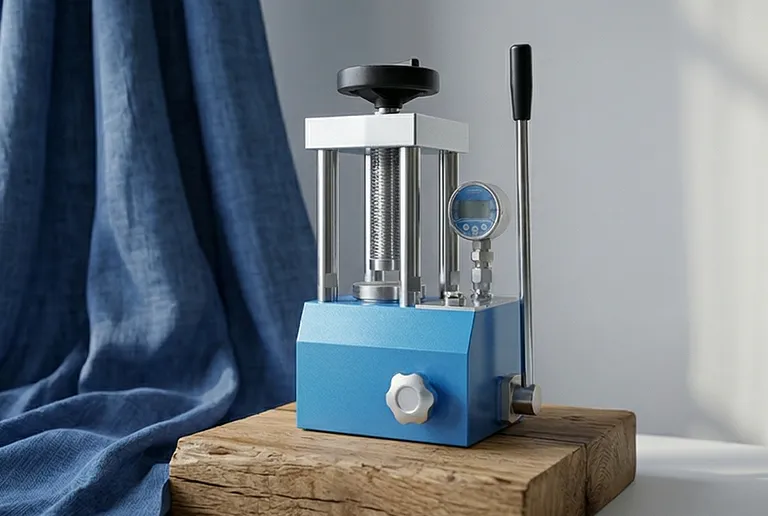
At KINTEK, we understand the "engineer's romance" with precision. We provide the full spectrum of laboratory pressing solutions—from manual and automatic hydraulic presses for localized uniaxial control to advanced CIP and WIP systems for high-density applications. Our equipment is designed to give you the granular control over pressure and temperature required to keep your internal architectures intact.
Ensure your internal geometries survive the pressure of innovation. Contact Our Experts
Related Products
- Warm Isostatic Press for Solid State Battery Research Warm Isostatic Press
- Lab Isostatic Pressing Molds for Isostatic Molding
- Automatic Lab Cold Isostatic Pressing CIP Machine
- Electric Split Lab Cold Isostatic Pressing CIP Machine
- Electric Lab Cold Isostatic Press CIP Machine
Related Articles
- How Warm Isostatic Pressing Transforms High-Performance Manufacturing
- How Warm Isostatic Pressing Optimizes Material Performance for Industrial Applications
- The Pressure to Be Perfect: How Hot Isostatic Pressing Achieves Absolute Material Integrity
- The Physics of Patience: Why Hot Isostatic Pressing Trades Speed for Certainty
- The Enemy Within: How Hot Isostatic Pressing Forges Perfect Material Integrity



















