All Questions
How Are Lithium-Based Batteries Classified, And What Factors Guide Cell Format Selection In R&D?
Learn classification by electrolyte state and physical configuration, and key factors for choosing the right cell format in lab R&D.
Which Electrolyte Formulations Are Suitable For High-Temperature (>60°C) Lithium-Ion Cell Testing? Discover Litdi-Based Electrolytes For Reliable High-Temp Performance
Explore LiTDI-based electrolytes for high-temperature lithium-ion cell testing above 60°C, comparing stability and performance against conventional LiPF6.
How Does The 'Solvent-In-Salt' Strategy Enhance Electrolyte Stability In Advanced Lithium Battery Research? Key Parameters For Cell Testing
Learn how solvent-in-salt electrolytes boost stability and what to evaluate in cell testing for optimal performance.
Why Do Sodium-Ion Battery Full Cells Exhibit Lower Energy Density Than Half-Cells? Optimize With Precision Electrode Processing And Testing.
Learn why Na-ion full cells have lower energy density than half-cells and how advanced lab equipment can improve performance.
Which Key Parameters Determine The Corrosion Rate Of Positive Grid Alloys? Master Battery Material Testing With These 4 Factors
Learn the 4 key parameters—potential, temperature, alloy, area—that control positive grid corrosion, guiding battery material testing.
Why Are Low-Atomic-Number Battery Materials Difficult To Characterize With Conventional X-Ray Absorption Imaging? Unlock Hidden Insights With Phase Contrast And Xrs.
Discover why low-Z materials are nearly invisible in X-ray absorption and how phase contrast and XRS enable better battery R&D.
What Interfacial And Operational Drawbacks Are Associated With Fec Electrolyte Additives During Lithium Cell Performance Evaluation?
Learn about FEC's risks: HF generation, thick interphases, and evaluation challenges in lithium batteries.
What Are The Mechanisms And Benefits Of Additive Synergies Like Fec+Tmsp Or Glymes In High-Voltage Lithium Batteries?
Discover how combining FEC with TMSP or glymes enhances high-voltage battery stability through complementary interfacial protection.
What Are The Primary Electrochemical Performance Advantages Of Lithium Rechargeable Batteries? Achieve Reliable, High-Energy Cell R&D With Consistent Fabrication.
Discover how high voltage, energy density, low self-discharge, and long life impact lab cell fabrication and testing.
What Role Do Cyclic Voltammetry Parameters And Transition Time Measurements Play In Selecting Electrochemical Testing Equipment For Battery Materials Research?
Learn how CV parameters and transition times guide equipment selection for accurate battery materials testing.
How Do Nitrate Additives Address Polysulfide Shuttling And Low-Temperature Discharge Bottlenecks In Li-S Batteries? Discover Dual-Protection Mechanisms And Testing Insights.
Learn how LiNO3 suppresses polysulfide shuttling and boosts low-temperature Li-S discharge. Key insights for prototype testing and optimization.
How Do Nitrate-Based Electrolyte Additives Influence The Li-Ion Solvation Sheath During Battery Cell Performance Testing, And Why Is This Relevant When Formulating Electrolytes For Cell Assembly Workflows?
Learn how nitrate additives reshape the Li⁺ solvation sheath, impacting performance and why precise formulation matters in battery cell assembly.
Why Are Precise Geometric Dimensions (R_1, R_2, R_3) And Hydrodynamic Control Essential When Utilizing Rotating Disk Electrode (Rde) And Rotating Ring-Disk Electrode (Rrde) Systems For Catalyst And Material Research?
Learn how precise electrode geometry and controlled rotation enable quantitative kinetic analysis in RDE/RRDE, ensuring reproducible catalyst research.
What Role Do Overpotential Components Play In Diagnosing Polarization Losses? Guide To Charge-Transfer, Mass-Transfer, And Nucleation Overpotential For Better Battery Analysis.
Learn how charge-transfer, mass-transfer, and nucleation overpotential reveal the root causes of polarization during cell testing.
Why Do Hierarchical Micro-Nanostructures Outperform Commercial Bulk Particles As Lithium-Ion Battery Anode Materials, And What R&D Considerations Apply?
Discover how hierarchical structures enhance battery anodes and key R&D factors for electrode fabrication.
What Structural And Kinetic Limitations Must Be Addressed During The Laboratory Processing And Testing Of Prussian Blue Analogue (Pba) Battery Electrode Materials? Key Strategies For Reliable Evaluation
Learn about key structural and kinetic controls for PBA electrodes, including volume change, water, density, and rate testing.
What Are The Main Electrochemical Advantages Of Prussian Blue Analogues (Pbas) When Evaluated As Electrode Materials In Lithium-Ion Battery Research And Testing? Unlock High-Rate, Durable, And Cost-Effective Electrode Development
Discover PBAs' electrochemical edge: fast Li+ diffusion, high cyclability, multiple redox sites, low strain, and safety for lithium-ion batteries.
Which Key Electrochemical Parameters Must Be Monitored When Evaluating Quasi-Solid-State Li-O2 Cell Performance? Essential Metrics And Testing Equipment For Reliable Analysis
Learn the critical electrochemical parameters for quasi-solid-state Li-O2 cells and the required battery testing equipment for accurate evaluation.
How Does Nb2O5 Doping Affect The Cycling Stability Of Mgh2-Libh4 Composites? Unlock Superior Capacity Retention With Tailored Battery Testing
Discover how Nb2O5 doping boosts stability and capacity in MgH2-LiBH4 anodes, and what battery testers need for accurate results.
What Causes Upper Lug Corrosion On Negative Plates During Float Charging? Prevent It With Electrolyte Contact, Alloy Choice, And Compression Control.
Learn the mechanism of upper-lug corrosion in float charge and engineering strategies to prevent it.
Why Does Oxygen Transport Differ Dramatically Between Flooded And Valve-Regulated Battery Environments? Unlock Reliable Vrla Test Results
Discover key differences in oxygen pathways and their impact on battery testing, float current, and recombination. Optimize your cell design.
How Do Trace Metallic Impurities Impact Hydrogen Evolution In Lead-Acid Batteries? Learn Why Purity Control In Electrode Fabrication Is Essential For Accurate Testing.
Trace metals like nickel, copper, and antimony can drastically increase hydrogen evolution in lead-acid batteries, skewing test results. Strict purity control is vital.
What Effect Does Catalyst Doping Have On Hydride Electrode Cyclability? Boost Capacity Retention In Solid-State Testing
Discover how catalyst doping enhances hydride electrode cyclability and capacity retention, with key data and solid-state testing insights.
Why Is Elevated-Temperature Testing Necessary For Libh4-Based Solid-State Battery Cell Fabrication And Evaluation? Enhance Kinetics And Capacity
Elevated temperatures activate LiBH4's high-conductivity phase, enabling accurate capacity and rate testing. Learn why temperature control is crucial.
How Do Nanostructured Cnf Composite Cathodes Enhance Li-O2 Batteries And What Equipment Is Needed?
Learn how CNF composite cathodes boost Li-O2 battery efficiency and the equipment required for fabrication.
What Mechanisms Cause Liquid Electrolyte Degradation In Li-O2 Batteries, And How Do High-Concentration Solvate Electrolytes Mitigate These Issues During Lab-Scale Testing?
Learn how superoxide attacks solvents and how concentrated solvates reduce decomposition for stable lab tests.
How Does Surface Modification Of Lithium Metal Anodes Using Additive-Containing Electrolytes Suppress Lithium Dendrite Growth In Li-O2 Battery R&D, And What Laboratory Equipment Is Needed?
Learn how FEC additives form a protective SEI to suppress dendrites, improving efficiency, and the essential lab equipment for evaluation.
Why Is Controlled-Atmosphere Cell Assembly Essential For High-Voltage Cathode Evaluation? Key Benefits And Best Practices
Discover why inert-atmosphere assembly is critical for reliable high-voltage cathode testing, ensuring accurate, reproducible results.
How Do High-Precision Laboratory Battery Testing Systems Help Identify Phase Transitions And Voltage Plateaus In Insertion-Type Positive Electrode Materials?
Discover how high-precision battery testing reveals phase transitions and plateaus in electrode materials, aiding R&D.
Why Is Copper And Titanium Substitution Utilized In Sodium-Ion Layered Oxide Cathodes, And How Does It Benefit Material Processing And Testing In Battery Laboratories?
Discover how Cu/Ti doping enhances cathode stability, air tolerance, and lab reproducibility, improving battery R&D efficiency.
What Causes Rapid Capacity Decay In High-Voltage Sodium-Ion Cathodes, And How Can Electrode Manufacturing Quality Mitigate These Issues During Testing?
Learn how high-voltage phase transitions cause capacity loss and why uniform slurry coating and precision pressing are crucial for reliable testing.
How Do Electrolyte Decomposition Limits And Cell Potential Windows Influence The Requirements For Laboratory Battery Testing Systems? Discover Key Testing Capabilities For Accurate Evaluation.
Learn how electrolyte stability impacts battery testers, requiring precise voltage control, low-current measurement, and programmable protocols.
How Is Collection Efficiency (N) Applied In Rrde Testing For Evaluating Side Reactions And Intermediate Species In Battery Electrochemistry?
Learn how collection efficiency (N) in RRDE testing reveals side reactions and intermediates, aiding battery research and material optimization.
What Is The Significance Of Isolating The Kinetically Limited Current (Ik) From The Disk Current (Id) During Rotating Disk Electrode Testing Of Energy Materials?
Learn why isolating iK separates intrinsic kinetics from transport effects in RDE testing, enabling accurate catalyst comparison.
Why Is Dsc Equipment Essential For Evaluating Novel Battery Electrolytes? Uncover Thermal Stability And Safety Insights.
Learn why DSC is vital for analyzing electrolyte thermal stability, phase transitions, and safety in battery R&D.
How Do Solvent Properties Impact Lithium-Ion Electrolyte Design? Key Factors And Lab Testing
Learn how dielectric constant, viscosity, and vapor pressure affect electrolyte performance, and why lab assembly/testing equipment is critical for evaluation.
What Are The Key Engineering Trade-Offs And Challenges Of Nanostructured Lto Anodes? Optimize High-Rate Battery Performance.
Discover the main trade-offs in nanostructured LTO anodes: surface area vs. stability, rate vs. density, and manufacturing challenges.
Which Electrochemical Testing Methods Are Essential For Evaluating The Performance Of Prussian Blue Analogue (Pba) Battery Electrodes?
Learn the key electrochemical tests for PBA electrodes: CV, galvanostatic cycling, EIS, and long-term cycling for performance evaluation.
How Do The High Theoretical Energy Density And Multi-Electron Transfer Mechanism Of Lithium-Sulfur (Li-S) Batteries Influence Requirements For Laboratory Cell Assembly And Testing Equipment In Battery R&D?
Learn how Li-S battery R&D demands precise assembly and testing equipment to control multi-electron reactions and achieve practical energy density.
Why Do Conversion Oxide Anodes Like Tin Dioxide (Sno2) Exhibit High Initial Irreversible Capacity? Design Strategies For Lithium Compensation In Full Cells.
Learn about SnO2 anode irreversible capacity and design strategies for full-cell assembly, including lithium compensation and pre-lithiation.
Why Are Cyclic Voltammetry Parameters Such As Peak Separation (Δep) And Peak Potentials (Epa, Epc) Essential When Analyzing Battery Active Materials? Unlock Battery Performance Insights
Discover how ΔEp, Epa, and Epc reveal reaction kinetics, reversibility, and stability in battery materials for optimized R&D.
What Electrolyte Structural Modifications Enable Stable High-Voltage Battery Cell Testing Up To 5.1 V At Elevated Temperatures? Discover Key Anion Changes
Learn how removing C-H bonds, nitrogen substitution, and trifluoromethyl groups enhance electrolyte stability for high-voltage battery testing.
How Do Tin-Based Composite Oxide Anodes Compare To Traditional Carbonaceous Negative Electrodes In Theoretical Capacity, And What Mechanism Drives Their Initial Capacity Loss During Battery Material R&D?
Learn the capacity advantages and first-cycle loss mechanisms of tin oxide anodes vs carbon ones.
How Do Dc Step Pulse Testing And 1 Khz Ac Impedance Measurements Differ? Discover Which Method Reveals True Battery Performance.
Learn the key differences between DC pulse and 1 kHz AC impedance for battery resistance testing, and choose the right method for your needs.
What Mechanisms Drive Initial Irreversible Capacity Loss In Silicon Precursor Anodes? Key Factors For Battery Testing
Explore mechanisms of irreversible capacity loss in silicon precursor anodes, including conversion reactions, SEI formation, and strategies for battery testing.
What Safety Hazards And Performance Trade-Offs Should Battery R&D Engineers Consider When Using Lithium Perchlorate (Liclo4) Electrolytes In Cell Testing? Key Considerations Include Thermal Stability, Oxidizing Behavior, And Safe Test Design.
Learn about LiClO4 electrolyte safety hazards and performance trade-offs, including catalytic decomposition and safe test design.
How Can Eis Analyze Sei Layer Growth And Interfacial Reactions In Battery Research? Discover Practical Strategies.
Learn how to use electrochemical impedance spectroscopy to track SEI growth and interfacial reactions in batteries. Practical tips included.
Why Is Small-Signal Linearity Critical In Eis Battery Testing? Ensure Valid Impedance Data
Learn why small-signal linearity is essential in EIS battery testing and how Kramers-Kronig checks confirm data validity.
How Does The Porous Structure Of Battery Electrodes Influence Eis Responses, And Why Is The Transmission Line Model Applied?
Learn how porosity affects EIS and why the transmission line model is essential for battery electrode characterization.
How Are Internal Resistance Parameters Extracted From Eis Used To Estimate Battery State Of Charge (Soc) And State Of Health (Soh)? Key Insights For Accurate Battery Management.
Learn how EIS-derived resistance parameters (Rs, Rct) support SoC and SoH estimation, calibration, and practical implementation.
How Can Equivalent Circuit Analysis Of Eis Nyquist Plots Be Used In Battery Testing Systems To Evaluate Sei Layer Growth And Interfacial Resistance?
Learn how to use EIS equivalent circuit fitting to track SEI resistance and interfacial changes in battery testing.
Why Is Non-Destructive Electrochemical Impedance Spectroscopy (Eis) Advantageous For Evaluating Lab-Scale Test Cells And Sensitive Battery Materials Under Dynamic Operating Conditions?
Discover how non-destructive EIS preserves cell integrity while revealing internal electrochemical processes, ideal for sensitive batteries.
What Mechanisms Enable High-Rate Capability In Dual-Phase Lto-Tio2 Nanocomposite Anodes, And How Should These Materials Be Prepared For Laboratory Testing?
Discover the key mechanisms behind high-rate performance in LTO-TiO2 anodes and learn essential electrode preparation for reliable lab tests.
Why Is Precise Capacity Balancing Critical When Assembling Lto Full Cells? Optimize Your Battery Performance
Learn why capacity balancing in LTO full cells is essential and the lab steps for precise fabrication to ensure optimal performance.
Why Are Hydrodynamic Methods Like The Rotating Disk Electrode (Rde) Important In Material Research? Unlock Kinetic Insights To Accelerate Battery And Advanced Materials Development
Discover how RDE separates mass transport from kinetics, enabling precise material screening and battery R&D for superior performance.
What Key Electrochemical Insights Does Cyclic Voltammetry (Cv) Provide When Using Laboratory Battery Testing Systems To Evaluate New Electrode Materials? - Guide
Learn how CV reveals redox potentials, reversibility, kinetics, and side reactions in battery electrode testing.
How Is Eis Used In Battery Testing To Evaluate Internal Resistance And Interfacial Kinetics?
Learn how EIS measures battery internal resistance and interfacial kinetics. Key insights for battery R&D and quality control.
How Does Thermal Conductivity Of Battery Container Materials Impact Heat Dissipation And Core-To-Surface Temperature Readings During Cell Testing?
Understanding thermal conductivity's role in battery testing, key materials, wall thickness, and measurement accuracy tips.
Why Is Maintaining Temperature Uniformity Across Cells Critical During Battery Pack R&D And Testing, And How Do Different Cooling Mechanisms Compare?
Uneven temperatures cause unequal aging, distort test data, and create safety risks. Compare cooling methods from passive to liquid to optimize battery pack R&D.
What Are The Key Electrochemical Performance Features Of Saccule-Like Sulfur@Reduced Graphene Oxide (S@Rgo) Cathodes In Lithium-Sulfur Cell Research, And What Battery Testing Systems Are Needed To Evaluate Them?
Discover the high-rate capacity, cycling stability, and testing systems needed to evaluate saccule-like S@rGO cathodes for Li-S batteries.
How Are Galvanostatic Charge-Discharge Profiles And Eis Spectra Interpreted When Evaluating Lithium-Sulfur Battery Cathode Materials? Discover The Key Diagnostic Insights
Learn to interpret charge-discharge curves and EIS for Li-S cathodes, covering plateaus, polarization, resistance, and transport to evaluate performance.
When Characterizing Sulfur-Polymer Cathode Powders For Battery Research, What Key Insights Do Xrd And Ftir Spectral Analyses Offer?
Discover how XRD and FTIR reveal sulfur phase state and chemical bonding in sulfur-polymer cathodes.
Why Is Sei Mechanical Flexibility Critical During Battery Cycling, And How Does Electrode Volume Change Influence Cell Mechanical Design?
Learn why SEI flexibility is vital for battery longevity and how electrode expansion impacts cell mechanical design. Key insights for advanced battery R&D.
What Baseline Electrochemical And Thermal Performance Criteria Must A Novel Electrolyte Satisfy During Battery Cell Testing And Development? Key Screening Benchmarks And Trade-Offs
Learn the essential electrochemical and thermal benchmarks for novel electrolytes, including conductivity, stability windows, and safety considerations. Discover how to verify performance in full cells and understand key trade-offs for battery R&D.
What Are The Key Microstructural Limitations Of Conventional Porous Lithium Battery Negative Electrodes, And How Do Solid Mixed-Conductor Matrix Electrodes Overcome Them?
Discover how solid mixed-conductor matrices overcome porous electrode instability for durable, reversible lithium battery anodes.
What Advantages Do Multi-Dimensional Carbon Nanomaterials Offer Over Carbon Black For Li-O2 Battery Air Cathodes? Explore Enhanced Conductivity, Pore Architecture, And Cycling Stability.
Discover how CNTs, graphene, and 3D carbons outperform carbon black in Li-O2 cathodes: better transport, uniform Li2O2 deposition, improved stability.
What Are The Key Performance Requirements For Cathode Materials In Lithium-Oxygen (Li-O2) Battery Research, And Why Is Structural Porosity So Critical? Unlock High-Capacity, Long-Cycle Cathodes.
Discover key cathode requirements: catalytic activity, conductivity, and engineered porosity for Li-O2 batteries. Learn how to optimize pore structure.
How Do Cyclic Voltammetry And Chronoamperometry Differ When Evaluating Mass-Transfer And Kinetic Properties? Discover Key Insights For Battery R&D.
Learn how CV vs CA uncover mass-transfer and kinetics. CV maps redox; CA quantifies diffusion. Essential for battery research.
What Operational Challenges Does Electrolyte Leakage At The Reference Electrode Tip Pose In Electrochemical Test Cells, And Why Are Quasi-Reference Electrodes Utilized? Understand Contamination Risks And Calibration Needs.
Learn how electrolyte leakage contaminates cells and why quasi-reference electrodes offer a solution, with calibration tips.
How Does Uncompensated Resistance Affect Potential Measurements? Optimize Accuracy In Your Electrochemical Testing
Learn how uncompensated resistance impacts electrochemical measurements and how modern testing systems can mitigate its effects for accurate results.
Why Is A Three-Electrode Configuration Preferred Over A Two-Electrode Setup? Unlock True Electrode Dynamics
Discover why three-electrode cells isolate working electrode potential for accurate kinetics. Ideal for advanced battery R&D.
What Electrochemical Trade-Offs Occur When Introducing Trivalent Aluminum (Al³⁺) Dopants Into Lithium Titanate (Lto) Anode Structures? Learn How Al Doping Affects Kinetics.
Discover Al³⁺ doping trade-offs in LTO anodes, including transport benefits and memory effect. Optimize your battery materials.
What Synthesis Routes And Coating Materials Are Effectively Used To Overcome The Low Electronic Conductivity Of Lithium Titanate (Lto) Battery Materials? Discover Proven Strategies For Enhanced Performance.
Explore effective coatings like graphene, PANI, Ag, and carbon, and synthesis routes that boost LTO conductivity for better battery performance.
How Does Mg2+ Doping Affect Lto Performance? Enhance Rate Capability And Stability With Optimized Doping.
Learn how Mg2+ doping improves LTO lithium-ion battery anodes, boosting rate capability, cycling stability, and phase stability.
How Do Solution Resistance, Charge Transfer Resistance, And Warburg Diffusion Manifest In The Nyquist Plot During Battery Electrochemical Testing?
Learn how solution resistance, charge transfer resistance, and Warburg diffusion appear in Nyquist plots for battery testing.
Why Is A Constant Phase Element (Cpe) Used Instead Of An Ideal Pure Capacitor When Modeling Real Battery Electrode Interfaces In Eis Data Analysis? Improve Fit Accuracy
Learn why CPEs are essential for accurate EIS modeling, capturing surface heterogeneity and depressed semicircles.
What Are The Key Advantages Of Using Electrochemical Impedance Spectroscopy (Eis) Over Traditional Direct Current (Dc) Characterization Techniques In Battery Research And Testing? Unlock Detailed Battery Diagnostics
Discover how EIS provides more detailed, nondestructive battery insights than DC methods, enabling precise mechanism separation and aging analysis.
How Do Electrolyte Anion Characteristics Influence Ionic Conductivity And Charge-Discharge Cycle Efficiency Measured On Battery Testing Equipment? Optimize Your Battery Performance
Learn how anion structure affects conductivity and efficiency in battery testing. Discover key factors for optimal electrolyte design.
How Does Anion Structure In Battery Electrolytes Impact Thermal Stability And Safety Parameters Evaluated During Battery R&D Testing? Discover Key Trade-Offs And Testing Methods.
Anion structure dictates electrolyte thermal stability and safety. Learn how to evaluate decomposition, heat release, and voltage windows.
How Do Specific Heat Capacities Of Battery Chemistries Impact Thermal Behavior? Optimize Testing With Precise Thermal Data
Learn how specific heat capacity affects battery temperature rise and why chemistry-specific data is vital for accurate battery testing.
Why Is Precise Battery Testing And Rul Estimation Critical For Managing Quality Variations In Battery Remanufacturing? Optimize Safety, Performance, And Value
Learn how precise testing and RUL estimation improve battery remanufacturing quality, safety, and efficiency.
At What Capacity Degradation Threshold Are Ev Battery Packs Typically Retired From Automotive Use? Discover 75–80% Soh Limits And How Testing Unlocks Second-Life Value.
Learn the 75–80% capacity retirement threshold for EV batteries and why testing systems are crucial for safe, profitable second-life use.
What Are The Primary Heat Generation Mechanisms In Battery Cycling? Master Thermal Analysis For Safer Cells
Learn the key heat sources in battery testing: reversible, irreversible, and gas reactions. Optimize safety and performance.
Why Do Nicd Cells Show Different Thermal Risk Profiles Than Lead-Acid During Charging Vs Discharging?
Explore the distinct thermal behaviors of NiCd and lead-acid cells to optimize battery testing and safety.
How Does The Internal Oxygen Cycle Impact Heat Generation During Battery Overcharge Testing, And Why Is Precise Thermal Monitoring Critical In Battery R&D? Key Insights For Safe Testing.
Learn how the oxygen cycle drives heat during overcharge and why precise thermal monitoring is essential for battery R&D safety and accuracy.
What Key Advantages Does Eis Offer Over Dc Methods? Uncover Detailed Kinetics Without Disrupting Your Battery Cells.
Discover how EIS reveals detailed battery kinetics safely, separating ohmic, charge-transfer, and diffusion processes.
Why Is Gitt Preferred Over Pitt? Unlock Reliable Li-Ion Diffusion Kinetics In Battery Testing
Discover why GITT excels over PITT for lithium diffusion kinetics, offering precise control & accurate measurements in battery testing.
What Role Does Controlled Thermal Carbonization Play In Synthesizing Pitch-Derived Carbon-Coated Lto Micro-Spheres For High-Performance Lithium-Ion Batteries? Unlock Superior Rate Capability And Conductivity.
Learn how controlled carbonization at 900°C forms a conductive carbon shell, preserves microsphere structure, and tunes Ti³⁺/Ti⁴⁺ for enhanced battery performance.
What Causes Initial Capacity Loss And Voltage Hysteresis In Graphitic Carbon Anodes, And How Are These Characteristics Evaluated In Cell Testing?
Learn the causes of initial capacity loss and voltage hysteresis in graphite anodes, and how to evaluate them in battery cell testing.
How Does Ionic Liquid Plasticization (Emitf) Affect Polymer Amorphicity And Transport In Gel Electrolytes? Optimize Battery Processing And Testing.
Learn how EMITF enhances amorphicity and conductivity in gel polymer electrolytes, with tips for battery material processing and testing.
How Does Capacity Deterioration During Storage Affect Stored Lithium-Ion Battery Modules, And Why Is Quality Screening Essential Prior To Cell Assembly And Remanufacturing?
Learn how storage degrades battery capacity and why screening is crucial for safe, consistent assembly.
At What Capacity Degradation Threshold Are Electric Vehicle Battery Packs Typically Retired? Discover The 75–80% Rule And How Lab Testing Evaluates Second-Life Potential.
Learn the 75–80% capacity threshold for EV battery retirement and how laboratory testing assesses secondary-use potential.
How Do Engineered Porous And Core-Shell Architectures Improve Silicon-Based Anodes? Unlock High-Capacity, Stable Battery Performance
Explore how porous and core-shell designs manage silicon volume expansion, enhance transport, and stabilize SEI for better lithium-ion batteries.
How Is Xrd Phase Characterization Used To Verify Sulfur Dispersion In Graphene-Based Battery Electrodes? Discover Key Insights For Better Battery Performance.
Learn how XRD verifies sulfur dispersion in graphene electrodes, and what it reveals about battery performance and material quality.
How Do Battery Test Systems And Eis Evaluate Graphene-Modified Sulfur Cathodes? Discover Performance Insights And Testing Methods.
Learn how battery test systems and EIS measure capacity, cycling stability, and resistance to validate graphene-enhanced sulfur cathodes.
What Are The Key Operational Differences Between Gitt And Pitt Methods When Measuring Solid-State Diffusion Coefficients With Laboratory Battery Test Instruments?
Discover the key operational differences between GITT and PITT for measuring solid-state diffusion coefficients, including control modes, measurement outputs, and instrument requirements.
How Is Differential Capacity (Dq/Dv) Analysis Utilized In Battery Testing To Evaluate Degradation And Structural Changes In Candidate Materials?
Learn how dQ/dV analysis reveals degradation and structural changes in battery materials for better R&D decisions.
Why Is Precision Coin Cell Assembly And Crimping Equipment Critical When Testing Gel Polymer Electrolytes (Gpe) With Magnesium Metal Anodes?
Learn how precision assembly and crimping ensure reliable GPE–magnesium testing, minimizing artifacts for accurate electrochemical data.
How Does Capacity Deterioration Affect Stored Lithium-Ion Battery Inventory, And How Can Testing Protocols Mitigate Quality Risks In Battery Processing? Essential Strategies For Reliable Cells
Learn how capacity loss and resistance growth impact stored Li-ion batteries, and discover testing methods to ensure quality and safety.
Why Is Precise Cell And Module Matching Critical During Battery Pack Assembly? Avoid Risks And Improve Safety
Discover why precise cell and module matching is critical for battery pack assembly, and learn the risks of mismatched components.
Related Products

Battery Testing Temperature Control System

Aqueous Battery Testing Fixture for Laboratory Cell Evaluation

20V 10A Battery Testing Equipment
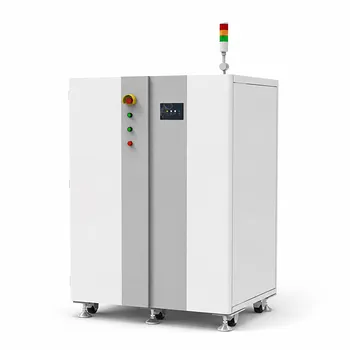
20V 10A Battery Tester Battery Testing Equipment

5V 5A Lithium Ion Battery Testing Equipment Battery Tester