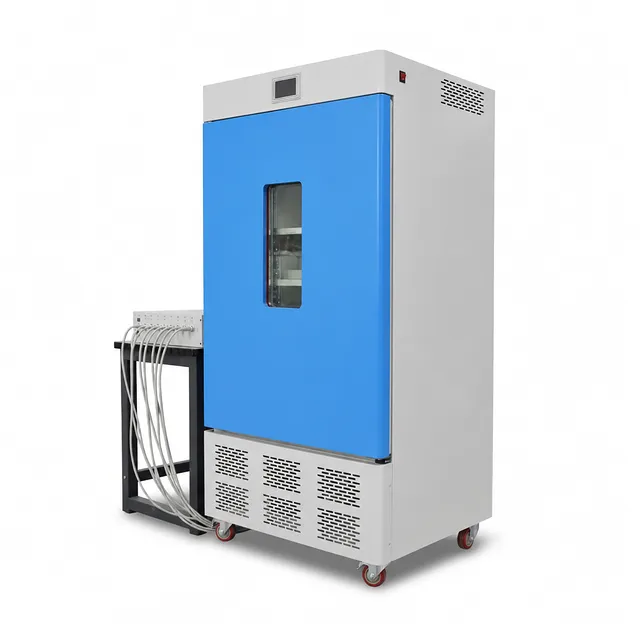
Battery Testing Equipment
Battery Testing Temperature Control System
Item Number : DC19
Price varies based on specs and customizations
- Temperature Range
- 5C~+70C (Stable from 5C)
- Nominal Volume
- 240L
- Temperature Uniformity
- Less than or equal to +/-1C

Shipping:
Contact us to get shipping details Enjoy On-time Dispatch Guarantee.
Why Choose Us
Easy ordering process, quality products, and dedicated support for your business success.
Product Overview
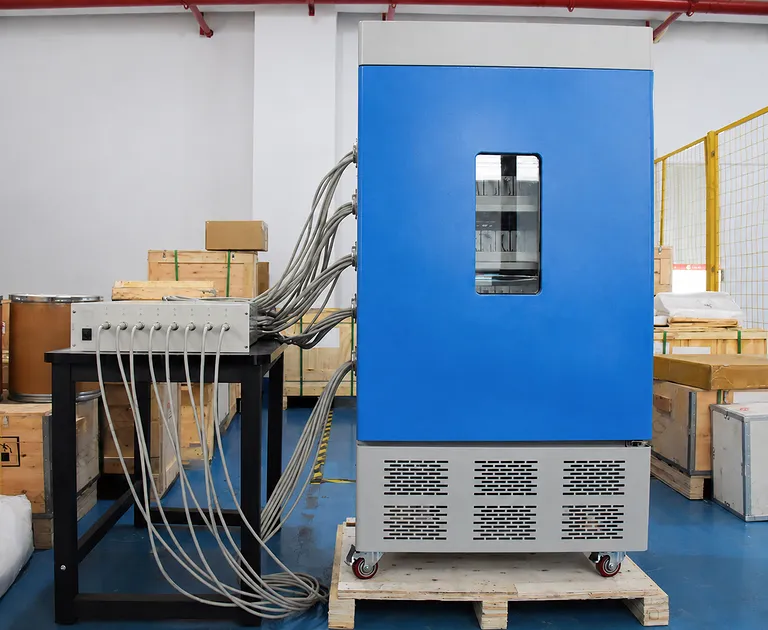
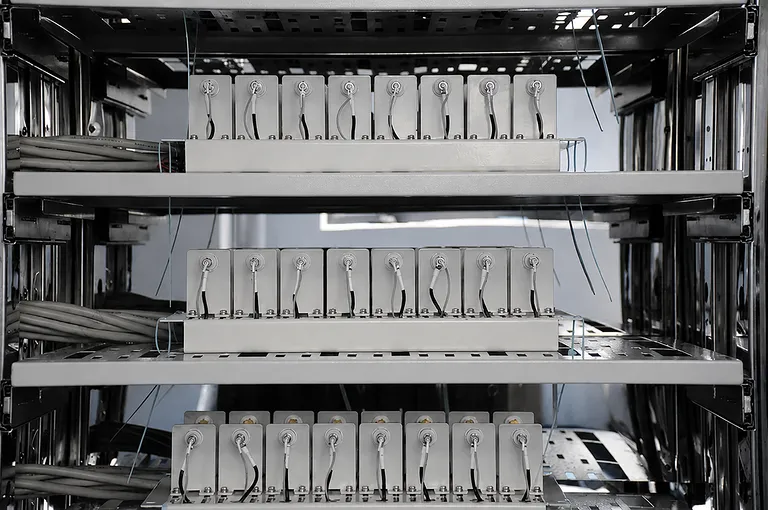
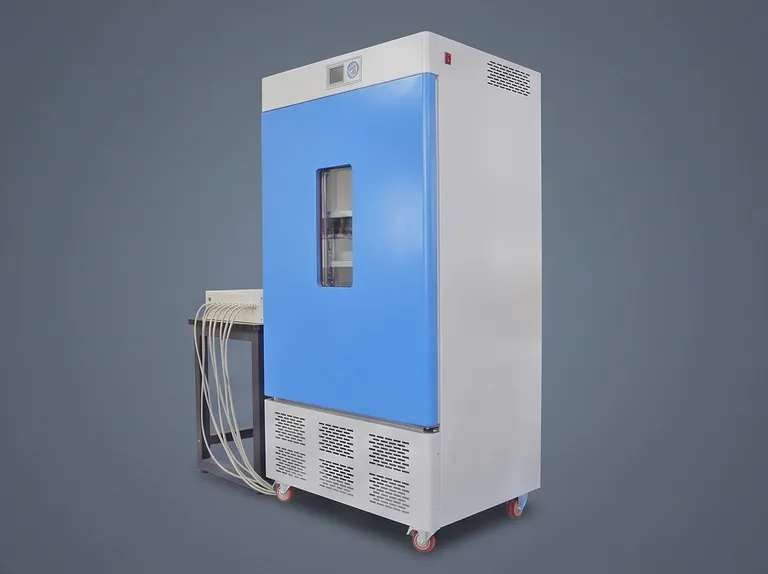
This battery testing temperature control system provides a controlled thermal environment for evaluating battery performance under normal-use conditions. Its 240L nominal chamber volume accommodates battery charging and discharging tests while maintaining a specified temperature range of 5C to +70C. The equipment is intended to help laboratories and testing teams obtain precise performance data by reducing environmental temperature variation during evaluation.
The system is a routine test solution for coin cells, polymer pouch cells, prismatic cells, and cylindrical cells. It supports battery research, manufacturing, and end-use testing where teams need to simulate a defined operating environment before comparing charging and discharging behavior. It is also applicable to quality testing across energy technology, electronics, communications, vehicles, medical products, aerospace products, plastics, metals, chemicals, food, building materials, electrical appliances, and instrumentation.
Specified temperature fluctuation of no more than 1C, temperature deviation of +/-1C, and temperature uniformity of less than or equal to +/-1C establish a clear basis for repeatable chamber conditions. With documented heating and cooling rates, the unit supports planned transitions between test setpoints while retaining a practical, laboratory-oriented chamber format.
Key Features
-
Controlled 5C to +70C test range: The equipment operates from 5C to +70C and is specified as stable from 5C. This range supports battery evaluation in controlled conditions that represent normal-use temperature environments rather than uncontrolled ambient exposure.
-
Defined thermal stability: Temperature fluctuation is specified at no more than 1C. For users referencing GB/T 5170.2-1996 notation, the supplied specification expresses fluctuation as no more than +/-0.5C, giving test teams a documented performance reference for their reporting convention.
-
Uniform chamber conditions: Temperature uniformity is less than or equal to +/-1C, with temperature deviation specified at +/-1C. These stated limits help users assess whether samples positioned within the chamber are being tested under a consistent thermal condition.
-
Practical 240L working capacity: A 240L nominal volume, together with an internal size of 688mm wide x 400mm deep x 882mm high, gives the system a defined working envelope for battery samples and test arrangements. The vertical internal space supports organized placement across the available shelf levels.
-
Structured shelf geometry: Each shelf measures 665mm long x 400mm wide x 15mm thick, and the layer height between shelves is 120mm. This documented geometry enables users to assess sample clearance and plan the arrangement of coin, pouch, prismatic, or cylindrical battery test articles before procurement.
-
Specified heating response: Average heating rate is 4C/min. This provides a clear planning value when establishing test schedules that require the chamber to move from a lower condition toward a higher temperature setpoint.
-
Specified cooling response: Average cooling rate is 0.5C/min. The stated rate supports test planning where samples must return toward lower setpoints in a controlled sequence rather than being removed from the thermal environment.
-
Standards-referenced test basis: The supplied test methods reference GB/T 5170.2-2008 for temperature test equipment and GB/T 5170.5-2008 for damp heat test equipment. These references give quality teams an identifiable framework when aligning chamber evaluation and internal procedures.
-
Laboratory-ready electrical requirement: The unit uses a 220V supply with maximum power of 2.5KW. Its external dimensions of 810mm wide x 570mm deep x 1540mm high and weight of 120KG provide procurement teams with concrete installation information for laboratory placement and utility review.
Applications
| Application | Description | Key Benefit |
|---|---|---|
| Coin cell charge-discharge evaluation | Test coin cells in a controlled 5C to +70C environment during research or routine performance assessment. | Supports comparison of electrical behavior under a defined thermal condition. |
| Polymer pouch cell testing | Place polymer pouch cells in the chamber for charging and discharging tests representing normal-use environmental conditions. | Provides a documented internal space and shelf geometry for test planning. |
| Prismatic battery quality testing | Evaluate prismatic batteries during production quality checks where temperature-controlled charging and discharging data are required. | Helps establish consistent chamber conditions through stated fluctuation, deviation, and uniformity values. |
| Cylindrical battery research | Use the system for controlled-temperature investigation of cylindrical cells during battery R&D. | Covers a specified 5C to +70C operating range stable from 5C. |
| Energy technology product testing | Assess battery-containing products used in energy technology under controlled environmental temperature conditions. | Enables defined heating and cooling sequences using stated average rates. |
| Vehicle-related battery evaluation | Conduct battery performance tests for vehicle-related products within a temperature-controlled chamber environment. | Supports use cases where battery charging and discharging data must be obtained under repeatable conditions. |
| Electronics and communications product quality testing | Evaluate batteries used in electronic, electrical, communications, or instrumentation products. | Gives quality teams a standards-referenced temperature test equipment basis. |
| Medical and aerospace product testing | Apply controlled battery testing to products for medical and aerospace sectors listed in the applicable fields. | Provides a specified chamber capacity, power requirement, and installation footprint for test-lab review. |
Technical Specifications
| Item | Specification |
|---|---|
| Site-facing identifier | DC19 |
| Equipment type | Battery constant-temperature test system |
| Nominal volume | 240L |
| Internal dimensions | Width 688mm x Depth 400mm x Height 882mm |
| External dimensions | Width 810mm x Depth 570mm x Height 1540mm |
| Shelf dimensions | Length 665mm x Width 400mm x Thickness 15mm |
| Height between shelf layers | 120mm |
| Weight | 120KG |
| Power supply | 220V |
| Maximum power | 2.5KW |
| Test environment | Ambient temperature +5~+40C, relative humidity <=85%, with no sample in the test chamber |
| Test method | GB/T 5170.2-2008 Temperature test equipment |
| Test method | GB/T 5170.5-2008 Damp heat test equipment |
| Temperature range | 5C~+70C (Stable from 5C) |
| Temperature fluctuation | <=1C (Note: expressed according to GB/T5170.2-1996, fluctuation is <=+/-0.5C) |
| Temperature deviation | +/-1C |
| Temperature uniformity | Less than or equal to +/-1C |
| Heating time | 4C/min (average heating rate) |
| Cooling time | 0.5C/min (average cooling rate) |
| Applicable battery types | Coin cells, polymer pouch batteries, prismatic batteries, cylindrical batteries |
| Applicable fields | Energy technology, electronics, electrical appliances, communications, instrumentation, vehicles, plastic products, metal products, food, chemicals, building materials, medical products, aerospace products |
Why Choose This Product
-
Defined performance criteria: Buyers receive explicit values for temperature range, fluctuation, deviation, uniformity, heating rate, and cooling rate. These specifications provide a practical foundation for comparing the unit against internal test requirements.
-
Battery-focused test versatility: The system is identified for coin, polymer pouch, prismatic, and cylindrical batteries. This breadth is valuable for facilities managing more than one cell format across research, production, and end-use evaluation.
-
Procurement-ready installation data: Nominal capacity, internal and external dimensions, shelf dimensions, weight, 220V supply, and maximum 2.5KW power are all specified. Facilities teams can use these details to review available space, chamber access, shelf clearance, and electrical suitability before installation.
-
Standards-referenced evaluation: The documented GB/T 5170.2-2008 and GB/T 5170.5-2008 test-method references help quality teams connect equipment selection with established temperature and damp heat test equipment practices.
-
Built for controlled test workflows: The combination of stated thermal performance and defined chamber geometry supports organized, repeatable battery test setup where reliable environmental conditions are central to meaningful charging and discharging data.
Contact us for a quote or a custom solution matched to your battery formats, test conditions, facility space, and electrical requirements.
Trusted by Industry Leaders

REQUEST A QUOTE
Our professional team will reply to you within one business day. Please feel free to contact us!
Related Products
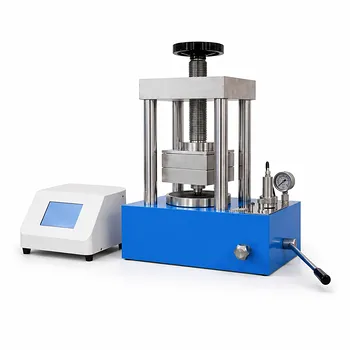
Manual Heating Press with Precision Temperature Control and Hydraulic Pressure
Discover our manual heating press with precise temperature control up to 300°C, hydraulic pressure up to 24 tons, water cooling, and touchscreen interface for consistent lab pressing applications including battery research and material testing. Request a quote today!
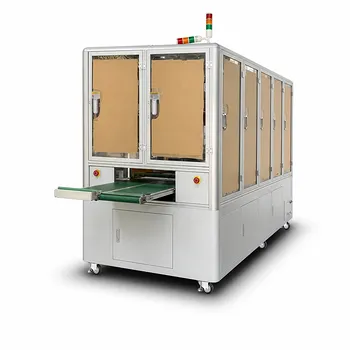
Pouch Prismatic Battery OCV DCIR Testing Machine with Barcode Scanning and Inkjet Coding
Automated pouch prismatic battery OCV and DCIR testing machine with barcode scanning, voltage resistance measurement, data traceability, and OK NG sorting for high throughput cell production across pouch cell manufacturing lines with reliable server integration
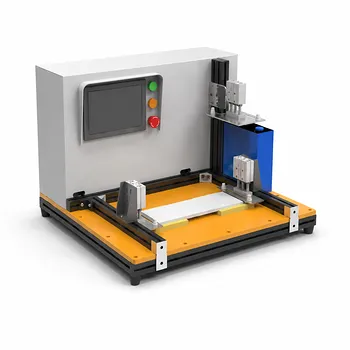
Prismatic Battery Automatic Testing and Sorting Equipment
Prismatic battery automatic testing and sorting equipment measures open circuit voltage and AC internal resistance, automatically pairs up to eight grades, supports traceable database management, and processes approximately 600 cells per hour for consistent pack quality in lithium battery production.
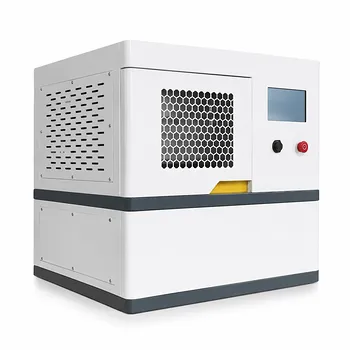
Solid State Battery Laboratory Hydraulic Hot Press Dual Zone Heating Programmable Pressure Control
High-precision hydraulic hot press for solid-state battery research, featuring dual-zone independent heating up to 200°C, 0-15 ton adjustable pressure, 8-stage programmable sequences, real-time data logging via 7-inch touchscreen, and active water cooling. Ideal for laboratory material development and research.
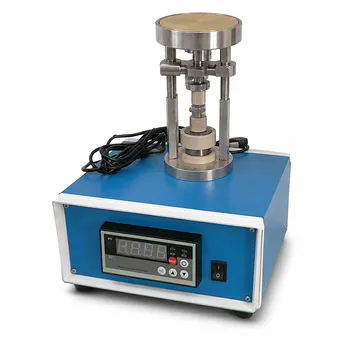
CT Testing Solid State Battery Device
CT testing solid state battery device for compact cell fixture evaluation with 2 mm inner diameter, optional display, external fixture, and 2 ton sensor integration for laboratory research workflows.
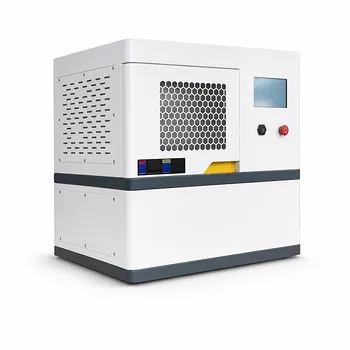
Solid State Battery Research Laboratory Hydraulic Hot Press Machine
High-precision thermal compression system for solid-state battery research with independent dual-platen heating up to 300°C, 30-ton hydraulic press, and automatic pressure compensation for precise sample fabrication. Ideal for electrolyte compaction and composite lamination. With programmable cooling and safety interlocks.
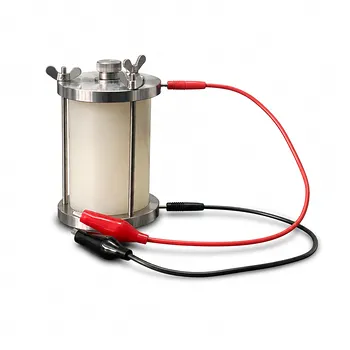
4680 Cylindrical Battery Detachable Split Test Kit
Detachable split test kit for 4680 cylindrical battery research with corrosion resistant sealing, stainless steel end caps, PTFE insulation, and secure spring loaded cell fastening for repeatable laboratory testing and flexible advanced materials workflows
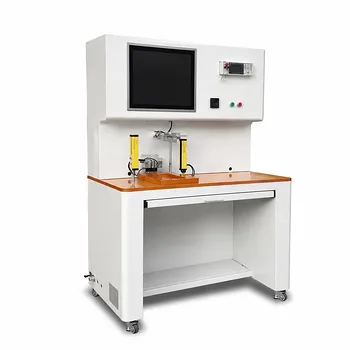
Manual Multifunctional OCV Sorting Machine for Pouch Lithium Ion Cells
Manual multifunctional OCV sorting machine for pouch lithium ion cells, combining voltage and internal resistance testing, data binding, software grading, voice notification, and flexible cell compatibility.
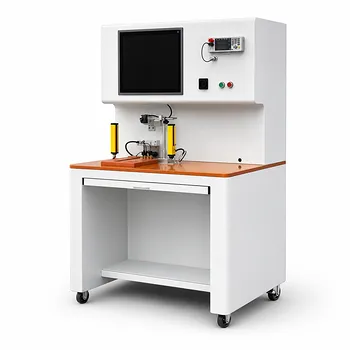
Manual OCV Multifunction Test Sorting Machine
Manual OCV multifunction test sorting machine for pouch lithium ion prismatic cells combines voltage and internal resistance grading data binding database storage and operator guided handling for controlled battery production inspection with computer display and configurable audible grade notification.
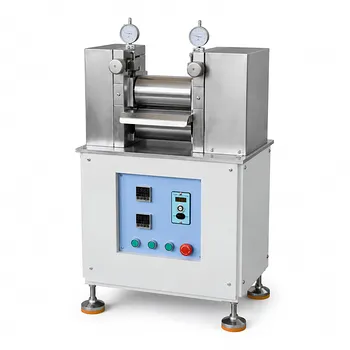
100 x 200 mm Heated Laboratory Rolling Mill Battery Electrode Dual Roller Machine Independently Adjustable Temperatures to 200 C
100 x 200 mm heated laboratory rolling mill with independently adjustable dual roller temperatures to 200 C, 5 T pressure, 0-3 mm gap, and variable speed for lithium battery electrode densification and precision materials research applications worldwide.
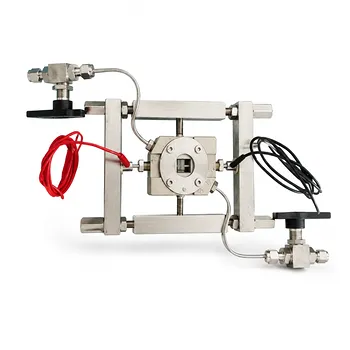
Optical Testing Solid State Battery Device for Microscopy Raman and Infrared Cross Section Analysis
Optical testing solid state battery device with compact fixtures for microscope, Raman, and infrared cross section analysis, including venting configuration for advanced battery research. Supports precise laboratory characterization, flexible sample dimensions, and controlled access for materials science and cell development.
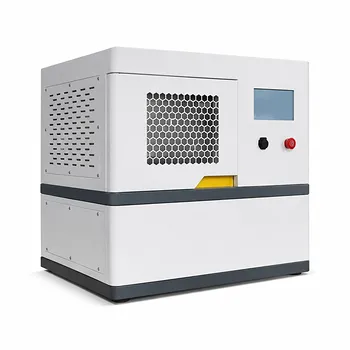
Solid State Battery Laboratory Hydraulic Hot Press
Benchtop laboratory hot press for precise thermo-compression of advanced materials. Features dual-zone independent programmable heating, servo-driven force control, and 7-inch touchscreen interface for repeatable solid-state battery research, electrode fabrication, and composite lamination with built-in over-temperature and over-pressure protection.
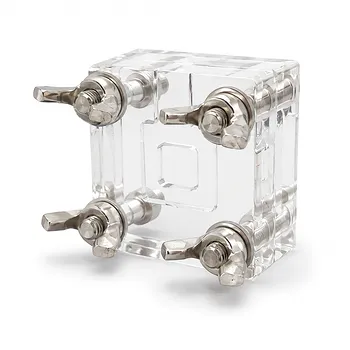
Solid State Zinc Air Battery Test Fixture Flexible Zinc Air Mold
Transparent solid state zinc air battery test fixture with flexible zinc air mold design, compact assembly, 1 to 4 cm² reaction areas, 0.2 cm electrode spacing, customizable construction, and clear observation for zinc air battery research and practical laboratory evaluation.
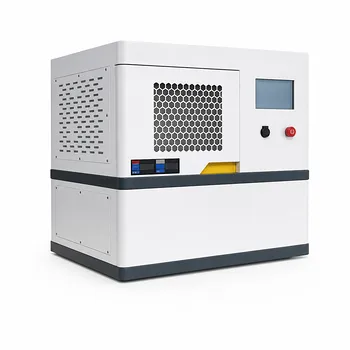
Solid-State Battery Electrolyte and Polymer Composite Laboratory Hot Press Machine
Compact high-precision thermal pressing system for solid-state battery electrolyte pellet preparation and polymer composite curing. Oil-free servo drive with dual independent programmable heating up to 300°C and precise pressure control up to 2 tons. Ideal for cleanroom research environments.
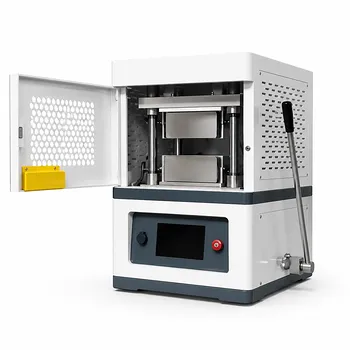
Laboratory Hydraulic Hot Press Machine for Solid-State Battery Research
Compact benchtop laboratory hydraulic hot press for solid-state battery research featuring independent dual-zone heating up to 300°C, 25-ton automatic pressure control, and integrated water cooling for precise compaction of electrolytes and polymer membranes in small-footprint design ideal for R&D applications.
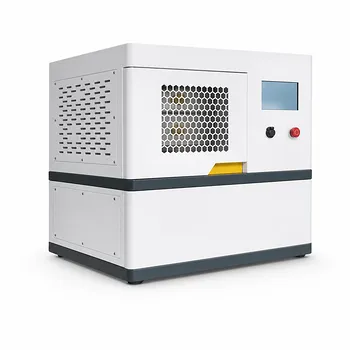
Solid-State Battery Laboratory Electric Hot Press Machine
Compact benchtop electric hot press for solid-state battery research, polymer lamination, and MEA fabrication. Features dual-plate independent heating up to 200°C, programmable pressure up to 1800 kgf. Oil-free electric servo drive ensures clean, high-repeatability pressing, integrated water cooling.
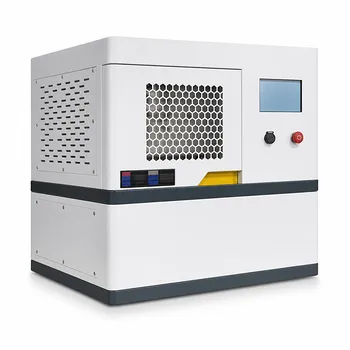
Solid-State Battery Research Laboratory Hydraulic Hot Press Machine
Designed for solid-state battery research, this laboratory hydraulic hot press features servo-driven pressurization up to 2 tons, dual-platen heating up to 300°C, programmable pressure cycles, and a 7-inch touch-screen controller for precise thermal compaction of electrolytes and electrodes.
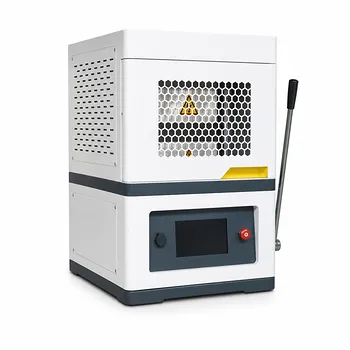
Solid State Battery Research Hydraulic Hot Press Machine
Benchtop hydraulic hot press for solid-state battery research. Precision temperature up to 300°C, 30-ton pressure, automatic holding, water cooling, touch-screen control. Ideal for electrolyte densification, electrode lamination, polymer membrane fabrication. Compact benchtop fits gloveboxes, customizable software, hardware, CE certified safety.
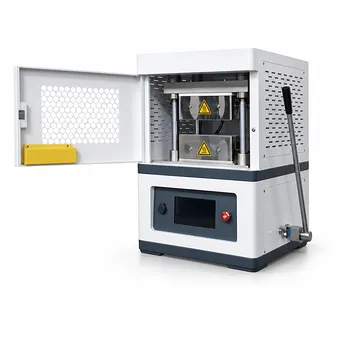
Laboratory Hydraulic Hot Press for Solid-State Battery and Polymer Electrolyte Research
Compact benchtop hydraulic hot press for solid-state battery and polymer electrolyte research with dual-zone heating, automatic pressure compensation, and active cooling system, ensuring uniform temperature up to 300°C and stable load for extended tests with CE certification and safety features.
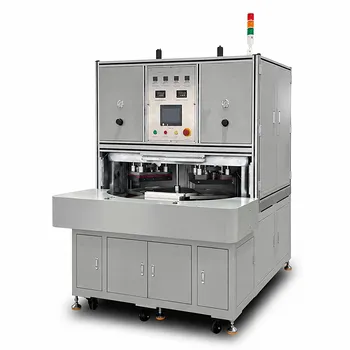
Rotary Hot Cold Press for Pouch Lithium Battery Cells
Rotary hot and cold press for pouch lithium battery cells delivers high-throughput thermal forming, precision thickness control, adjustable 5T pressing force, and reliable three-station automation for demanding battery manufacturing lines requiring controlled dwell, platen alignment, and repeatable material handling.