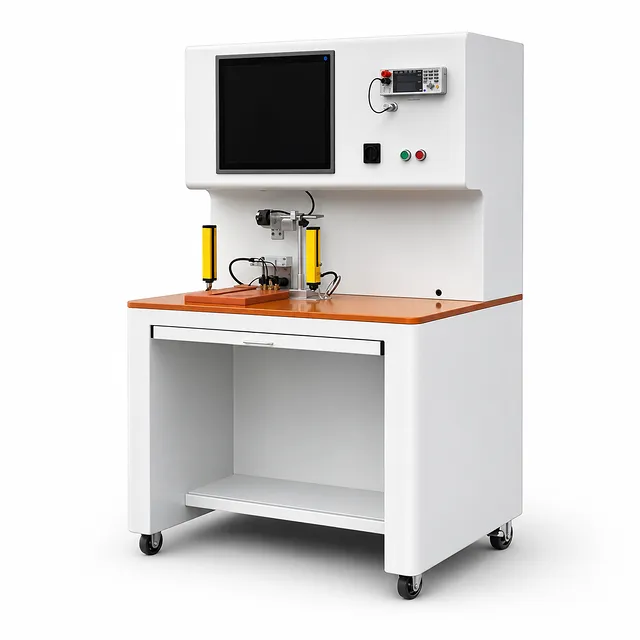
Pouch Cell Assembly Equipment
Manual OCV Multifunction Test Sorting Machine
Item Number : RB02
Price varies based on specs and customizations
- Efficiency
- >=10 PPM (subject to manual loading speed; test time 0.3S)
- Compatible Total Cell Length
- 80mm-330mm
- Test Functions
- Manual OCV and internal-resistance testing with data binding and software grading

Shipping:
Contact us to get shipping details Enjoy On-time Dispatch Guarantee.
Why Choose Us
Easy ordering process, quality products, and dedicated support for your business success.
Product Overview
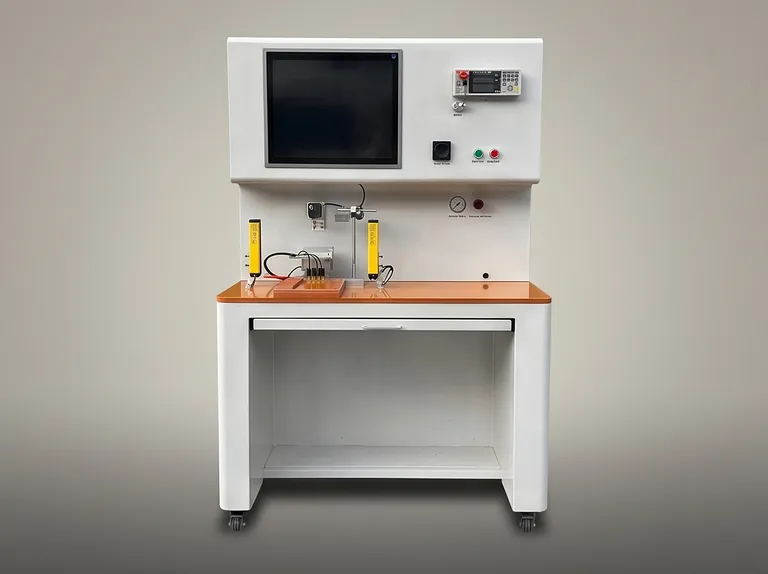
This system is a manual open-circuit-voltage testing and sorting solution for pouch lithium-ion prismatic cells. It combines OCV and internal-resistance measurement with data binding, software-based grade classification, and database upload. The operator receives a clear grade result after each completed test, creating a controlled manual workflow for separating cells according to defined voltage and resistance criteria.
The equipment is suited to lithium-ion cell manufacturing, cell inspection, pilot production, and laboratory workflows that require test data to remain associated with the inspected product. An operator manually loads a cell into the locating fixture, initiates the test through the light curtain, and places the completed cell into the appropriate grade tray after the system announces the result.
Built around an industrial control system, computer display, tester, test equipment, and software system, this unit supports consistent handling under routine production conditions. The measured data are displayed for review and uploaded to a database for retention, helping personnel identify abnormal products while maintaining a straightforward one-person operating process.
Key Features
-
Integrated OCV and Internal-Resistance Grading: The equipment tests voltage and internal resistance, then uses upper-computer software to classify the cell data into grades. This brings measurement and sorting decisions into one manual workstation.
-
Cell Data Binding and Database Upload: Test data are bound to the product and uploaded to the database through the industrial control system. The retained data support organized review of completed tests and grade results.
-
Light-Curtain Test Start: A light curtain initiates the tester after the cell is positioned in the fixture. This provides a defined trigger point in the manual loading sequence before measurement begins.
-
Operator-Directed Grade Output: After the tester completes its cycle and transfers data to the software system, the audio system announces the corresponding grade. The voice announcement can be disabled when an audible prompt is not required.
-
On-Screen Test Data Review: The computer display presents product test data for direct operator review. This helps the operator recognize abnormal products during the grading process.
-
Manual Loading with Simple Locating Fixture: Cells are manually placed on the fixture and manually removed after testing. The simple positioning fixture supports straightforward model changeover within the specified compatible cell-size range.
-
One-Person Standard Configuration: The standard operating arrangement is designed for one operator. The workflow assigns loading, result recognition, and placement into the relevant blister tray to a single workstation role.
-
Production-Oriented Throughput: The specified efficiency is at least 10 PPM, subject to manual loading speed and a stated 0.3 s test time. This makes the unit appropriate where controlled manual handling is required alongside rapid measurement.
-
Defined Equipment Support Systems: The supplied system includes a computer system, tester, test equipment, and software system. These elements work together to display, classify, announce, and store the test outcome.
-
Broad Pouch-Cell Dimensional Compatibility: The fixture accommodates specified cell length, width, total-length, tab-length, tab-spacing, and thickness limits. This allows the equipment to support a range of pouch lithium-ion prismatic cell formats without changing the core testing workflow.
Applications
| Application | Description | Key Benefit |
|---|---|---|
| Pouch Cell OCV Grading | Tests pouch lithium-ion prismatic cells for voltage and internal resistance, then assigns a software-defined grade. | Combines two key electrical measurements with a clear sorting result. |
| Final Cell Inspection | Supports end-of-process inspection before completed cells are placed into grade-specific blister trays. | Gives operators displayed data and an audible grade prompt for controlled disposition. |
| Production-Line Cell Sorting | Provides a manual workstation for repeated loading, testing, data upload, and manual unloading. | Supports at least 10 PPM, subject to manual placement speed and the stated test time. |
| Pilot-Line Format Changeover | Handles compatible pouch-cell dimensions using a simple locating fixture. | Simplifies adaptation across specified cell sizes in pilot or development workflows. |
| Battery R&D Cell Screening | Records voltage and internal-resistance results in the software and database for tested cells. | Keeps measured results available for review during experimental cell evaluation. |
| Abnormal Product Identification | Displays product test data on the computer screen during the operating sequence. | Helps personnel identify products that require attention before tray placement. |
| Grade-Based Blister Tray Handling | Directs the operator to manually place each completed cell into the corresponding grade blister tray. | Maintains a direct connection between the announced grade and physical cell separation. |
| Lithium-Ion Cell Data Retention | Uploads completed test data to a database through the industrial control system. | Provides stored test information for completed manual sorting operations. |
Technical Specifications
| Parameter | Specification | Notes |
|---|---|---|
| Site-facing identifier | RB02 | Manual OCV testing, data binding, and sorting equipment |
| Intended cell type | Pouch lithium-ion prismatic cell | Used for voltage and internal-resistance grading |
| Core test functions | Manual OCV testing; data binding | Voltage and internal-resistance data are classified through upper-computer software |
| Test result handling | Data uploaded to software system after tester completion | Software assigns the grade |
| Cell loading | Manual placement of the battery on the fixture | Standard configuration: 1 operator |
| Test start method | Light curtain | Starts the tester |
| Cell unloading | Manual | Completed products are placed into the corresponding grade blister tray |
| Locating fixture | Simple positioning fixture | Model changeover is simple |
| Test-data display | Computer display screen | Facilitates identification of abnormal products |
| Control and storage | Industrial control system; test data uploaded to database for storage | Supports retention of test data |
| Grade notification | Audio announcement of the corresponding grade | Voice announcement can be disabled |
| Supplied system components | Computer system; tester; test equipment; software system | Included equipment configuration |
| Efficiency | >=10 PPM | Specific performance depends on manual loading speed; test time is based on 0.3S |
| Test time | 0.3S | Used as the basis for stated efficiency |
| Failure rate | <=1% | |
| Yield rate | >=99% | |
| Equipment power | 1.5KW | Equipment operating power |
| Compatible cell length A | 30mm (including top sealing edge) | |
| Compatible cell width B | 60mm | |
| Compatible tab length C | >=8.5mm | |
| Compatible total length D | 80mm-330mm | |
| Compatible tab spacing E | 30mm-80mm | |
| Compatible cell thickness | 0.5-5mm | |
| Overall dimensions | 10006601540 (mm) (L x W x H) mm | Dimensions are subject to final completed design |
| Weight | Approximately 100 kg | |
| Color | International warm gray | |
| Required air supply | 0.5~0.7 Mpa | Supplied by customer |
| Required power supply | 220V 50Hz | Voltage fluctuation less than +/-10% |
| Power-installation requirement | 1.5KW; grounding wire and phase-loss protection required | |
| Floor load requirement | >100kg/m2 |
Why Choose This Product
-
Measurement-to-Sorting Workflow: This unit connects OCV and internal-resistance testing, data binding, software grading, display, and physical cell separation in one defined manual process.
-
Controlled Operator Process: The light-curtain trigger, locating fixture, screen display, audio grade announcement, and grade-specific tray placement provide clear operating steps for each cell.
-
Data-Focused Cell Inspection: Test results are uploaded to the database for storage, while the computer screen provides immediate visibility of product data for abnormal-product identification.
-
Specified Production Performance: With an efficiency of at least 10 PPM, a failure rate of no more than 1%, and a yield rate of at least 99%, the equipment is specified for reliable manual grading operations under the stated conditions.
-
Practical Format Coverage: Compatibility with the listed pouch-cell dimensions, combined with simple fixture-based changeover, supports use across applicable lithium-ion prismatic cell formats.
Contact us for a quote or a custom solution aligned with your pouch-cell format, grading process, and installation conditions.
Trusted by Industry Leaders

REQUEST A QUOTE
Our professional team will reply to you within one business day. Please feel free to contact us!
Related Products
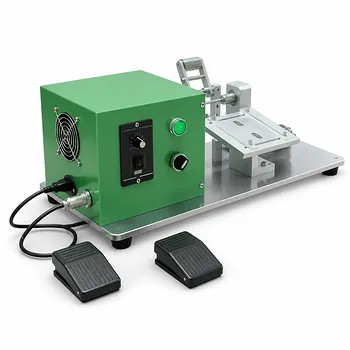
Manual Lithium Battery Electrode Sheet Winding Machine
Manual lithium battery electrode sheet winding machine for supercapacitor cylindrical and pouch cell fabrication featuring adjustable guides bidirectional variable speed winding support rollers and compact foot-pedal operation for dependable laboratory electrode assembly and repeatable cell winding workflows.
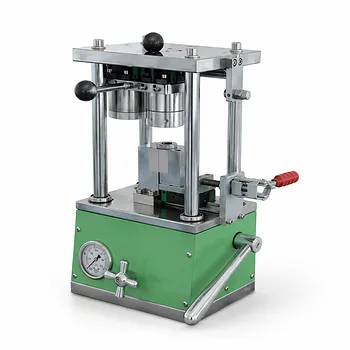
Laboratory Manual Cylindrical Battery Sealing Machine
Laboratory manual cylindrical battery sealing machine with two stage sealing hydraulic drive embedded pressure gauge and 8 ton maximum force for precise 18650 research
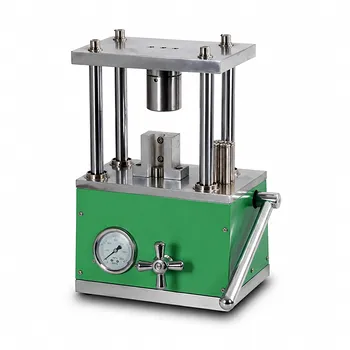
Laboratory Manual Cylindrical Battery Third Seal Crimping Machine
Laboratory manual cylindrical battery crimping sealing machine for 18650 third sealing delivers precise pressure control, smooth edges, strong airtightness, stable forming, compact operation, and glovebox compatible battery research performance with reliable consistency and convenient maintenance for demanding laboratory workflows
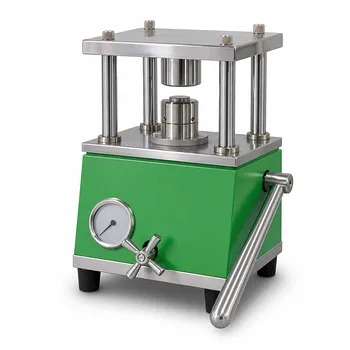
Manual Coin Cell Battery Crimping Machine
Manual coin cell battery crimping machine for laboratory research delivers precise hydraulic sealing up to 8T pressure, compact glovebox operation, adjustable safety control, accurate height limiting, and dependable short circuit protection for repeatable sample preparation and pilot production.
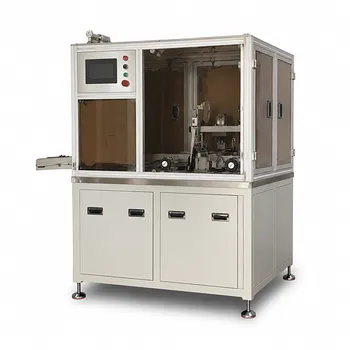
Fully Automatic Mechanical Battery Sealing Machine
Fully automatic mechanical battery sealing machine automates first second third and height-setting seals for liquid-filled cylindrical cells, delivering at least 45PPM throughput with 99% equipment-related yield, 98% equipment uptime, pneumatic height control, and corrosion-resistant industrial construction for production lines.
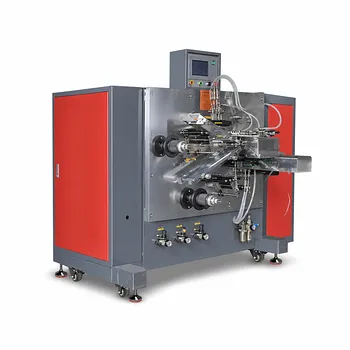
Semi Automatic Cylindrical Lithium Battery Winding Machine
Precision semi-automatic cylindrical lithium battery winding machine for consistent cell assembly, adjustable winding speed, controlled diaphragm tension, accurate alignment, reliable tape application, automatic needle exchange, and efficient unloading across battery research and advanced materials manufacturing workflows with repeatable results.
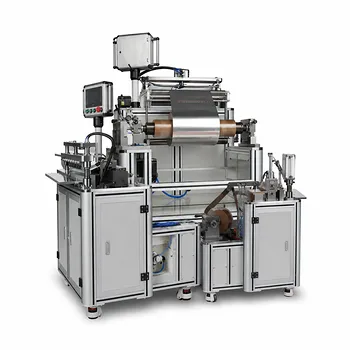
Automatic Battery Electrode Sheet Cutting Machine
Automatic battery electrode sheet cutting machine delivers programmable length cutting or fiber sensor tracking, 500 mm maximum width, adjustable 1–8 m/min speed, and precise pneumatic cutting for consistent electrode preparation in battery research, laboratory, and pilot-line production environments.
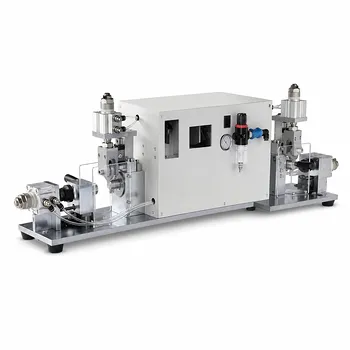
Semi Automatic Cylindrical Battery Grooving Machine
Semi automatic cylindrical battery grooving equipment delivers adjustable 1.2 to 2.0 mm depth precision for steel cell cases and aluminum capacitor shells with PLC touchscreen control dependable 400 EA per hour production and stable adjustable speed operation performance.
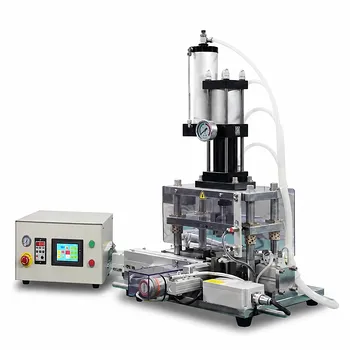
Glove Box Compatible Automatic Cylindrical Battery Sealing Machine
Automatic cylindrical battery sealing machine for glove box operation, three-stage sealing, precise molding, strong airtightness, high consistency, and reliable production of 18650 and 21700 cells with PLC touchscreen control, adjustable parameters, compact construction, and efficient automated loading and unloading
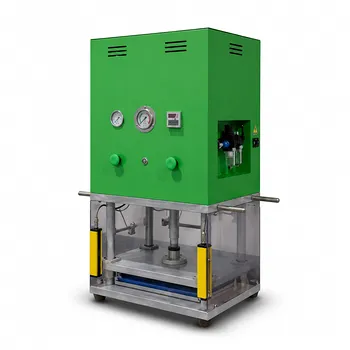
Semi Automatic Pouch Cell Electrode Sheet Die Cutting Machine
Semi-automatic pouch cell electrode die cutting machine with infrared positioning, adjustable 3T or 5T force, +/-0.1 mm precision, 800-2000 pieces per hour, clean edges, and safe light curtain protection for reliable battery research and scalable laboratory production workflows.
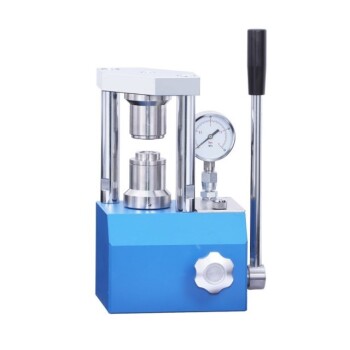
Manual Button Battery Sealing Machine for Battery Sealing
Manual Button Battery Sealer for precise, affordable lab sealing. Ideal for CR2032, LR44 batteries. Enhances safety & extends battery life. Get yours now!
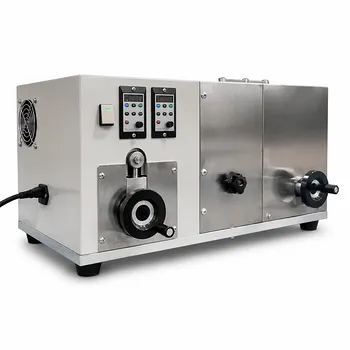
18650 21700 Series Laboratory Cylindrical Battery Case Opening Machine
Precision 18650 and 21700 cylindrical battery case opening machine with interchangeable tooling, tungsten carbide blade, accurate disassembly, compact design, and safe operation for laboratory research validation in advanced battery development environments with consistent results
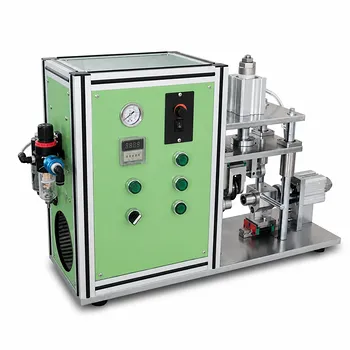
Cylindrical Battery and Capacitor Case Grooving Machine
Adjustable cylindrical battery and capacitor case grooving machine for precise laboratory sample preparation and low volume pilot production with manual automatic operation adjustable depth width speed accurate repeatable groove forming glovebox compatible design for advanced electrochemical development applications.
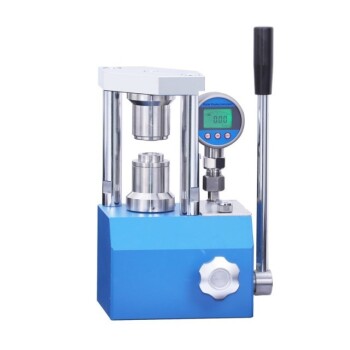
Button Battery Sealing Machine for Button Batteries
KINTEK's Manual Button Battery Sealer ensures precise, airtight sealing for CR2032, LR44 batteries. Ideal for labs, R&D, and small production. Boost efficiency now!
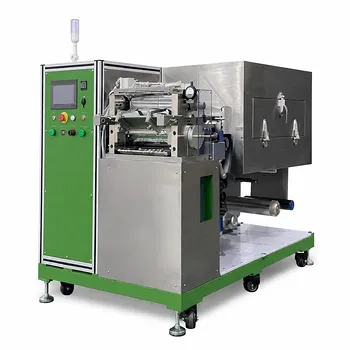
Continuous Intermittent Battery Laboratory Coating Machine
Continuous intermittent battery laboratory coating machine combines stable web tension correction precision comma blade metering three roll transfer coating and dual sided hot air drying for dependable electrode process development with PLC touch screen operation and optional solvent recovery handling.
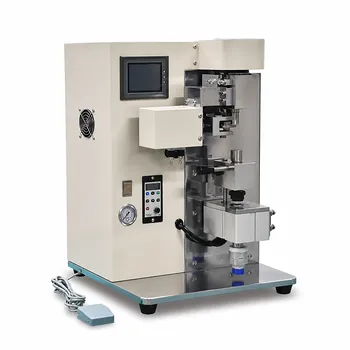
Vertical Cylindrical Battery Grooving Machine
Vertical cylindrical battery grooving machine with adjustable 1.2–2.0 mm depth, ±0.1 mm precision, PLC touchscreen control, and 400 EA/H semi-automatic capacity for stable cell production and compact 220 V operation across battery research and capacitor shell processing applications.
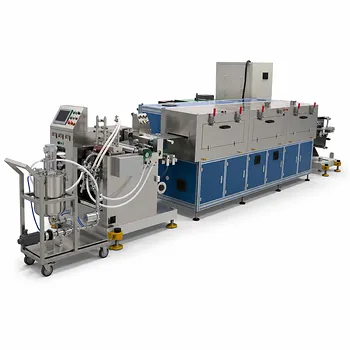
Single Sided Battery Electrode Extrusion Coating Machine
Single-sided battery electrode coating machine delivers precise intermittent and continuous slurry application, stable web tension, controlled electric drying, and consistent coatings for lithium-ion battery research, pilot production, and advanced materials development across demanding laboratory and development workflows every day.
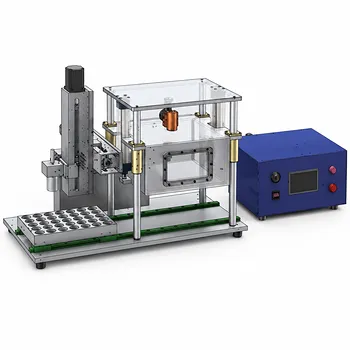
Electrolyte Vacuum Filling and Soaking Integrated Machine
Electrolyte vacuum filling and soaking integrated machine delivers ±0.5% dosing accuracy for cylindrical, coin, and pouch battery cells, combining programmable vacuum, inert-gas filling, and controlled resting to improve electrolyte uptake consistency in advanced battery manufacturing and laboratory research workflows.
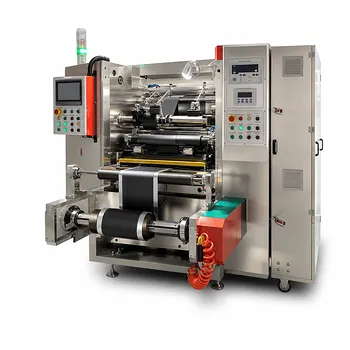
Continuous Lithium Battery Electrode Slitting Machine for 4680 Tabless Cells
Continuous lithium battery electrode slitting machine delivers controlled multi-strip processing, closed-loop tension, precision web guiding, dust extraction, and stable rewinding for demanding 4680 tabless cell electrode manufacturing lines handling coated rolled foil within width thickness speed burr and straightness requirements.
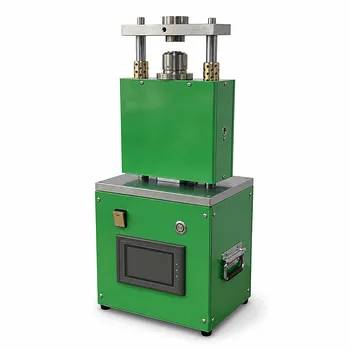
Electric Coin Cell Crimping Machine Battery Sealing Press
Electric coin cell crimping machine for laboratory battery research, capacitor sealing, small batch production, adjustable pressure, interchangeable dies, vibration free operation, and precise reliable forming across diverse materials processing applications.