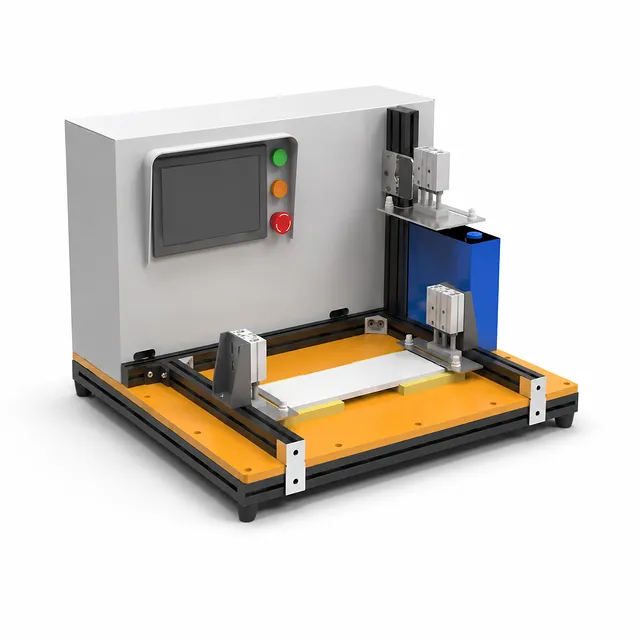
Prismatic Cell Equipment
Prismatic Battery Automatic Testing and Sorting Equipment
Item Number : FX08
Price varies based on specs and customizations
- Sorting Accuracy
- 99.9%
- Sorting Efficiency
- ≥10PPM
- Maximum Sorting and Pairing Groups
- 8 groups

Shipping:
Contact us to get shipping details Enjoy On-time Dispatch Guarantee.
Why Choose Us
Easy ordering process, quality products, and dedicated support for your business success.
Product Overview
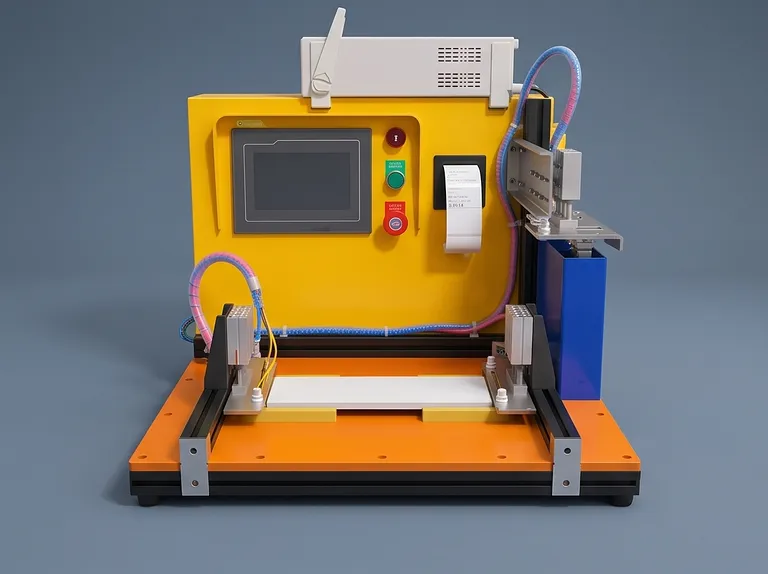
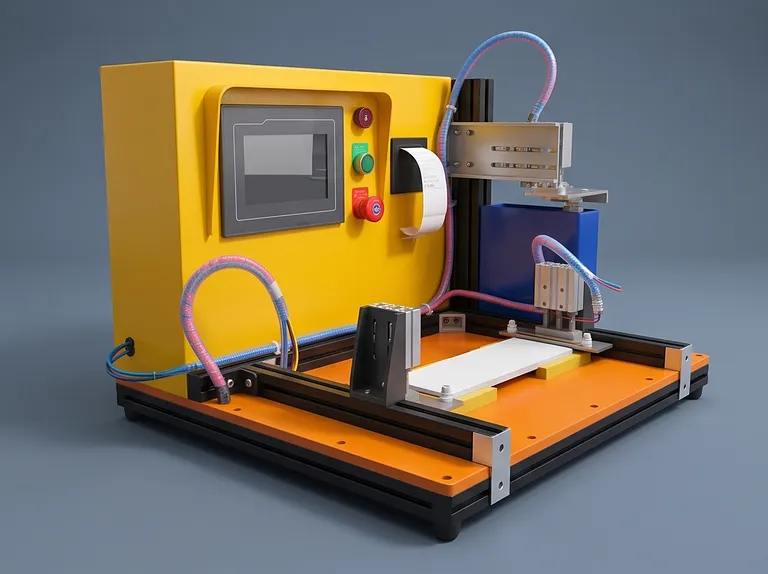
This automated testing and sorting system is designed for prismatic lithium battery cells that require controlled electrical inspection, grading, pairing, and discharge handling within one production process. It combines a computer, dedicated software, precision voltage and internal-resistance measurement, inkjet marking, batch feeding, robotic grade sorting, and automatic unloading. The result is a structured workflow for turning measured cell data into repeatable sorting decisions with less manual intervention.
The equipment is suited to lithium battery cell production, pack assembly preparation, incoming-cell evaluation, and process-development operations where open-circuit voltage and AC internal resistance are critical pairing parameters. By sorting cells into as many as eight matched groups in a single operation, the system supports improved consistency among cells selected for pack manufacturing and gives production teams a practical basis for controlling cell allocation.
Built around automatic data acquisition and process control, this unit is intended for demanding routine operation. Its specified sorting accuracy of 99.9%, sorting qualification rate of at least 98%, and equipment operation rate of at least 95% provide measurable indicators for buyers evaluating process repeatability, throughput stability, and the reliability of automated cell classification.
Key Features
-
Integrated Electrical Test and Sorting Process: This system brings open-circuit voltage testing, AC internal-resistance testing, grading, pairing, marking, and discharge handling into an automated sequence. Combining these operations reduces handoffs between separate test and sorting activities and keeps the classification process tied directly to collected measurement data.
-
Precision Measurement Configuration: The equipment uses dedicated precision voltage and internal-resistance measurement instruments for automatic acquisition of the two specified sorting parameters. This measured-data foundation supports accurate classification decisions instead of relying on manual reading, recording, or judgment during routine production.
-
Up to Eight Pairing Groups: The unit can complete sorting and pairing into a maximum of eight groups in one operation. This capability gives production personnel a defined method for separating cells by electrical performance parameters before they enter a battery pack process.
-
Secondary Testing for Edge Grades: Edge-grade cells can receive secondary testing with a voltage deviation of plus or minus 0.1 mV and an internal-resistance deviation of plus or minus 0.05 mOhm. This additional control point is valuable where borderline classifications require closer confirmation before final group assignment.
-
Automated Material Handling: Batch loading through a hopper, robotic automatic grade sorting, and automatic unloading are incorporated into the equipment. The material-handling arrangement supports a more consistent production rhythm while limiting the manual handling associated with individual cell testing and placement.
-
Specified Production Efficiency: The system is specified for sorting efficiency of at least 10 PPM and approximately 600 tested and paired cells per hour. These figures allow manufacturing and procurement teams to assess the equipment against planned cell volume and operator-allocation requirements.
-
High Sorting Performance Metrics: Specified product qualification is at least 99%, sorting qualification is at least 98%, and sorting accuracy is 99.9%. These performance measures focus evaluation on the outcomes that matter in a cell grouping process: dependable classification, repeatable pairing, and reduced risk of unsuitable cell combinations entering pack preparation.
-
Database-Based Traceability: Cell performance data are managed in a database for long-term retention, historical traceability, and export. The industrial computer automatically collects data and generates curve charts and bar charts, enabling teams to retain a direct record of the measurements and sorting outcomes associated with each production run.
-
Process Analysis Support: The accompanying software provides data-analysis functions for longer-term monitoring of product performance and quality. Teams can use retained test information to review trends that may inform battery formulation development and production-process improvement activities.
-
Straightforward Automatic Operation: Automatic process control coordinates the test and sorting sequence after hopper loading. The operating approach is designed to simplify recurring cell grading work, replace manual participation in the core sorting flow, and preserve the accuracy of collected test parameters throughout the pairing process.
Applications
| Application | Description | Key Benefit |
|---|---|---|
| Prismatic lithium battery cell production | Tests open-circuit voltage and AC internal resistance before cells are assigned to performance grades. | Establishes a measured electrical basis for downstream cell sorting. |
| Battery pack cell pairing | Matches cells according to the specified electrical parameters in as many as eight groups during one sorting operation. | Supports improved consistency among cells selected for pack assembly. |
| Pack production quality control | Applies automatic test, sorting, marking, and unloading steps before cells proceed into pack manufacturing. | Helps protect pack quality through controlled cell classification. |
| Incoming-cell inspection | Evaluates cells supplied to a production operation using open-circuit voltage and AC internal-resistance measurements. | Creates retained measurement records for reviewed cell batches. |
| Edge-grade confirmation | Performs secondary testing on cells near a grade boundary using the stated voltage and resistance deviation controls. | Provides a closer check before assigning borderline cells to a group. |
| Production-line automation | Uses hopper batch loading, robotic grade sorting, and automatic unloading in a coordinated process. | Reduces manual involvement in repetitive test-and-sort handling. |
| Process performance monitoring | Stores cell performance data and presents automatically generated curve charts and bar charts for review. | Supports long-term observation of product quality trends. |
| Battery R&D and process improvement | Uses database records and software analysis to compare product-performance information over time. | Provides data that can guide formulation development and process-flow improvement. |
Technical Specifications
| Parameter | Specification |
|---|---|
| Site-facing equipment identifier | FX08 automated testing and sorting system |
| Core test functions | Open-circuit voltage testing; AC internal-resistance testing; sorting and pairing |
| Sorting parameters | Open-circuit voltage; AC internal resistance |
| Maximum sorting and pairing groups per operation | 8 groups |
| Data acquisition | Automatic acquisition of AC internal resistance and open-circuit voltage |
| Sorting process control | Automatic |
| Loading method | Hopper batch loading |
| Sorting mechanism | Robotic automatic grade sorting |
| Unloading method | Automatic unloading |
| Marking mechanism | Inkjet marking mechanism |
| Computer and software | Industrial computer; software system; database function |
| Data output | Automatically generated curve charts and bar charts; historical-data traceability; data export |
| Data retention | Long-term database management of cell performance data |
| Resistance measurement instrument | FX08 precision AC internal-resistance meter, 1 set |
| Voltage measurement instrument | FX08 automatic voltage meter, 1 set |
| Secondary test voltage deviation for edge grades | ±0.1mV |
| Secondary test internal-resistance deviation for edge grades | ±0.05mΩ |
| Sorting efficiency | ≥10PPM |
| Approximate testing and pairing capacity | Approximately 600 cells per hour |
| Product qualification rate | ≥99% |
| Equipment operation rate | ≥95% |
| Sorting qualification rate | ≥98% |
| Sorting accuracy | 99.9% |
| Power supply | 220V, 0.5KW |
| Air supply | 0.5~0.6 Mpa (dry air) |
| Equipment weight | ≥300KG |
| Overall dimensions | 1600 (length) × 1600 (width) × 1700 (height) mm |
Why Choose This Product
-
Controlled, Data-Led Cell Allocation: This equipment bases sorting and pairing on automatically acquired open-circuit voltage and AC internal-resistance data. That approach gives production teams a defined and repeatable basis for assigning cells to groups rather than depending on manual testing and manual sorting steps.
-
Performance Metrics Buyers Can Evaluate: The stated sorting accuracy of 99.9%, product qualification rate of at least 99%, sorting qualification rate of at least 98%, and operation rate of at least 95% make the expected operating standard explicit. These metrics are directly relevant when comparing equipment for consistent pack-preparation workflows.
-
Built for Routine Automated Throughput: Hopper batch loading, robotic sorting, automatic unloading, and a sorting efficiency of at least 10 PPM support recurring production work. Approximately 600 cells can be tested and paired per hour, helping operations evaluate capacity alongside the required electrical control.
-
Traceability That Extends Beyond the Test Station: Database management retains performance data over the long term, while history retrieval, export, curve charts, bar charts, and analysis functions provide practical access to the information. This supports both immediate production review and longer-term quality monitoring.
-
Precision Where Classification Is Most Sensitive: Secondary testing for edge grades applies the specified ±0.1mV voltage deviation and ±0.05mΩ internal-resistance deviation. This added verification capability is particularly relevant when close grade boundaries require disciplined measurement control before final pairing.
Contact us for a quote or a custom solution tailored to your prismatic battery testing, sorting, pairing, traceability, and production-capacity requirements.
Trusted by Industry Leaders

REQUEST A QUOTE
Our professional team will reply to you within one business day. Please feel free to contact us!
Related Products
Pouch Prismatic Battery OCV DCIR Testing Machine with Barcode Scanning and Inkjet Coding
Automated pouch prismatic battery OCV and DCIR testing machine with barcode scanning, voltage resistance measurement, data traceability, and OK NG sorting for high throughput cell production across pouch cell manufacturing lines with reliable server integration
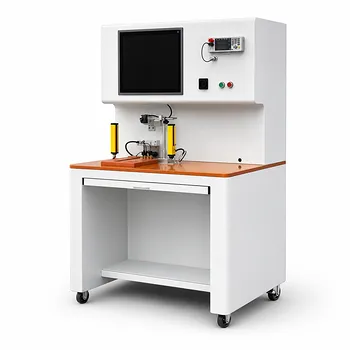
Manual OCV Multifunction Test Sorting Machine
Manual OCV multifunction test sorting machine for pouch lithium ion prismatic cells combines voltage and internal resistance grading data binding database storage and operator guided handling for controlled battery production inspection with computer display and configurable audible grade notification.
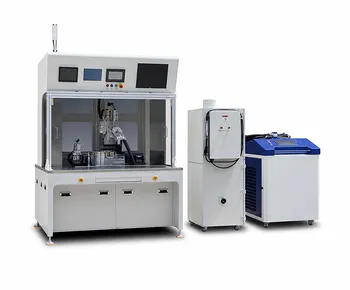
Prismatic Aluminum Case Battery Laser Welding System
Integrated laser welding system for prismatic aluminum case batteries combines top cover full seam and sealing pin welding with precise fixturing vision inspection protective gas and dust extraction for consistent high quality production in advanced battery manufacturing lines worldwide.
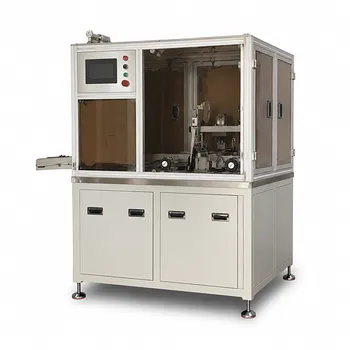
Fully Automatic Mechanical Battery Sealing Machine
Fully automatic mechanical battery sealing machine automates first second third and height-setting seals for liquid-filled cylindrical cells, delivering at least 45PPM throughput with 99% equipment-related yield, 98% equipment uptime, pneumatic height control, and corrosion-resistant industrial construction for production lines.
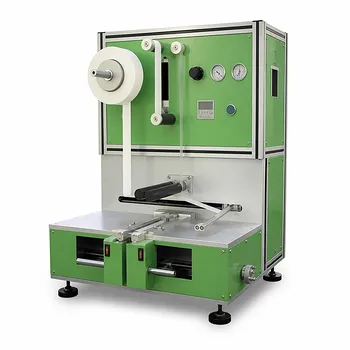
Lithium Ion Battery Z Type Semi Automatic Stacking Machine
Lithium ion battery Z type semi automatic stacking machine combines controlled separator tension, foot pedal operation, precise alignment, and digital timing for efficient research sample preparation and small batch cell prototyping.
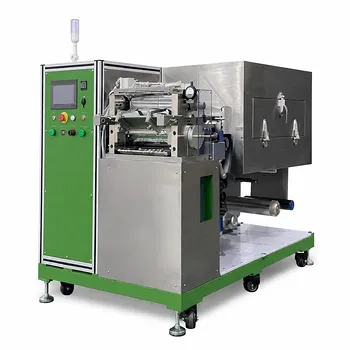
Continuous Intermittent Battery Laboratory Coating Machine
Continuous intermittent battery laboratory coating machine combines stable web tension correction precision comma blade metering three roll transfer coating and dual sided hot air drying for dependable electrode process development with PLC touch screen operation and optional solvent recovery handling.
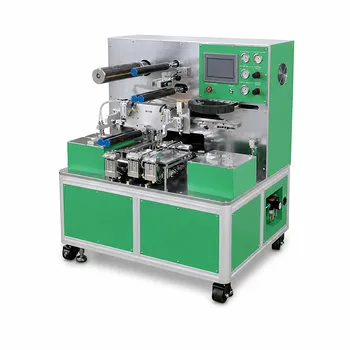
Lithium Ion Battery Semi Automatic Stacking Machine
Semi automatic lithium ion battery stacking machine delivers precise Z folding electrode and separator assembly with automatic alignment tension control and programmable layers for flexible cell research sample fabrication in advanced laboratory development workflows and pilot production tasks.
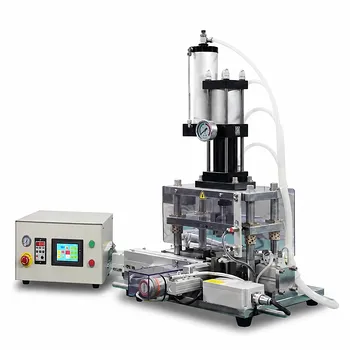
Glove Box Compatible Automatic Cylindrical Battery Sealing Machine
Automatic cylindrical battery sealing machine for glove box operation, three-stage sealing, precise molding, strong airtightness, high consistency, and reliable production of 18650 and 21700 cells with PLC touchscreen control, adjustable parameters, compact construction, and efficient automated loading and unloading
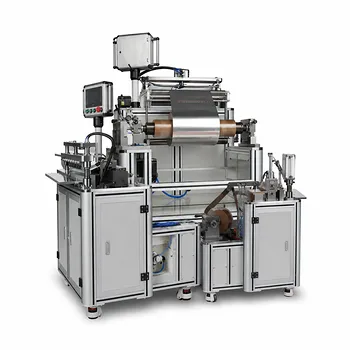
Automatic Battery Electrode Sheet Cutting Machine
Automatic battery electrode sheet cutting machine delivers programmable length cutting or fiber sensor tracking, 500 mm maximum width, adjustable 1–8 m/min speed, and precise pneumatic cutting for consistent electrode preparation in battery research, laboratory, and pilot-line production environments.
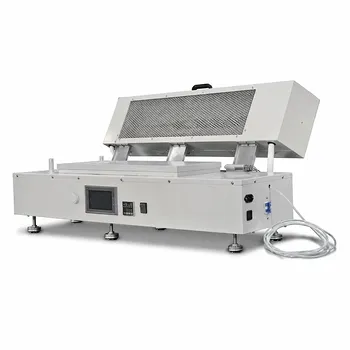
Automatic Coating Film Drying Machine Lithium Battery Laboratory Coating Machine
Automatic coating film drying machine and lithium battery laboratory coating machine with 130°C heating, adjustable coating speed, vacuum plate, precision scraper, programmable drying timer for 18650 electrode research smooth reproducible coatings across varied substrates compact bench scale development applications
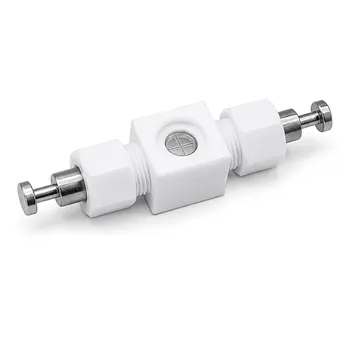
Optical Testing Cross Section Aqueous Battery Device for Microscopy Raman and Infrared Analysis
Optical testing cross section aqueous battery device for microscopy Raman infrared analysis dendrite observation and conductivity measurement in advanced battery research applications
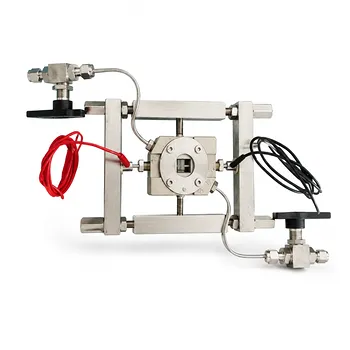
Optical Testing Solid State Battery Device for Microscopy Raman and Infrared Cross Section Analysis
Optical testing solid state battery device with compact fixtures for microscope, Raman, and infrared cross section analysis, including venting configuration for advanced battery research. Supports precise laboratory characterization, flexible sample dimensions, and controlled access for materials science and cell development.
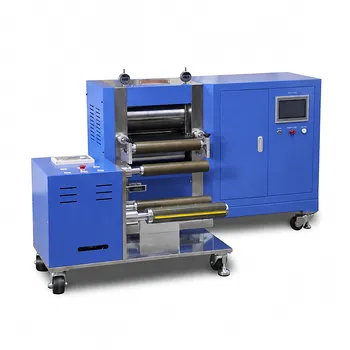
Automatic Laboratory Unwind Rewind Machine and Unwind Rewind Device for Battery Electrodes Optical Films and Functional Materials
Automatic laboratory unwind rewind machine with servo tension control optical web guiding and split structure for lithium battery electrodes optical films and functional roll materials delivering accurate continuous rewinding and slitting performance for demanding research and production workflows.
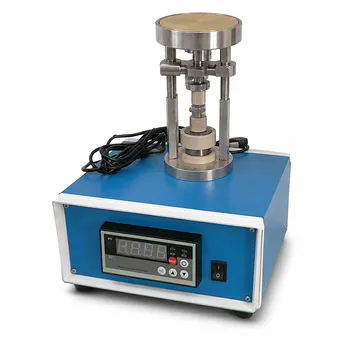
CT Testing Solid State Battery Device
CT testing solid state battery device for compact cell fixture evaluation with 2 mm inner diameter, optional display, external fixture, and 2 ton sensor integration for laboratory research workflows.
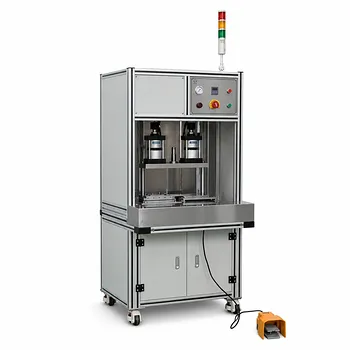
Battery Cell Tab Cutting And Flattening Machine Manual Loading Unloading
Manual loading and unloading battery cell tab cutting and flattening machine for stacked cell tab processing, pneumatic trimming, controlled flattening, automatic counting and dependable laboratory production workflows with foot pedal control and guarded operation for consistent throughput across demanding battery research environments
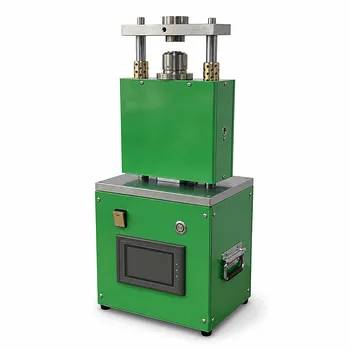
Electric Coin Cell Crimping Machine Battery Sealing Press
Electric coin cell crimping machine for laboratory battery research, capacitor sealing, small batch production, adjustable pressure, interchangeable dies, vibration free operation, and precise reliable forming across diverse materials processing applications.
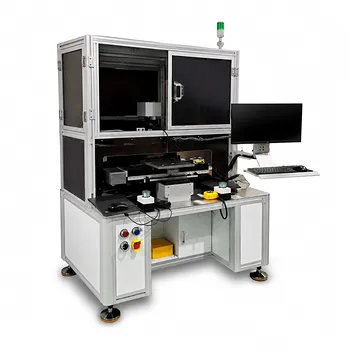
Semi Automatic Electrode Laser Cutting Machine
Semi automatic electrode laser cutting machine for lithium ion battery pilot lines delivers fast precision cutting clean dust control reliable handling and consistent production performance with simple software rapid changeover stable fiber laser and high yield results for advanced research
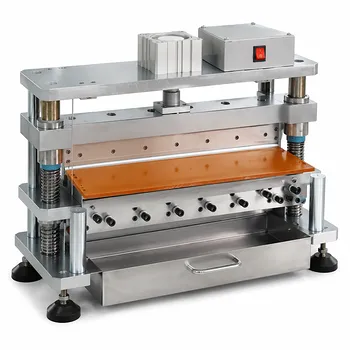
Pneumatic Battery Electrode Sheet Trimming Machine Edge Cutting Machine
Pneumatic battery electrode sheet trimming machine delivers accurate top side seal edge cutting after aluminum plastic film pocket forming with foot pedal operation custom width control and durable high speed steel blades for reliable pouch cell production workflows.
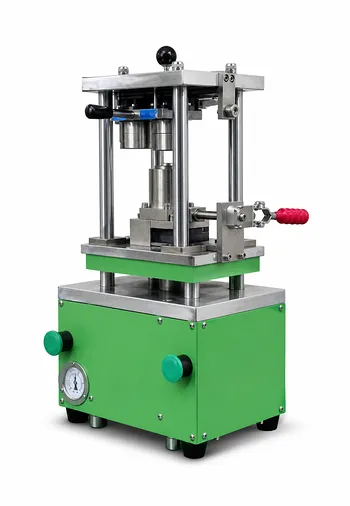
Pneumatic Cylindrical Battery Sealing Machine for Laboratory Cell Research
Pneumatic cylindrical battery sealing machine for 18650 cells delivers two station precision sealing, adjustable 0.4 to 0.5 MPa operation, inert gas compatibility, external exhaust, low gas consumption, compact construction, and reliable laboratory sample preparation for battery and capacitor research.
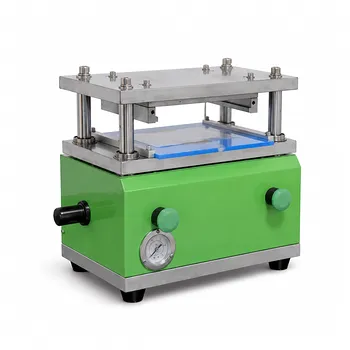
Laboratory Pneumatic Battery Electrode Sheet Die Cutting Machine
Laboratory pneumatic battery electrode sheet die cutting machine delivers clean precise cuts for battery research with configurable tooling glovebox compatible pneumatic operation long die life and controlled burr performance for dependable electrode preparation in demanding laboratory workflows every day.