Hydraulic presses are primarily utilized in laboratories to investigate the fundamental effects of high pressure on various substances. By applying a controlled, powerful compressive force, these instruments allow researchers to simulate extreme environmental conditions and observe how materials behave when pushed to their physical limits.
The core purpose of a hydraulic press in high-pressure investigations is to bridge the gap between theoretical chemistry and physical reality. It allows scientists to force materials into states that do not exist under normal atmospheric conditions, revealing critical data about durability, elasticity, and atomic structure.
Unlocking Material Behavior Under Stress
Simulating Extreme Environments
The primary reference highlights that materials science and chemistry rely heavily on hydraulic presses to study material behavior.
Researchers use these tools to replicate the intense load environments found in real-world applications, such as aerospace or automotive structures.
By controlling the pressure, scientists can observe how a substance reacts when subjected to forces far exceeding standard operational limits.
Analyzing the Transition to Plasticity
A critical aspect of high-pressure investigation is identifying the point where a material stops resisting force and begins to deform permanently.
This involves observing the transition from elastic behavior (where the material returns to its shape) to plastic behavior (permanent deformation).
Data gathered during this process helps researchers accurately measure the material's yield point and understand its strain hardening characteristics.
Advantages in the Laboratory Setting
Precision and Consistency
For an investigation to be valid, the applied pressure must be uniform and repeatable.
Hydraulic presses differ from mechanical alternatives by delivering consistent pressure, which is essential for creating homogenous samples.
This consistency ensures that any changes observed in the material are due to the pressure itself, not irregularities in the testing equipment.
Efficiency and Accessibility
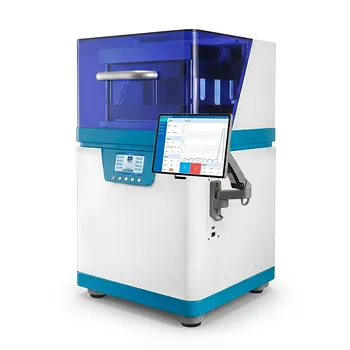
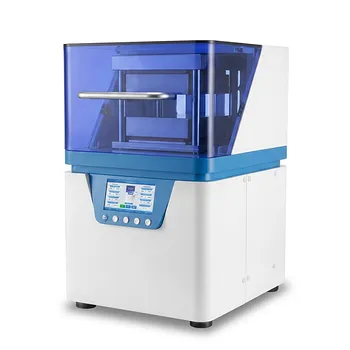
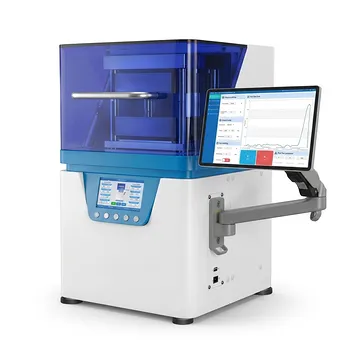
Modern laboratory presses, including hydraulic hot press machines, are designed to be compact and space-efficient.
They offer a cost-effective solution for high-pressure testing without requiring the massive infrastructure of industrial manufacturing floors.
This accessibility allows pharmaceutical labs, polymer testing facilities, and undergraduate chemistry departments to conduct high-level investigations with minimal physical effort.
Understanding the Trade-offs
Scale vs. Simulation
While laboratory hydraulic presses are excellent for investigation, it is important to distinguish between simulation and production.
A lab press is designed to analyze a small sample to predict how a larger structure will behave.
However, factors such as scale effects or complex geometries in full-sized industrial parts may introduce variables that a compact lab press cannot fully replicate.
Sample Preparation vs. Material Testing
It is vital to select the right press configuration for your specific goal.
Some presses are optimized for sample preparation (such as creating pellets for spectroscopy) and may lack the instrumentation required for dynamic material testing.
Using a basic preparation press for complex stress-strain analysis may yield insufficient data regarding the material's active response to loading.
Making the Right Choice for Your Goal
To maximize the value of your high-pressure investigation, align your equipment choice with your specific analytical needs.
- If your primary focus is fundamental research: Prioritize a press with high precision to accurately study the atomic and structural changes in new chemical substances.
- If your primary focus is industrial application: Ensure your equipment allows you to measure the yield point and plastic deformation to predict real-world structural integrity.
- If your primary focus is sample preparation: Look for a compact, cost-effective unit designed to create homogenous samples for spectroscopic examination.
By leveraging the correct hydraulic technology, you transform raw pressure into actionable scientific insight.
Summary Table:
| Feature of Investigation | Scientific Objective | Key Benefit in Lab |
|---|---|---|
| Extreme Simulation | Replicate high-load environments | Predicts material behavior in aerospace/automotive use |
| Plasticity Analysis | Identify yield point and deformation | Determines structural limits and strain hardening |
| Force Consistency | Ensure uniform pressure application | Guarantees repeatable, homogenous sample results |
| Structural Research | Analyze atomic & molecular changes | Bridges theory and physical material reality |
Elevate Your High-Pressure Research with KINTEK
As a leader in laboratory precision, KINTEK specializes in comprehensive laboratory pressing solutions designed for the most demanding investigations. Whether you are conducting fundamental battery research or complex material stress-strain analysis, our range of manual, automatic, heated, and multifunctional models—including glovebox-compatible units and isostatic presses—provides the consistency and control you need.
Why choose KINTEK?
- Precision Engineering: Achieve uniform, repeatable pressure for valid scientific data.
- Versatile Solutions: From pellet preparation to high-temperature material testing.
- Expert Support: We help you select the right configuration to bridge the gap between theory and reality.
Contact KINTEK Today to Optimize Your Lab Results
Related Products
- Automatic Hydraulic Hot Press with Large Plate and Precision Temperature Control for Advanced Material Sample Preparation and Industrial Research
- Automatic Hydraulic Heat Press Machine with Multi Stage Programmable Control and Integrated Water Cooling Plate Size 180x180mm
- Automatic High Temperature Heated Hydraulic Press Machine with Heated Plates for Lab
- Automatic Heated Hydraulic Lab Press with Programmable Touch Screen Controls and Precision Temperature Regulation
- Manual Heated Hydraulic Lab Press with Integrated Hot Plates Hydraulic Press Machine
People Also Ask
- What are the specific features and applications of hydraulic hot press machines? Precision Solutions for Modern Labs
- How does an automatic hydraulic press operate? Achieve Precision and Consistency in Lab Pelleting
- What are the advantages and common applications of an automatic hydraulic press? Elevate Your Lab's Precision
- What is the technical significance of setting a precise dwell time? Achieve Peak Material Density and Stability
- When is an automatic hydraulic press more suitable than a manual press? Scale Your Lab with Precision & Speed